
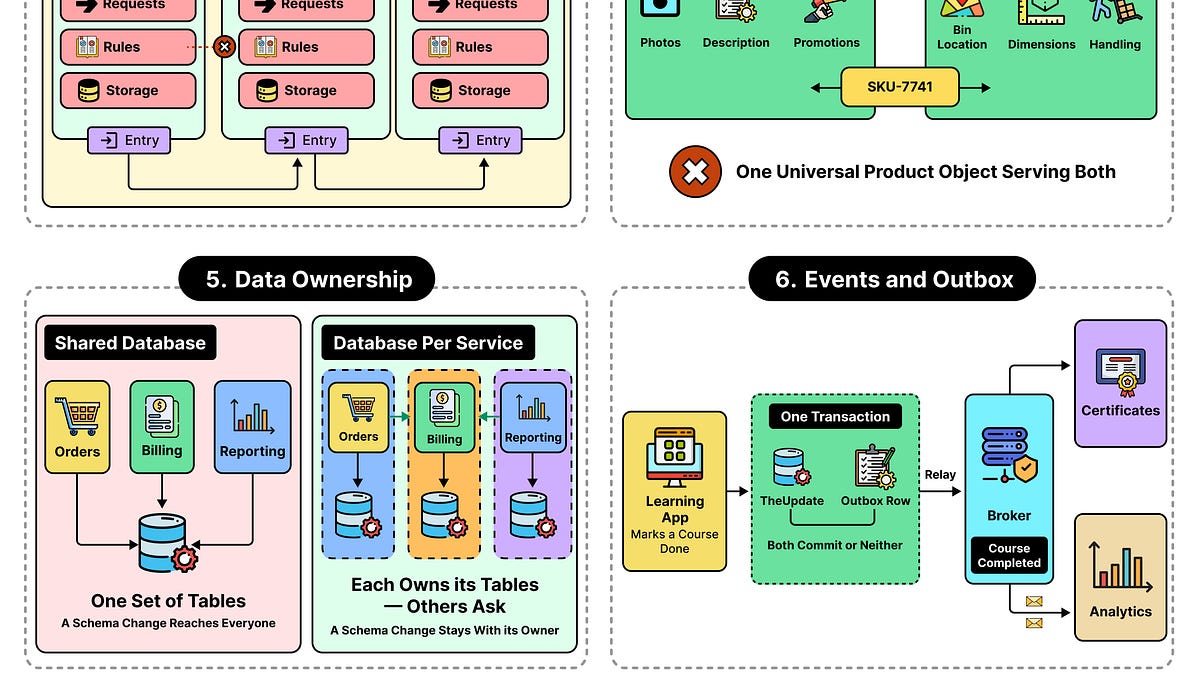
No matter how large a software system becomes, it will still have a boundary. This boundary separates the things inside the system from those outside it. Dividing a large system into multiple components can bring great benefits, but deciding how that division should happen requires real skill and understanding.
Experience is usually the best teacher in these cases. Still, there are strategies that can help developers make better choices. To understand why they matter, it helps to ask what a boundary actually does. A good software boundary keeps an application's responsibilities, its rules, and the details needed to apply those rules together. Parts of the system outside the boundary can interact with what lies inside only through a clear pathway.
This means the skill of setting boundaries involves judging which responsibilities belong together and which dependencies should exist between them. Getting these decisions right shapes how easily a system can be understood, changed, and maintained over time.
This article explores key strategies that can help a developer make sound boundary-related decisions for the systems they work on.
Source: ByteByteGo · Summarized by HeadlinesBriefing