
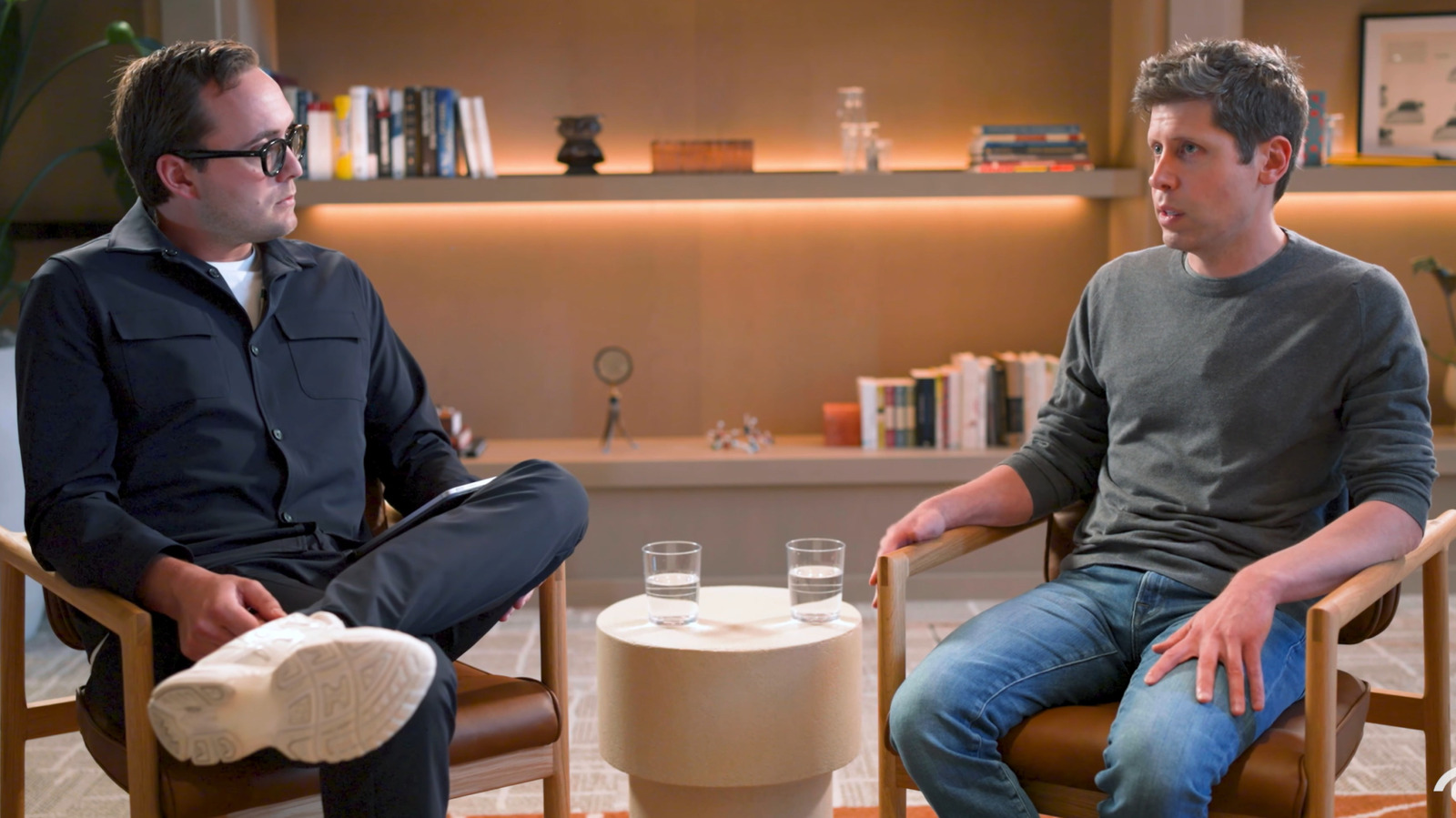
OpenAI CEO Sam Altman says the company will build a humanoid robot because "the world is very much designed for people." Doors, keyboards and tools are all shaped around a human body, so matching that form factor makes sense. However, Altman stresses that the physical design is "less important than really figuring out ... the brain that makes the robot work." A machine with two arms and two legs is useless without knowing what to do with them. Altman expects a cool demo in 2027, but does not anticipate robots walking the streets for a few years longer. OpenAI has not disclosed what the demo will showcase, what the humanoid will look like, or when outsiders will see one. The "brain" must interpret camera and sensor data, follow instructions, coordinate movement, and self-correct when the real world interferes. Picking up a mug requires identifying it, finding the handle, estimating grip, and applying the right force. OpenAI is hiring for motion control, state estimation, actuator control, whole-robot behavior, and machine-learning infrastructure for physical AI. Past work includes the Dactyl project, which taught a simulated robotic hand to manipulate real objects and later a Rubik's Cube. The company is also building custom electromechanical actuators and supply chains for scaled hardware production. Short-term, OpenAI wants general-purpose robots to help skilled workers build infrastructure; long-term, it aims for personal robots that handle a wider variety of tasks. Competitors include Tesla's Optimus and XPENG's IRON humanoid.
FAQ Q: Why does OpenAI say the robot brain matters more than the body?
FAQ A: Because giving a machine arms and legs does not help if it does not know how to use them; intelligence must interpret sensors, follow instructions, coordinate motion, and self-correct in the real world.
来源: Engadget · 由HeadlinesBriefing整理摘要