
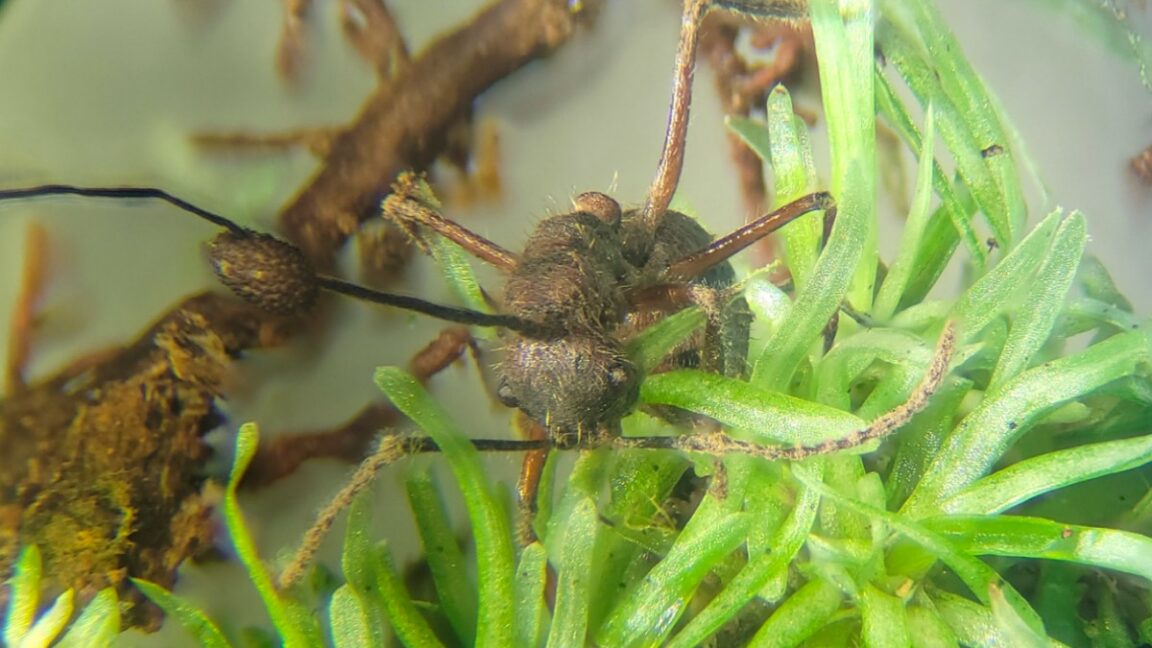
The parasitic fungi of the Cordyceps genus, known for their 'zombie-ant' behavior, have been found to exist in mosses, according to research published in IMA Fungus. DNA analysis revealed the presence of the same fungus in both infected insects and the surrounding mosses, suggesting a potential second life stage within the plant. This adaptation may help the fungus survive when insect hosts are scarce and could explain why infected ants bite into mosses during their final moments.
There are over 400 species of Cordyceps, each targeting specific insect hosts like ants, dragonflies, and beetles. The fungus infects an insect, turning it into a 'zombie slave' by compelling it to climb a plant and clamp its jaws in a death grip. The fungus then devours the host, eventually sprouting from its head to release more spores. This process, which can take four to 14 days, involves the fungus controlling the ant's behavior by essentially cutting off its brain from the rest of its body.
Previous studies have shown that the 'zombification' may be caused by a special chemical that forcefully contracts the ant's mandible muscles. In 2017, research indicated that fungal cells form a 3D network to communicate and exchange nutrients. A 2019 study revealed that the fungus doesn't directly attach to the ant's brain but instead damages jaw-muscle fibers, leading to the powerful death-grip bite.
Source: Ars Technica · Summarized by HeadlinesBriefing