
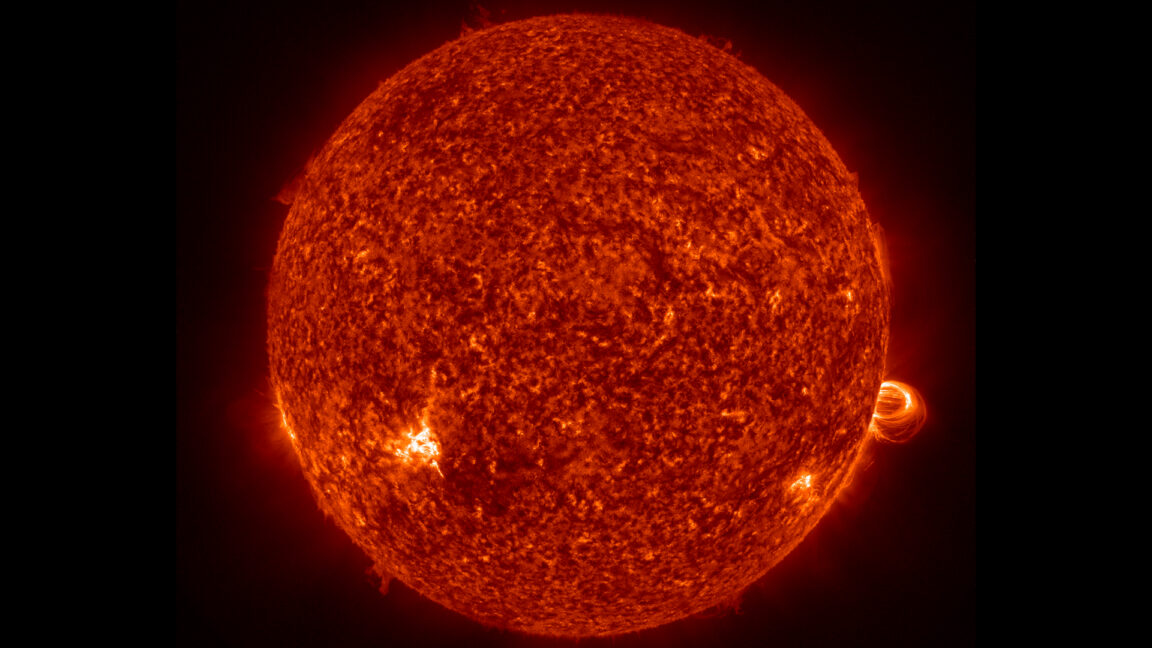
A new paper by Jacob Haqq‑Misra of Blue Marble Space and Eric Wolf at the University of Colorado Boulder asks how long Earth’s biosphere can survive the Sun’s gradual brightening. The star will increase luminosity over roughly 5 billion years before swelling into a red giant that engulfs the planet. Their analysis suggests humanity has ample time to contemplate long‑term planetary stewardship.
Earth’s climate relies on a thermostat‑like feedback: silicate weathering pulls CO₂ into carbonate that subducts into the mantle, later outgassed by volcanism. Higher temperatures accelerate weathering, pulling more CO₂ and cooling the surface, but excessive drawdown could starve photosynthesis of its raw material. If CO₂ drops below a few parts per million, even hardy microbes would struggle to photosynthesize. This balance decides whether life persists as the Sun brightens.
Earlier research relied on simple equations or one‑dimensional ocean‑atmosphere models. The new study introduces a fully three‑dimensional climate simulation and runs two extreme scenarios, bracketing possible outcomes. Results show Earth retains habitable surface conditions for over a billion years longer than earlier estimates, pushing the end of surface life well beyond the Sun’s red‑giant phase. The findings temper existential dread, showing Earth’s biosphere outlives the Sun’s most violent phase.
Source: Ars Technica · Summarized by HeadlinesBriefing