
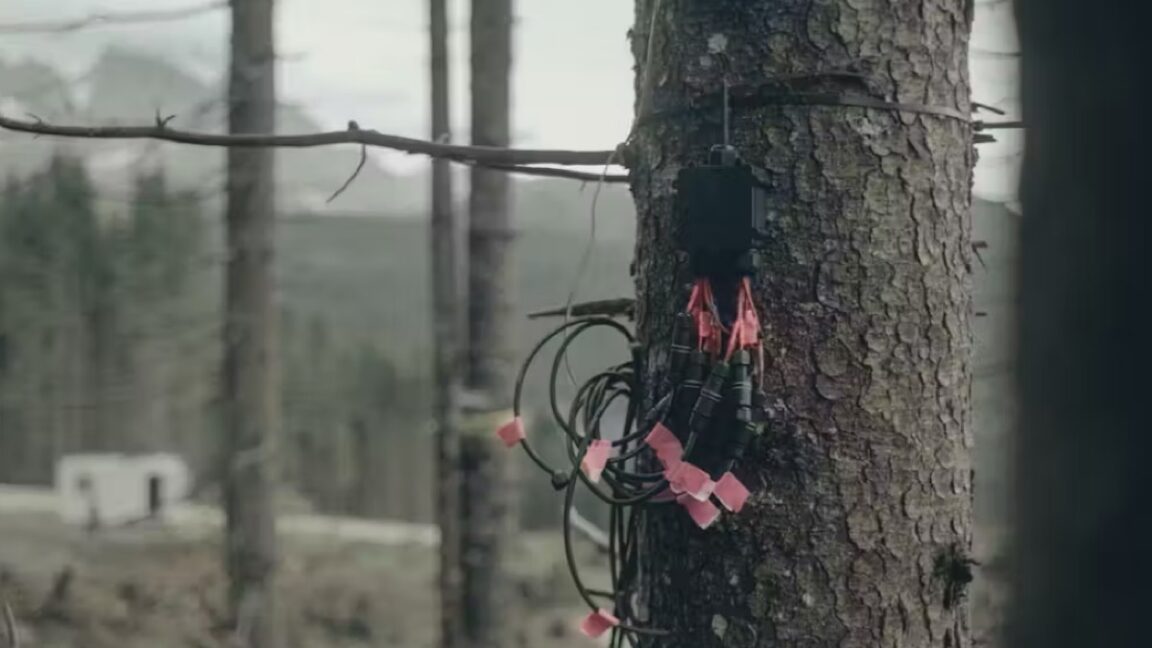
Last year, a study suggested that spruce trees in Italy could sense a partial solar eclipse, sparking interest. Researchers attached electrodes to trees, observing increased bioelectrical activity during the event. This led to speculation about trees communicating and anticipating environmental changes. These findings even inspired a documentary, but faced immediate scrutiny from the scientific community.
Now, a new critique published in *Trends in Plant Science* debunks the original claims. Critics pointed to the study's small sample size and potential alternative explanations for the observed electrical spikes. Scientists suggest that the activity could be attributed to temperature shifts or even lightning strikes. The idea of older trees passing down "knowledge" of eclipses was also questioned, due to the unique path of each eclipse.
Experts argue that the study's conclusions are unfounded, representing a possible intrusion of pseudoscience into research. The original researchers had essentially created an EKG for trees. The new critique further emphasizes the need for rigorous scientific methodology and the importance of considering alternative explanations before drawing conclusions.
Ultimately, this highlights the importance of peer review and skepticism in scientific inquiry. It serves as a reminder that extraordinary claims require extraordinary evidence. The scientific community continues to debate the complexities of plant communication, requiring more research to understand how trees interact with their environment and each other.
Source: Ars Technica - All content · Summarized by HeadlinesBriefing