
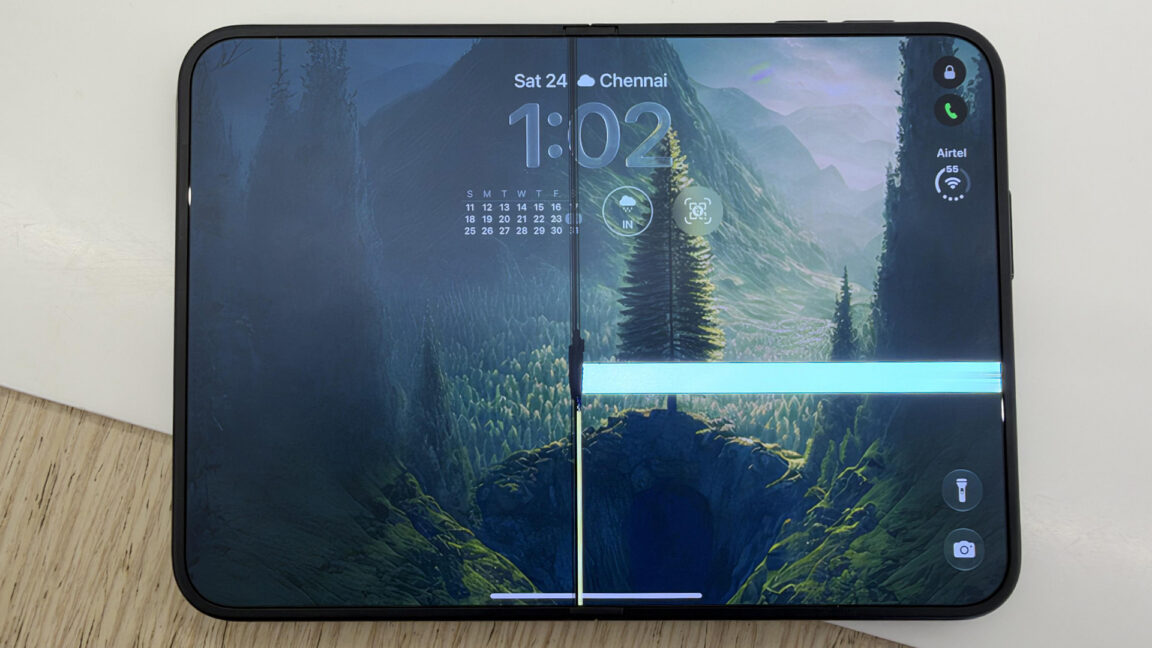
People with broken $2,000 iPhones report unusual physical resistance and clicking sounds when closing the device. After that, lines appear on the screen. iFixit has shown that the point of failure starts below where the ribbon cable passes through the hinge. The width of the supporting hinge mechanism changes in that spot, suggesting mechanical misalignment.
A possible explanation for iPhone Duo failures is that the animation shows iFixit's best guess at what's happening. The support bar in that narrowed section of the hinge may be getting stuck, preventing it from dropping far enough to accommodate the waterdrop bend in the OLED panel when the device closes. This creates stress on the display that ultimately damages the matrix.
YouTuber Curious Hagi also identified a place where the thinner link may be snapping during operation, speculating the component is physically sticking to the support plate. If this fiddly little hinge piece is the culprit, there's no way to prevent the OLED on an affected device from failing. It could happen after five minutes or five days, but continuous pressure on an OLED panel will eventually lead to permanent damage.
Apple has yet to acknowledge the issue and probably won't have anything to say until the problem is fully investigated. The scale is impossible to know, as Apple sells a lot of devices, so even a low failure rate could see a flood of reports on social media. Adding moving parts to a phone will lead to at least some increase in hardware issues.
Samsung released the original Galaxy Fold in 2019 with a much more primitive hinge design. Even before launch, reviewers began seeing OLED damage after a few days of use. The issue was a design with openings that allowed particulates to infiltrate the hinge, damaging the screen from underneath.
Samsung delayed the release while it re-engineered the hinge. Other makers of foldable phones move so few units that occasional defects may not make waves online.
Source: Ars Technica · Summarized by HeadlinesBriefing