
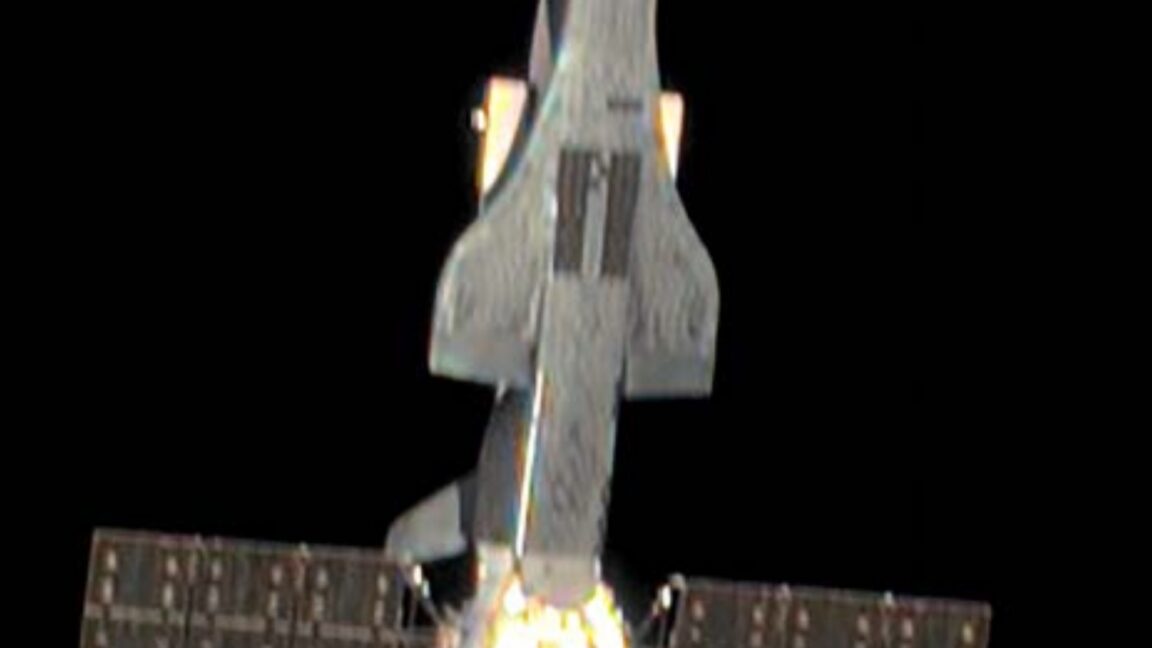
China’s top-secret spaceplane continues to operate in low-Earth orbit, raising concerns among Western intelligence agencies. While commercial entities like Maxar monitor space activities through chance encounters, military powers such as Russia and China are advancing aggressive counterspace capabilities. The Defense Intelligence Agency (DIA) highlights China’s development of directed-energy weapons (DEWs), including ground-based lasers capable of disrupting or damaging satellites in LEO. By the late 2020s, China may deploy space-based laser systems and higher-powered ground lasers targeting satellites in higher orbits. The country has also demonstrated satellite refueling in geosynchronous orbit—a first beyond LEO—and tested a robotic arm designed to capture spacecraft. Its TJS satellite fleet routinely approaches foreign satellites, signaling offensive intent.
Meanwhile, the U.S. Space Force operates inspector satellites in geosynchronous orbit and has recently acquired refuelable platforms to extend maneuverability. Air Force Secretary Troy Meink confirmed the Pentagon has deployed weapons in space, making the U.S. the first nation to openly acknowledge orbital arms. Russia is pursuing its own orbital combat program, including plans to deploy a nuclear weapon in space. It has also developed the Nivelir system, designed to fire projectiles between satellites, and simulated attacks using this technology in 2020. In April, Russia launched small satellites near an ICEYE radar satellite used by Ukraine, with one closing to within tens of meters before retreating.
Source: Ars Technica · Summarized by HeadlinesBriefing