
Kevin Seifert Nov 25, 2026, 06:00 AM ET Close Kevin Seifert is a staff writer who covers the Minnesota Vikings and the NFL at ESPN. Kevin has covered the NFL for over 20 years, joining ESPN in 2008. He was previously a beat reporter for the Minneapolis Star Tribune and Washington Times.
He is a graduate of the University of Virginia. EAGAN, Minn. -- The unusual coalition of forces that surged the Minnesota Vikings to a 6-0 start has collapsed over the past month. The breakdown has left the team's decision-makers to evaluate how much to credit their high-level opponents over that stretch, and -- most notably -- whether they are equipped to beat quality opponents when their defense does not dominate.
The essential facts are as follows: The Vikings lost three of four games against teams that currently have a combined record of 32-8. Those teams -- the Detroit Lions, Buffalo Bills and San Francisco 49ers -- would win their respective divisions if the season ended this week. All four, including the team they beat in the Green Bay Packers, would make the playoffs in that scenario.
Although the stretch has left the Vikings with a 7-3 record and dropped them to third place in the NFC North, their postseason chances have been minimally impacted. ESPN's Football Power Index gives them a 93% chance to make the playoffs, thanks in part to the NFL's seventh-easiest remaining schedule that includes NFC South opponents (Atlanta, followed by Carolina) in their next two games. But the question is not so much whether they will advance to the postseason.
Instead, it's this: Have the Vikings already demonstrated they are unlikely to make the kind of playoff run that a 6-0 start otherwise might suggest? After a 35-10 loss Sunday night to the 49ers in Mexico City, a game that for the first time exposed vulnerabilities in their top-ranked defense, the Vikings arrived back at their facility at 7 a.m. local time Monday to begin assessing the damage. "We're going to work through it as we do every game," coach Kevin O'Connell said, "and make sure we have the discussions about each individual play and also the big picture of how we were attacked from their offense, how we were defended, anything that came up in the kicking game. Then we're going to apply that to how we game plan." Through 10 games this season, the Vikings have scored 16 touchdowns -- tied for the fewest in the NFL and the lowest total for any Vikings team since at least 2000. They are averaging 17.9 offensive points per game, fifth lowest in the NFL.
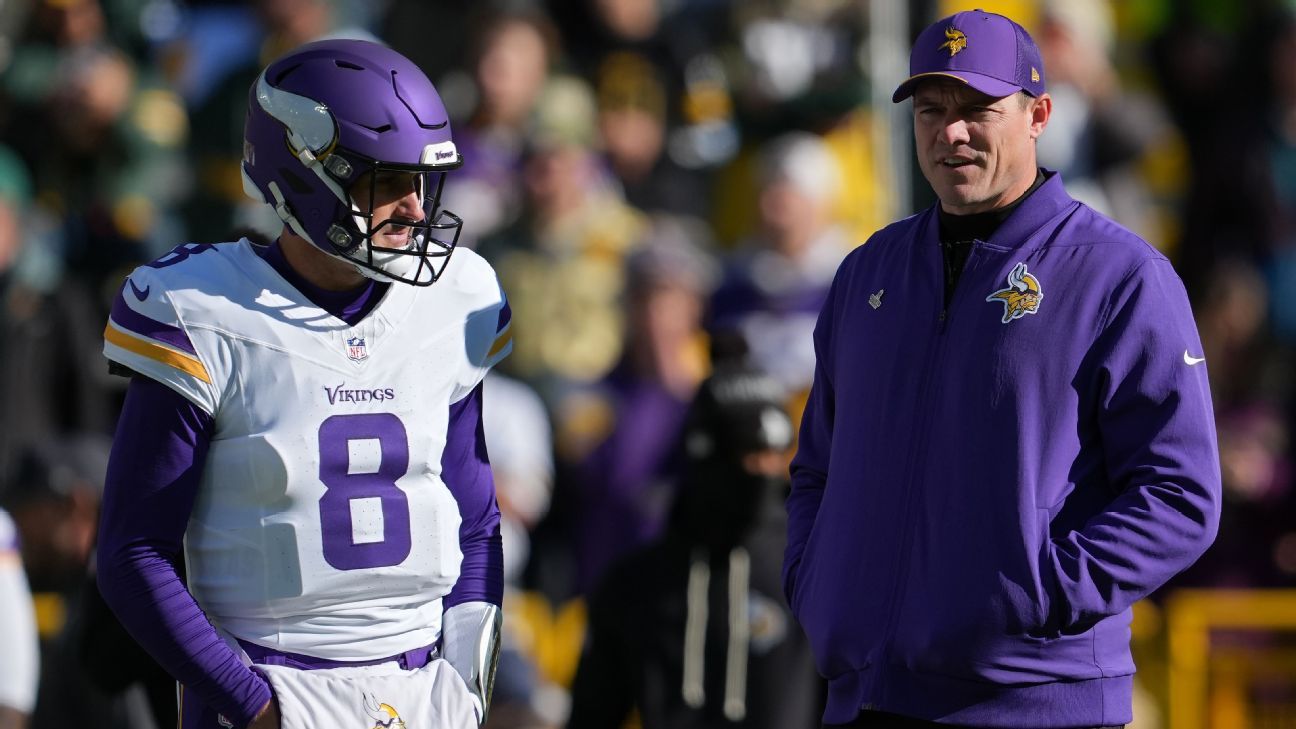
The Vikings traded for quarterback Kirk Cousins to elevate their offense enough to release some pressure on their defense and special teams. Receiver Justin Jefferson has said that the offense needs only to be "mediocre" to do its part. In two games with Cousins, the Vikings rank No. 24 in EPA.
Well into the second half of the season, is it reasonable to expect a significant improvement? ESPN Research looked at all 255 teams that were averaging fewer than 20 offensive points through 10 games over the past 20 seasons. The average team improved its scoring by 1.4 points per game over the remainder of the season. A total of 11 increased by an average 10 or more points per game.
In other words, there isn't much precedent for the kind of boost the Vikings were looking for -- leaving their early-season performance as the most reliable winning formula. For six games over seven weeks to start the season, the Vikings' defense and special teams ranked at or near the top of the NFL, based on expected points allowed, and thus covered for a mostly punchless offense that ranked No. 31. The Vikings further minimized the impact of their offense's ineffectiveness by ranking No.1 in turnover margin (-7) and No. 2 in penalties (6.5 per game), while O'Connell kept it simple by calling the NFL's fourth-highest rate of designed runs (43%).
Placekicker Will Reichard converted 18 of 19 field goal attempts, including six from at least 50 yards, tied for most in the NFL.
Source: ESPN NFL · Summarized by HeadlinesBriefing