
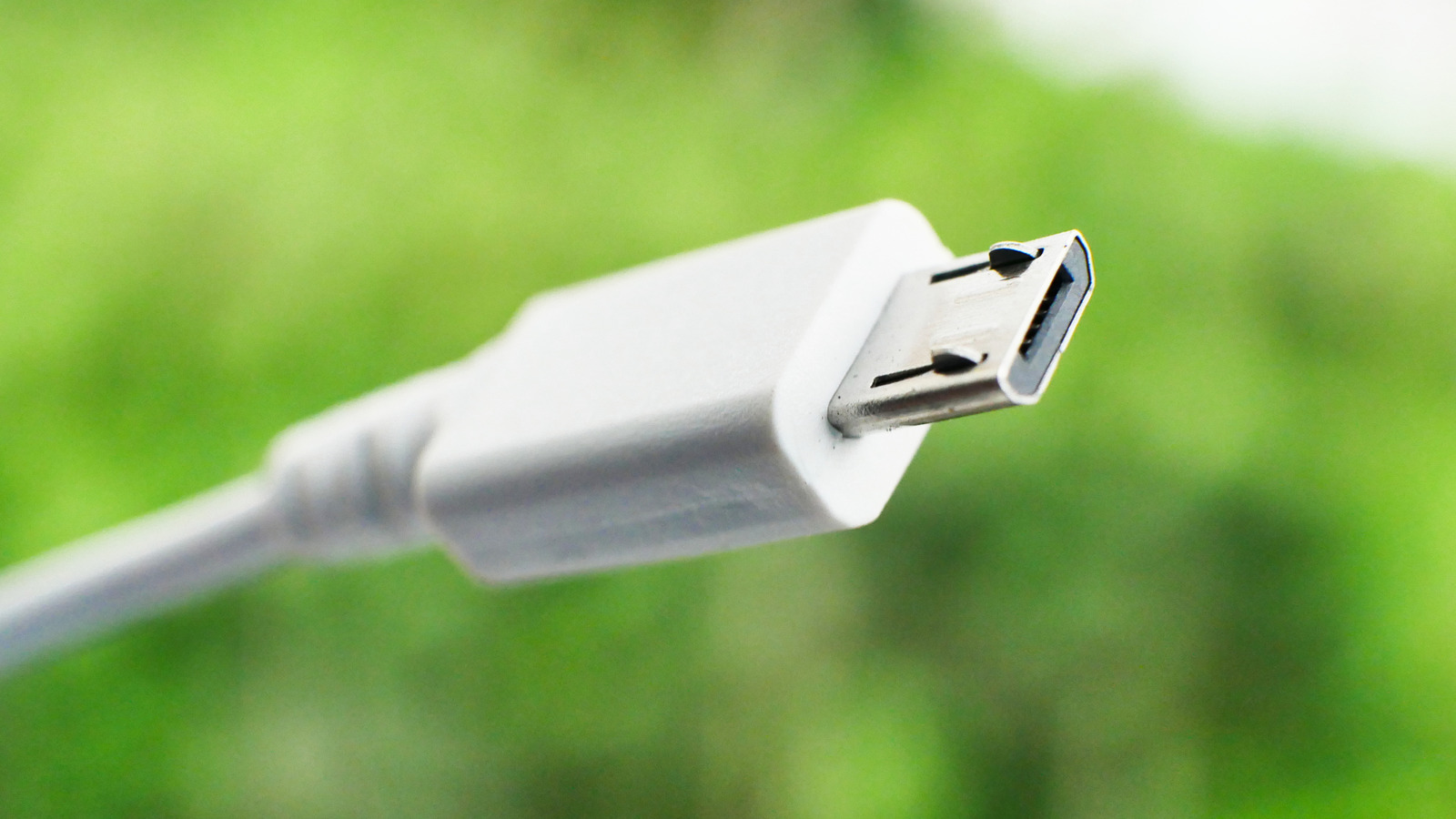
Micro USB isn't entirely extinct, but it should be avoided when making new purchases. While USB-C has largely supplanted the older connector, the tech industry's obsession with universality has led to confusion. USB 1.0 originated in 1996, and since then, the tech world has spawned countless variants.
Micro USB was one of the most enduring, popularizing data and charging for smaller devices. Despite the widespread transition to USB-C, older connectors still appear on products and even new cables. When choosing, skip micro USB—it signals an outdated product or compromised performance.
The main drawbacks are performance and compatibility. Micro USB is limited to USB 2.0 speeds (480 Mbps) and powers devices at a glacial 7.5W, whereas USB-C delivers 5 Gbps to 40 Gbps and supports 100W+ fast charging. The larger form factor also requires different cables and adapters, and the non-reversible design makes orientation tricky.
Some categories like wireless earbuds may still function adequately with micro USB, but for new devices, USB-C is the clear recommendation for better speed, power, and future-proofing.
Source: Engadget · Summarized by HeadlinesBriefing