
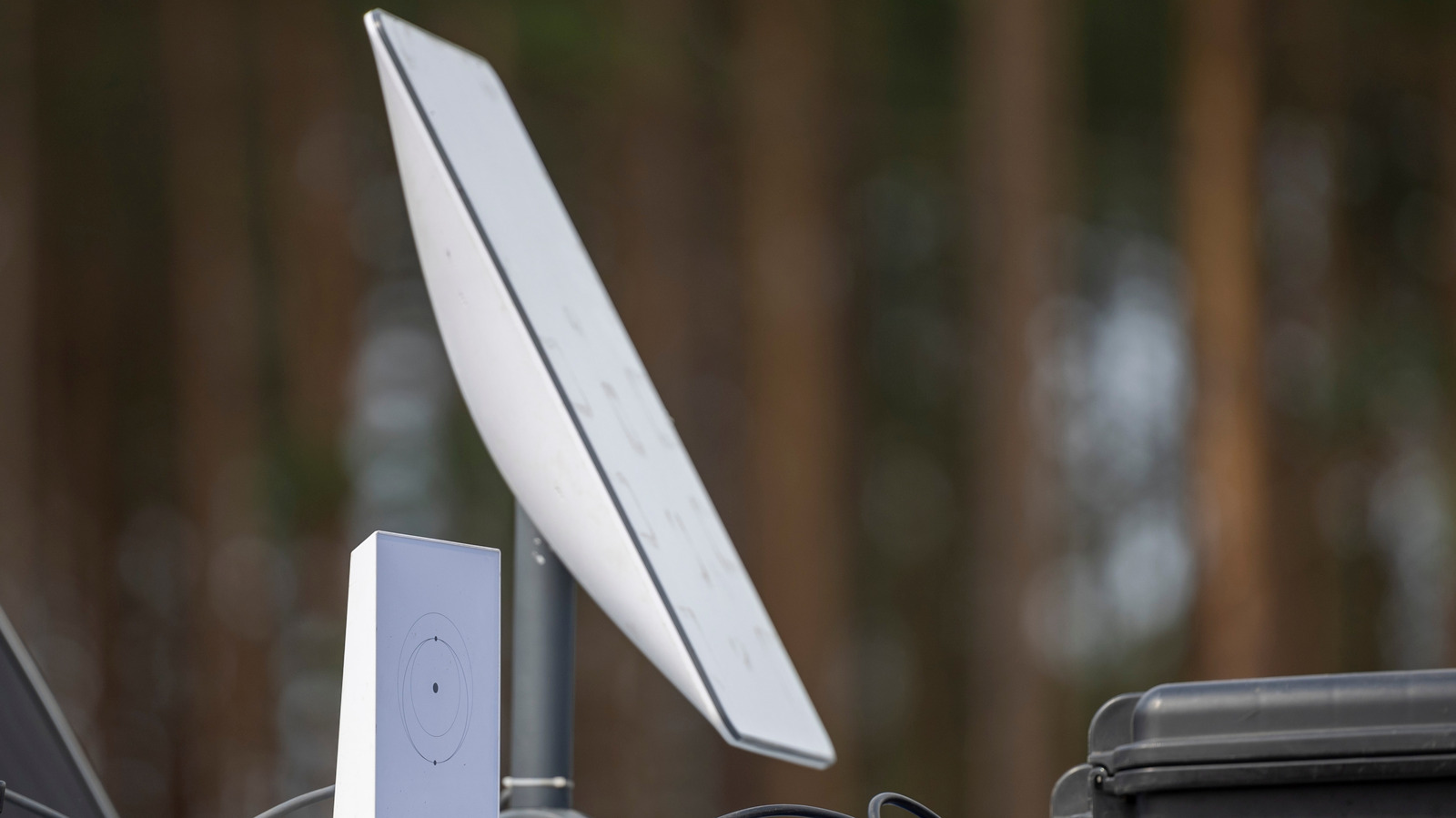
Why satellite internet has a unique advantage over terrestrial providers. Starlink's network is based around clusters of small satellites inserted into low Earth orbit (LEO). As of October 2026, there were over 11,000 working satellites, flying at altitudes ranging from about 205 to 311 miles (330 to nearly 500 kilometers).
Space X continues to launch more, whether to expand the network or replace malfunctioning units. Essentially, there should always be a cluster overhead at any given time. The most obvious advantage of this is that whereas traditional internet connections can be knocked offline for hours by a single cable or server going down, it's rare for Starlink to suffer a similar fate.
If one satellite fails, another in the same cluster should be able to pick up the slack. Even sightline obstacles aren't necessarily an issue, since the cluster approach means there's almost always a satellite with a viable angle as long as your dish is positioned properly. As mentioned, this coverage is only slated to get better.
Space X recently filed an application with the US Federal Communications Commission to operate up to 100,000 of its Gen3 satellites, following up on a recent approval to expand Gen2 numbers as high as 15,000. If you can afford to install and maintain a dish, your internet access could hypothetically become bulletproof, short of power outages or other rare disruptions. Current-generation models can melt snow and endure temperatures from -40 to 110 degrees Fahrenheit (-40 to 43 degrees Celsius).
Properly mounted, they can supposedly withstand heavy rain and winds in excess of 99 miles per hour (about 160 kilometers per hour). In practice, things don't always work perfectly. Snow takes time to melt, and there are regular, brief disruptions while your dish switches from one satellite to another.
The possibility of prolonged outages remains, whether because of extreme weather, some systemic problem on Starlink's end or issues with the rest of the internet. It hardly matters how many satellites are in the sky if a particular trunk of the internet is having trouble with its local ground-based infrastructure. Some prospective users may want to actively avoid Starlink altogether.
Apart from the many controversies involving founder Elon Musk, those momentary signal blips can be terrible for real-time activities like online gaming.
Source: Engadget · Summarized by HeadlinesBriefing