
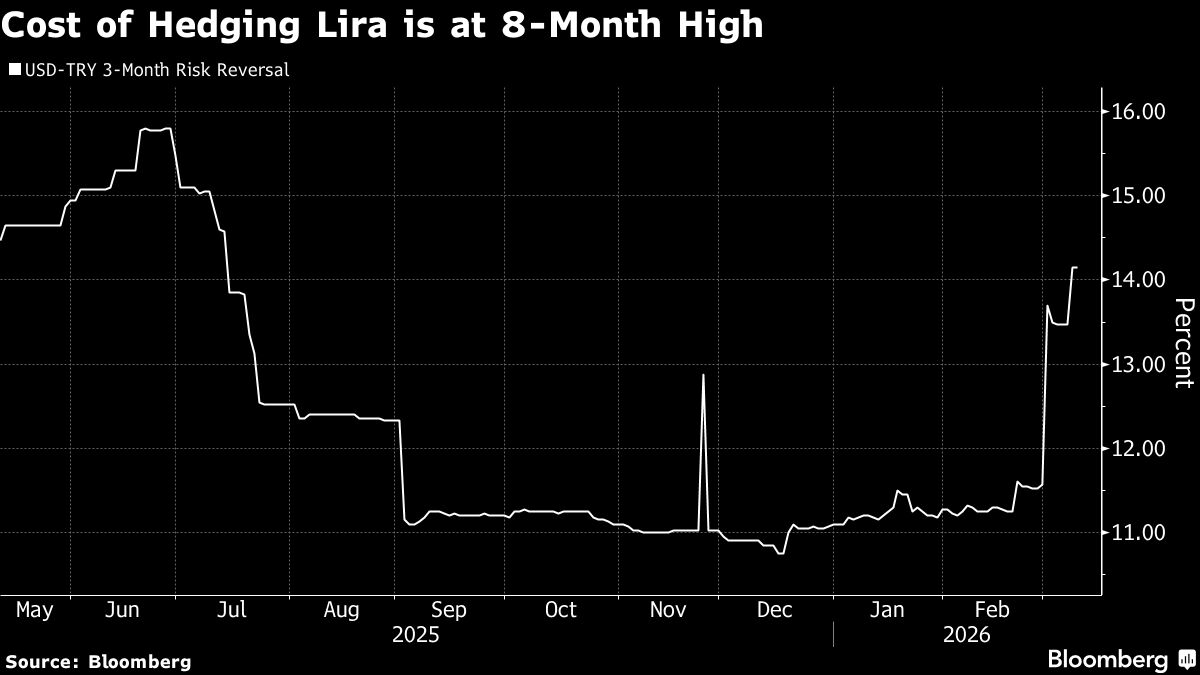
Turkey’s currency hedging costs have spiked to an 8-month high as traders maintain aggressive bearish bets against the lira, even as U.S.-Iran conflict risks ease. The 25 Delta risk reversal premium for three-month options to sell lira versus dollars surged to 14.2%, nearing July peaks, reflecting persistent market pessimism. This volatility, driven by Iran war tensions, has pressured emerging markets, with energy price spikes threatening Turkey’s disinflation efforts. Central bank interventions, including $12 billion in dollar sales, aimed to stabilize the lira, which briefly strengthened last week amid defense measures. However, bonds and equities remain under selling pressure as investors weigh risks of prolonged instability.
Iran war uncertainty continues to ripple through global markets, with oil prices plunging after Trump hinted at a potential U.S. exit. Emerging-market assets rebounded slightly, but Turkey’s lira faced dual pressures: war-driven risk aversion and inflation concerns. Goldman Sachs analysts noted reduced dollarization risks compared to earlier 2024, yet traders remain cautious. The lira edged down 0.1% to 44.0775 per dollar in Istanbul trading, signaling fragile recovery efforts.
Market resilience hinges on Turkey’s ability to balance defense spending with rate cuts. While central bank interventions temporarily curb volatility, underlying inflationary pressures from energy costs persist. Analysts stress that sustained stability requires addressing structural vulnerabilities, including reliance on volatile energy markets. The lira’s performance underscores broader challenges for emerging economies navigating geopolitical shocks and monetary tightening.
Key takeaway: Currency markets remain jittery as Turkey navigates war-related turbulence. $12 billion interventions highlight desperation to preserve confidence, but long-term credibility depends on resolving inflationary triggers. Investors will monitor central bank policies and geopolitical developments closely, with the lira’s trajectory reflecting broader EM vulnerability.
Source: Bloomberg Markets · Summarized by HeadlinesBriefing