
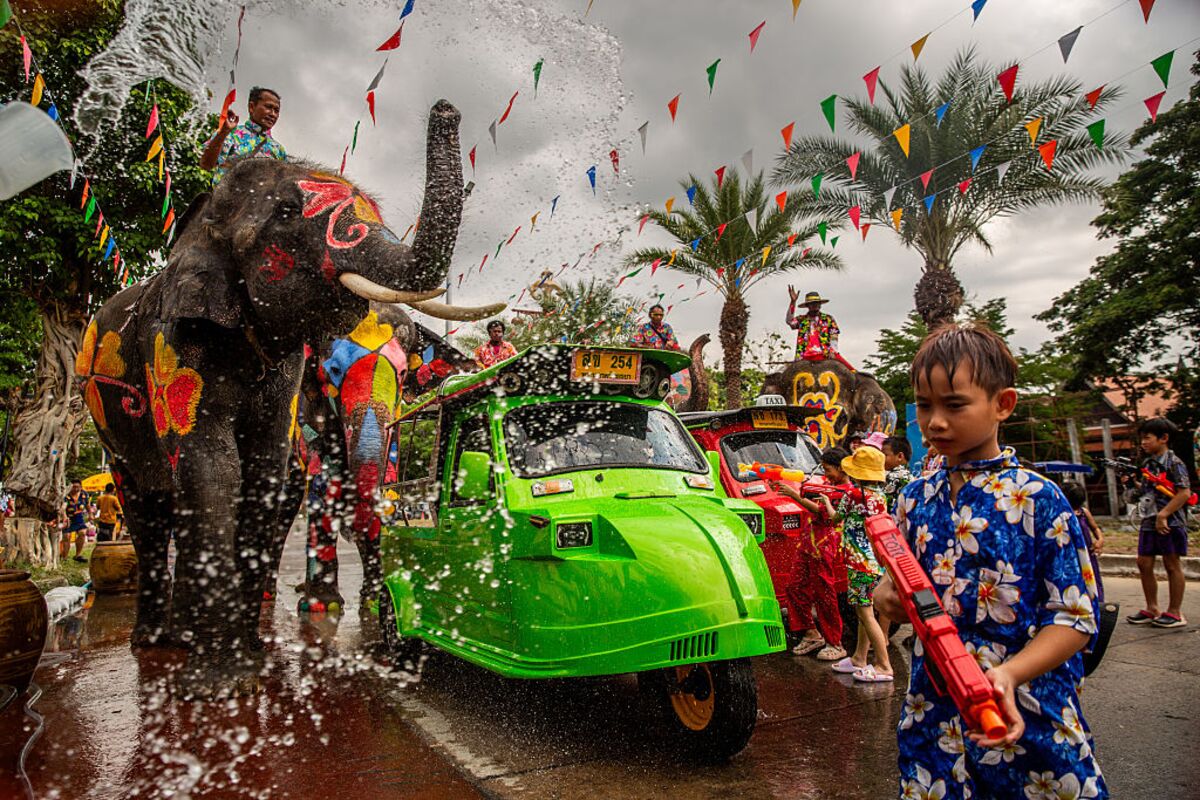
Thailand’s iconic Songkran festival, known for its vibrant water fights and consumer-driven festivities, is expected to see its weakest spending surge since 2022 as households grapple with rising living costs. The annual celebration, which typically boosts retail sales and tourism revenue, faces a dual challenge: inflationary pressures and shifting consumer priorities. Families are prioritizing essential expenses over discretionary spending, dampening the usual economic momentum tied to the event.
Rising inflation and tighter household budgets have forced many to cut back on traditional activities like elaborate water parties, luxury gifts, and travel. While exact figures remain undisclosed, analysts suggest a multi-percent decline in overall spending compared to pre-pandemic peaks. Small businesses, particularly those reliant on seasonal tourism, are bracing for reduced foot traffic and lower transaction volumes. The festival’s economic ripple effects—normally a lifeline for local vendors and hospitality sectors—are now under scrutiny as demand wanes.
This downturn underscores broader economic vulnerabilities. Thailand’s recovery from post-pandemic disruptions has been uneven, with wage growth failing to keep pace with inflation. Experts warn that prolonged spending restraint could delay the nation’s return to pre-crisis economic trajectories. While the government has not intervened directly, some municipalities are urging businesses to promote budget-friendly alternatives to preserve participation.
The situation highlights a delicate balance between cultural tradition and economic realities. For now, the subdued Songkran festivities serve as a barometer of consumer confidence in Southeast Asia’s second-largest economy. If trends persist, the festival’s role as a seasonal economic engine may face lasting transformation.
Source: Bloomberg Markets · Summarized by HeadlinesBriefing