
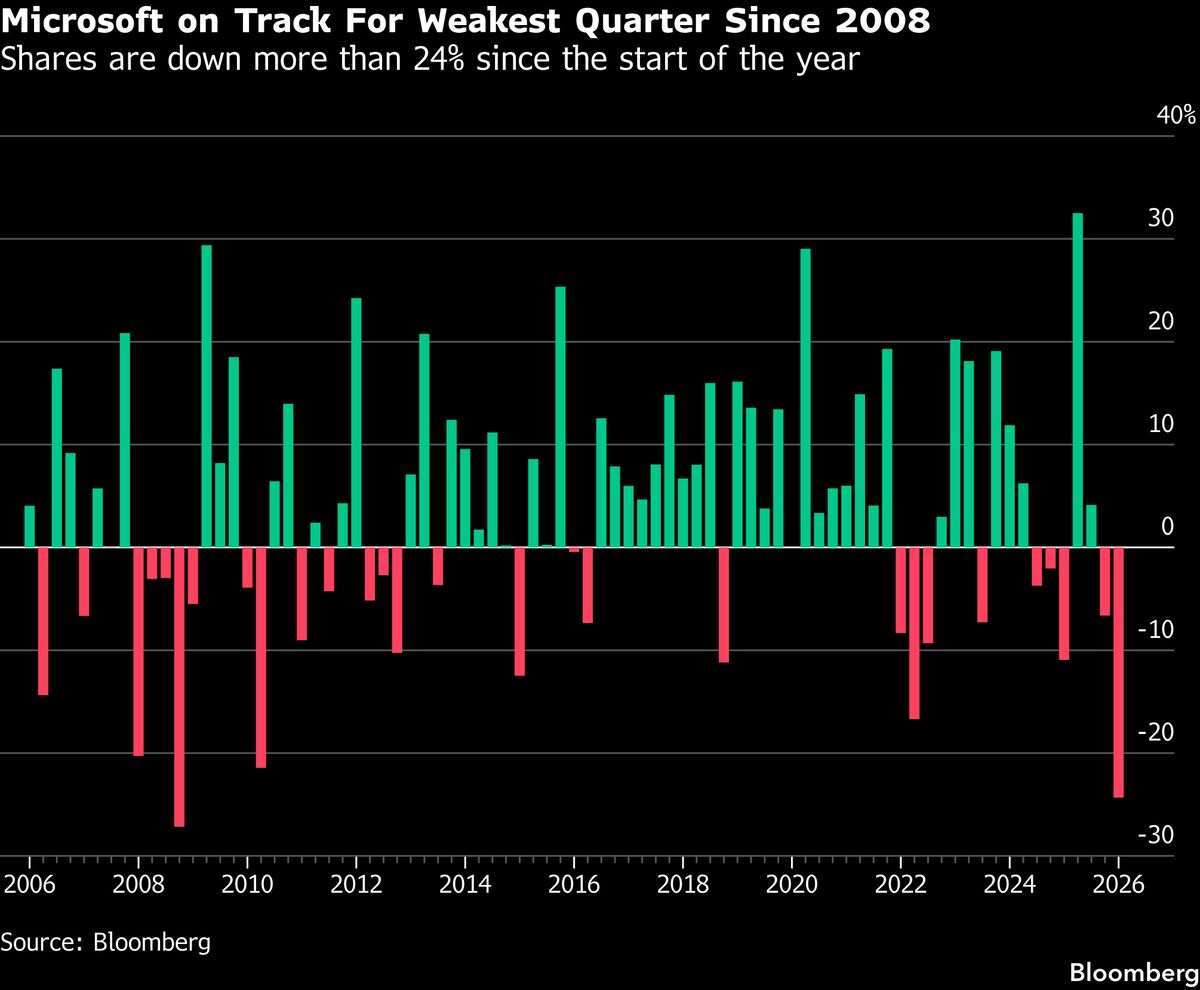
Microsoft is bracing for its worst quarterly performance since the 2008 financial crisis as artificial intelligence (AI) reshapes the tech sector. The software giant finds itself at the intersection of two challenges: slowing enterprise spending and aggressive AI-driven competition. Bloomberg Markets reports that Microsoft’s stock is projected to decline sharply in the coming months, with analysts linking the slump to reduced cloud infrastructure investments and delayed enterprise AI adoption. Two key factors—declining PC sales and weakened commercial demand for Azure services—are compounding the downturn, marking the company’s most significant slump in two decades.
The tech sector’s volatility has intensified as startups and rivals like Google and Amazon accelerate AI product launches, squeezing margins for established players. Microsoft’s Azure division, a critical revenue driver, is reportedly seeing slower growth as businesses reassess spending on AI infrastructure. Analysts note that the company’s reliance on high-margin cloud services makes it particularly vulnerable to economic headwinds. Investors are scrutinizing Microsoft’s ability to pivot toward AI-driven revenue streams amid broader market uncertainty.
This downturn underscores broader sectoral shifts, with AI adoption disrupting traditional business models. While Microsoft has historically weathered tech cycles, the current convergence of macroeconomic pressures and rapid innovation cycles poses unprecedented risks. Market analysts warn that prolonged weakness could trigger a reallocation of capital toward AI-native firms. The stock’s trajectory will likely hinge on Microsoft’s near-term execution in AI integration and enterprise client retention.
Microsoft’s struggles reflect a pivotal moment for the tech industry, where legacy players must adapt to AI’s transformative potential. The company’s response to these challenges will set benchmarks for balancing legacy operations with cutting-edge innovation. As of now, the stock’s performance serves as a barometer for investor confidence in AI’s long-term economic impact.
Source: Bloomberg Markets · Summarized by HeadlinesBriefing