
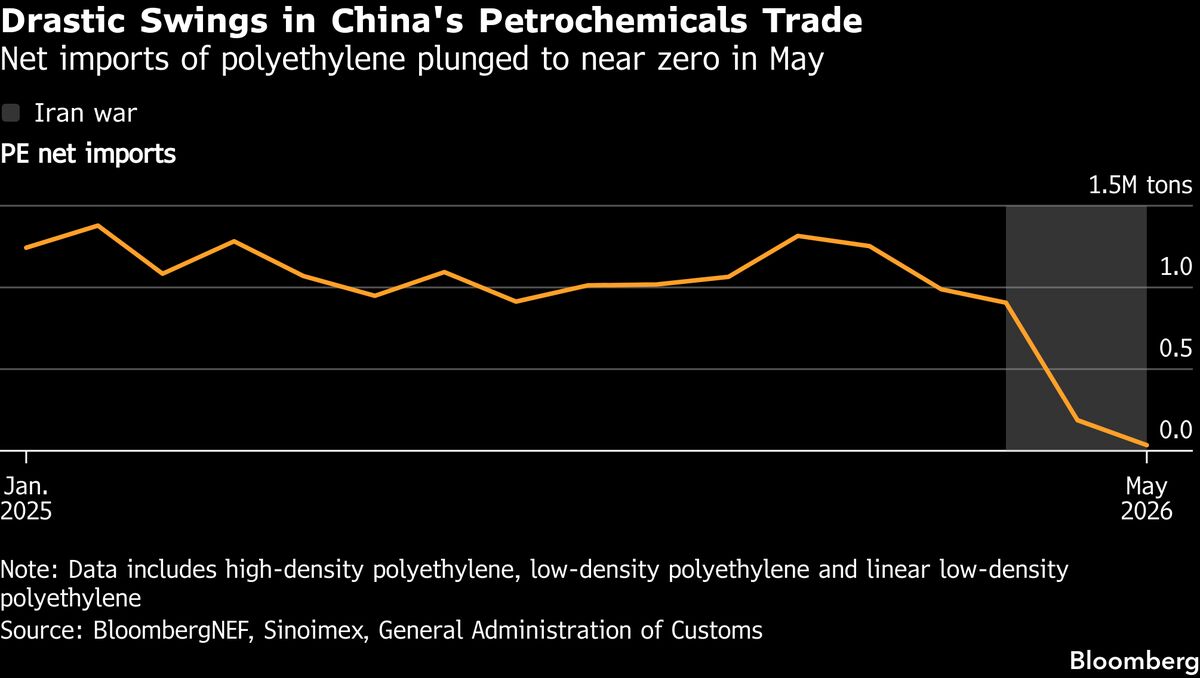
Iran War has forced China to expand petrochemicals exports as Persian Gulf feedstock losses disrupt regional supplies. The conflict has prompted buyers in Vietnam and Indonesia to shift toward China, which holds massive stockpiles and avoids Middle East dependencies. This realignment addresses China’s overcapacity in plastics, rubber, and textile materials, offering a temporary but strategic reprieve. If these trade routes persist post-conflict, producers could stabilize operations amid global supply chain volatility.
The Persian Gulf’s role as a traditional feedstock hub has diminished, forcing Asia-Pacific markets to recalibrate. China’s minimal reliance on Middle Eastern oil and gas fields has amplified its export capacity, while rivals like Saudi Arabia face reduced demand. Vietnam and Indonesia, historically reliant on Gulf supplies, now prioritize Chinese producers for cost efficiency. This shift underscores how geopolitical shocks can rapidly alter industrial supply chains, with petrochemicals serving as a critical test case.
The long-term impact hinges on the conflict’s duration and stability in alternative trade corridors. While China benefits short-term from diverted demand, sustained reliance on these channels could strain its logistics or invite regulatory scrutiny. Investors should monitor whether this realignment becomes a durable trend or a wartime anomaly. The data suggests China’s petrochemical sector has gained a tactical advantage, but strategic overreliance on conflict-driven markets carries inherent risks.
Source: Bloomberg Markets · Summarized by HeadlinesBriefing