
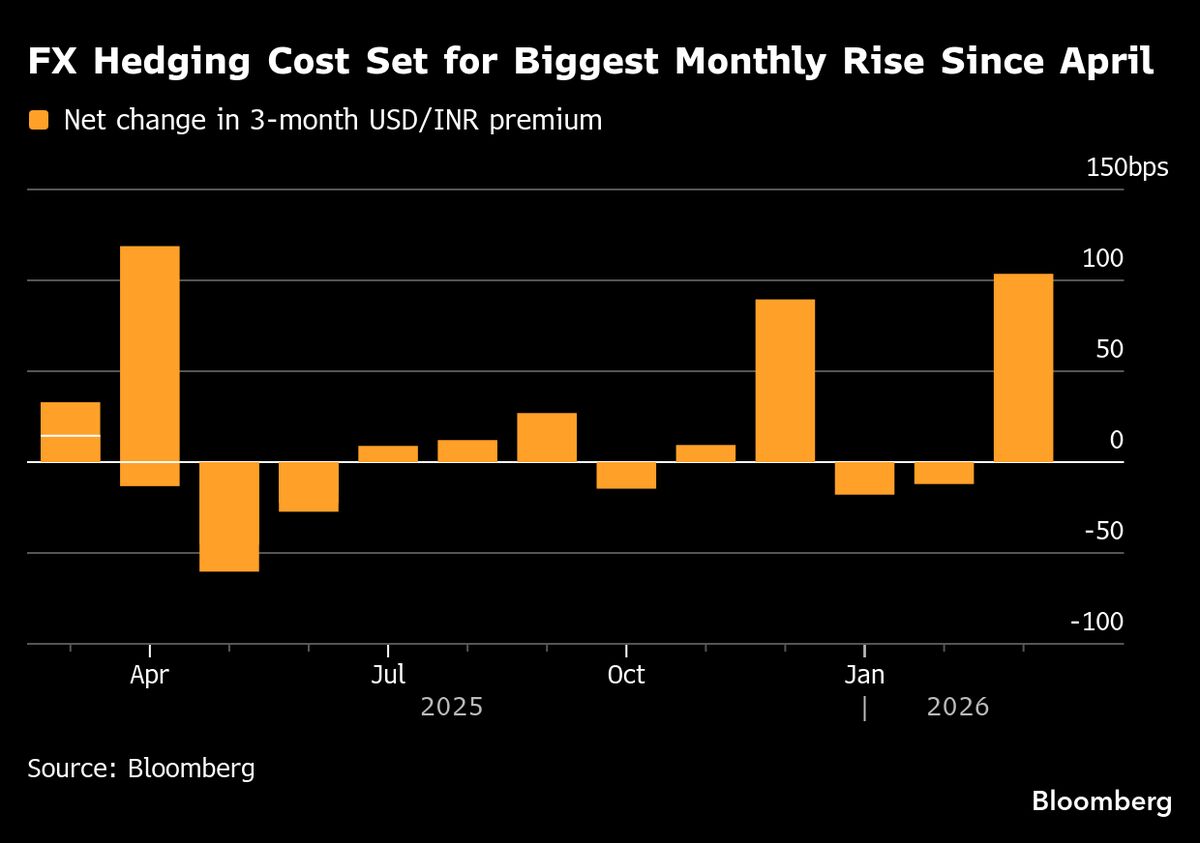
Indian importers are scrambling to hedge against further currency depreciation as the rupee hits record lows, exacerbated by surging global oil prices. The central bank’s efforts to stabilize the currency have faltered, with the rupee trading at 83.5 per dollar—its weakest level in two decades. This volatility has forced businesses reliant on imported raw materials and fuel to pay premiums for currency protection, squeezing profit margins across sectors.
The spike in hedging costs stems from heightened demand for forward contracts and options to lock in exchange rates. Analysts note that $10 billion in rupee derivatives have been traded in recent weeks alone, a 40% surge from last quarter. Industries like automotive and pharmaceuticals, which depend heavily on imports, are particularly vulnerable. For instance, a Mumbai-based refinery recently reported a 15% increase in operating costs due to currency fluctuations, illustrating the ripple effects on domestic pricing.
The Reserve Bank of India (RBI) has intervened by selling foreign reserves and raising interest rates, but these measures have had limited success. Critics argue that structural issues, including a widening trade deficit and foreign investor outflows, undermine long-term stability. Meanwhile, exporters are benefiting from a weaker rupee, boosting competitiveness in global markets—a double-edged sword for India’s economy.
This crisis underscores the fragility of emerging market currencies amid geopolitical tensions and supply chain disruptions. With inflation already at 6.2%, policymakers face a tough balancing act between defending the rupee and avoiding a growth slowdown. For now, importers are left to navigate the storm, with little respite in sight.
Source: Bloomberg Markets · Summarized by HeadlinesBriefing