
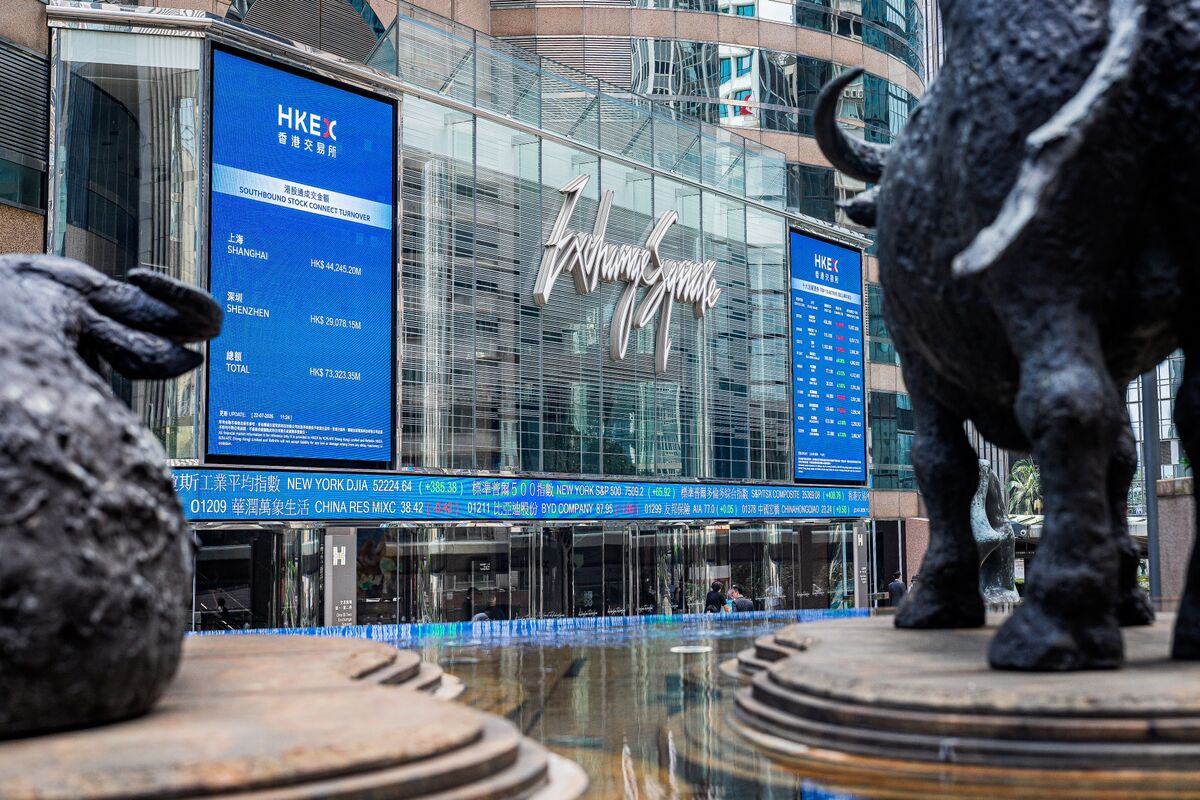
Hong Kong’s stock benchmark led losses in Asia as trading resumed after a holiday, pressured by a surge in US yields and disappointment over China’s latest stimulus measures. The Hang Seng Index slid as much as 3%, the most since March 23, with financials being a major drag. A gauge of Chinese shares listed in the city was down about 2.5%. The moves came as markets on the mainland remained shut for holidays, removing a source of potential buying support. China unveiled a fresh stimulus package earlier this week, but investors were largely unimpressed by the measures, seeing them as sufficient to keep growth on track rather than spur a broader economic revival. The steps followed months of deterioration in data that suggested a further loss of momentum in the world’s second-largest economy.
"While price swings are somewhat amplified by the lack of southbound flows and thin liquidity during China’s Golden Week holidays, the distinct defensive tone in the morning session sends a fairly clear signal that investors are underwhelmed by Beijing’s growth support measures announced at the start of the week," said Homin Lee, senior macro strategist at Lombard Odier Singapore. Shares of HSBC Holdings Plc slumped more than 5.5%, a day after benchmark US 10-year yields touched the highest level since 2002. China Construction Bank Corp. and Bank of China Ltd. were down about 2.5%. Losses in tech heavyweights Alibaba Group Holding Ltd. and Tencent Holdings Ltd. also weighed on the gauge. Rising US yields can hurt Hong Kong stocks by tightening local financial conditions through the HK dollar’s peg to the greenback.
Source: Bloomberg Markets · Summarized by HeadlinesBriefing