
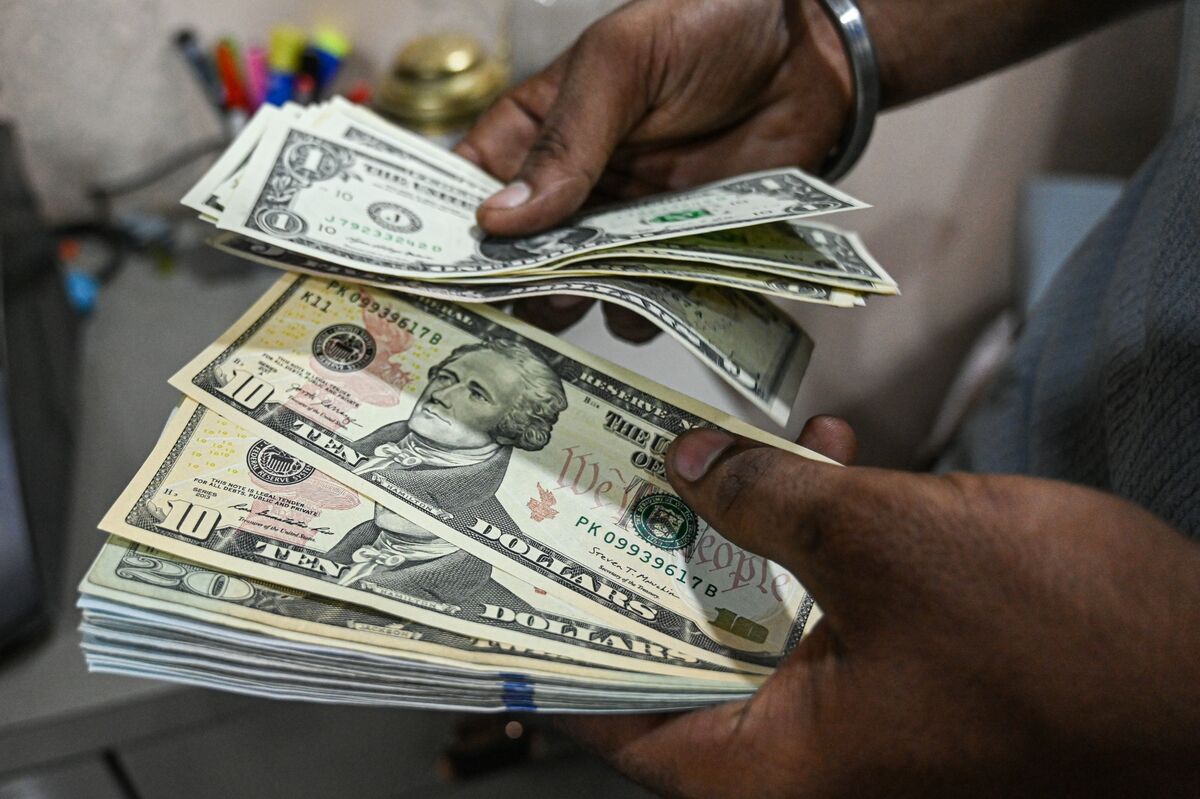
The US dollar is set to finish its strongest monthly performance since September 2022, driven by escalating tensions in the Middle East that have destabilized energy markets and reshaped investor risk appetite. The conflict has triggered sharp spikes in oil prices, prompting central banks to recalibrate monetary policy and forcing businesses to hedge against currency volatility. This surge reflects a broader flight to safety, with the dollar benefiting from its status as the world’s dominant reserve currency during periods of geopolitical uncertainty.
The rally underscores how geopolitical shocks amplify the dollar’s role in global finance. As crude oil prices climb above $80 per barrel—a level not seen since 2022—the energy sector faces renewed pressure, while exporters in Europe and Asia scramble to manage dollar-denominated debts. Investors are pouring funds into Treasury bonds, pushing yields lower and reinforcing the dollar’s safe-haven appeal. Central banks in emerging markets are intervening to stabilize local currencies, highlighting the ripple effects of US monetary policy.
This volatility reveals vulnerabilities in global supply chains, particularly for energy-dependent economies. Companies with heavy exposure to Middle Eastern oil are facing margin compression, while importers in Europe grapple with inflationary pressures. The dollar’s strength also complicates efforts by the European Central Bank and Bank of Japan to achieve their inflation targets, as tighter monetary conditions in the US constrain global liquidity. These dynamics are forcing policymakers to reassess currency intervention strategies and trade dependencies.
The dollar’s ascent signals a temporary but significant shift in market psychology. While analysts caution that sustained rallies depend on prolonged geopolitical instability, the current environment demonstrates how quickly risk perceptions can realign capital flows. For now, the reserve currency remains the anchor for portfolios seeking stability amid chaos, even as policymakers warn of potential long-term consequences for global economic coordination.
Source: Bloomberg Markets · Summarized by HeadlinesBriefing