
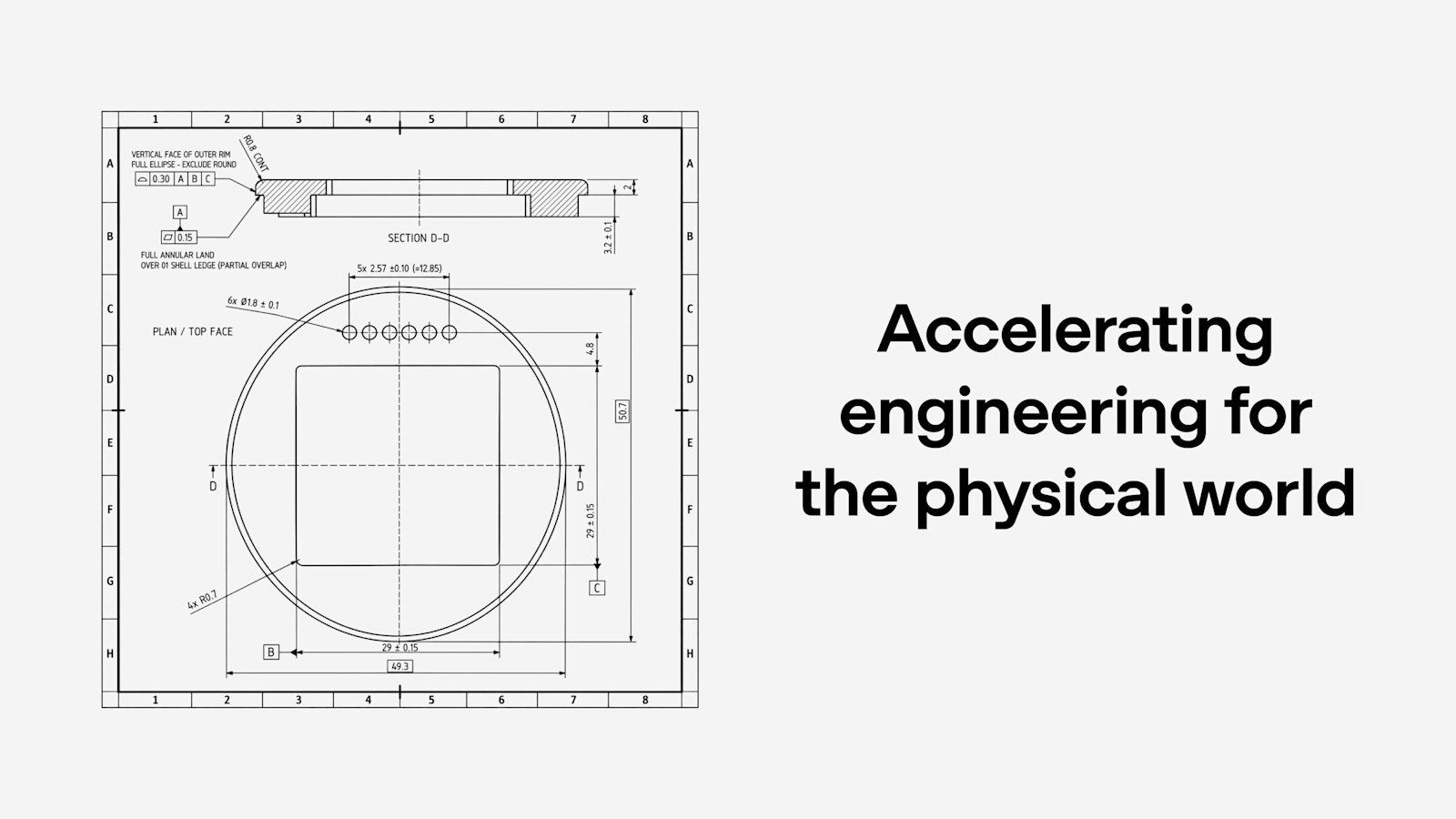
OpenAI announces advances in how its models assist engineers in designing, simulating, and building physical products. The capabilities span mechanical and electrical engineering as well as end-to-end system design. These tools are already helping internal teams test ideas and iterate faster.
Engineers must integrate mechanical designs, electronics, software, and manufacturing requirements using specialized tools. OpenAI is teaching models to support this work, from preparing drawings and setting up simulations to coordinating changes across disciplines. The goal is to give engineers more time to explore ideas and improve designs.
Over the past year, improved frontier model capabilities have helped internal teams test new ideas and iterate faster, with early evidence of these capabilities improving professional industry workflows. OpenAI is working with collaborators to understand where these capabilities can make the biggest difference and what needs to improve. OpenAI tested its state-of-the-art model, Astra, in multimodal and computer use workflows to create a functional device without direct human edits.
Astra developed the device's aesthetics, mechanical enclosure, printed circuit board, and software integrations to connect with Codex. Two team members designed the test device with Astra as a side project in under a week. A contract manufacturer built prototypes in under a month.
Astra did not consistently account for production limits, tolerances, or assembly details, helping identify what future models need to improve. OpenAI's hardware and infrastructure teams have seen model usage grow 23-fold since February, used for creating CAD models, preparing drawings, setting up simulations, and reviewing designs. Newer internal models achieved an average score of 0.875 on Bench CAD 2.0, compared to 0.594 for GPT-6, testing the ability to reconstruct 3D parts and identify circuit board connections.
OpenAI is working with industry collaborators to test these capabilities on real engineering problems, with engineers reviewing model outputs for accuracy and practicality.
Source: OpenAI Blog · Summarized by HeadlinesBriefing