
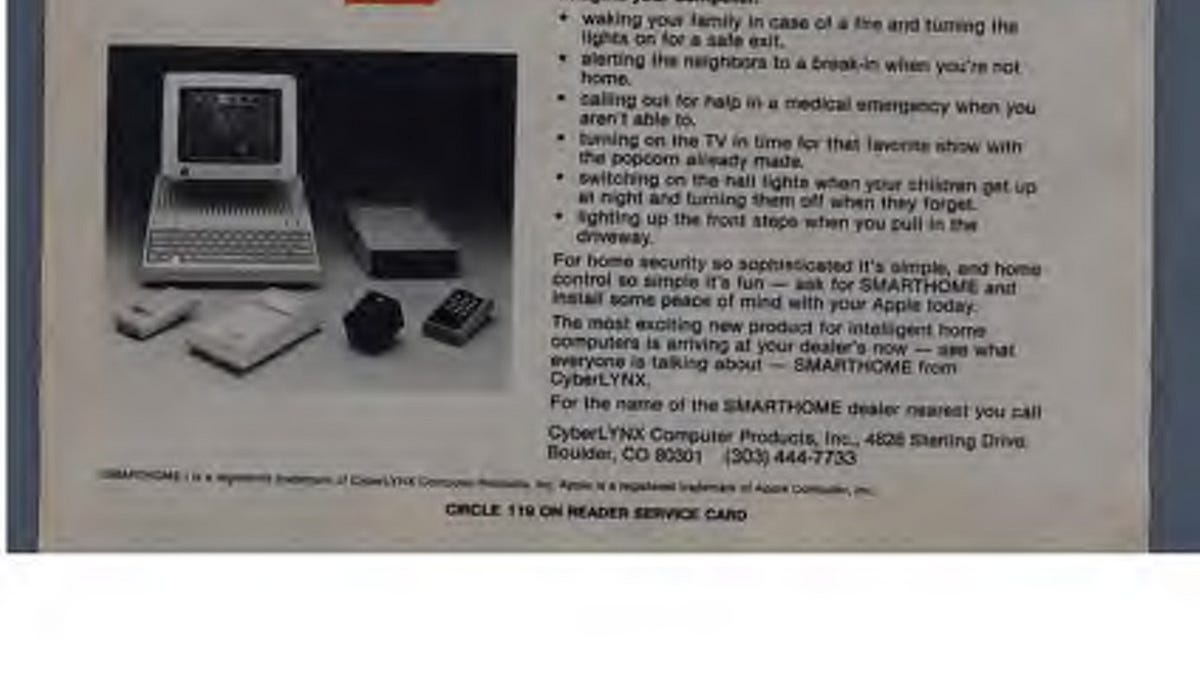
Creative Computing, November 1984, showcases early home automation concepts. Cyber LYNX promised lights, music, and dinner waiting upon arrival, while Smarthome I offered dependable apartment control despite confusing instructions. Compu Serve demonstrated a multi-state social experiment, allowing users to coordinate across nine states with minimal effort. These articles highlight the era's fascination with connecting household tasks to emerging technology.
Macworld and Practical Computing reviews from late 1984 examine early software utilities. Filevision aimed to pair database records with dinner wine selections, though it required significant user expertise. Practical Computing notes the technical hurdle of creating working copies on 128K Macs, requiring 17 disk swaps. Meanwhile, COMPUTE! magazine explores educational software, featuring Positronic Bridge, which offered improving opponents and rigid bidding mechanics, though limited to rubber scoring.
The article also covers unique input methods and hardware reviews. Peter Mc Williams describes an eye-switch interface allowing 5-10 words per minute selection. Sony's 1999 AIBO robot pet, priced at $2,500, is noted for shaping behavior through interaction. U.S. Robotics' modem setup is discussed in the context of historical figures like Benjamin Franklin, though manuals admitted difficult configurations. Financial software reviews cover Mitel's Kontact office tools and Lanpar's limited 300-installation distributor network from 1985.
Gaming and speech technology round out the collection. Computer Gaming World's January 200... issue and Type 'N Talk speech synthesis are featured. The Henry Ford museum preserves early speech hardware. Throughout, the narrative reflects on how early predictions shaped modern computing, noting that many promised features required significant user setup or lacked full functionality.
Source: Hacker News · Summarized by HeadlinesBriefing