
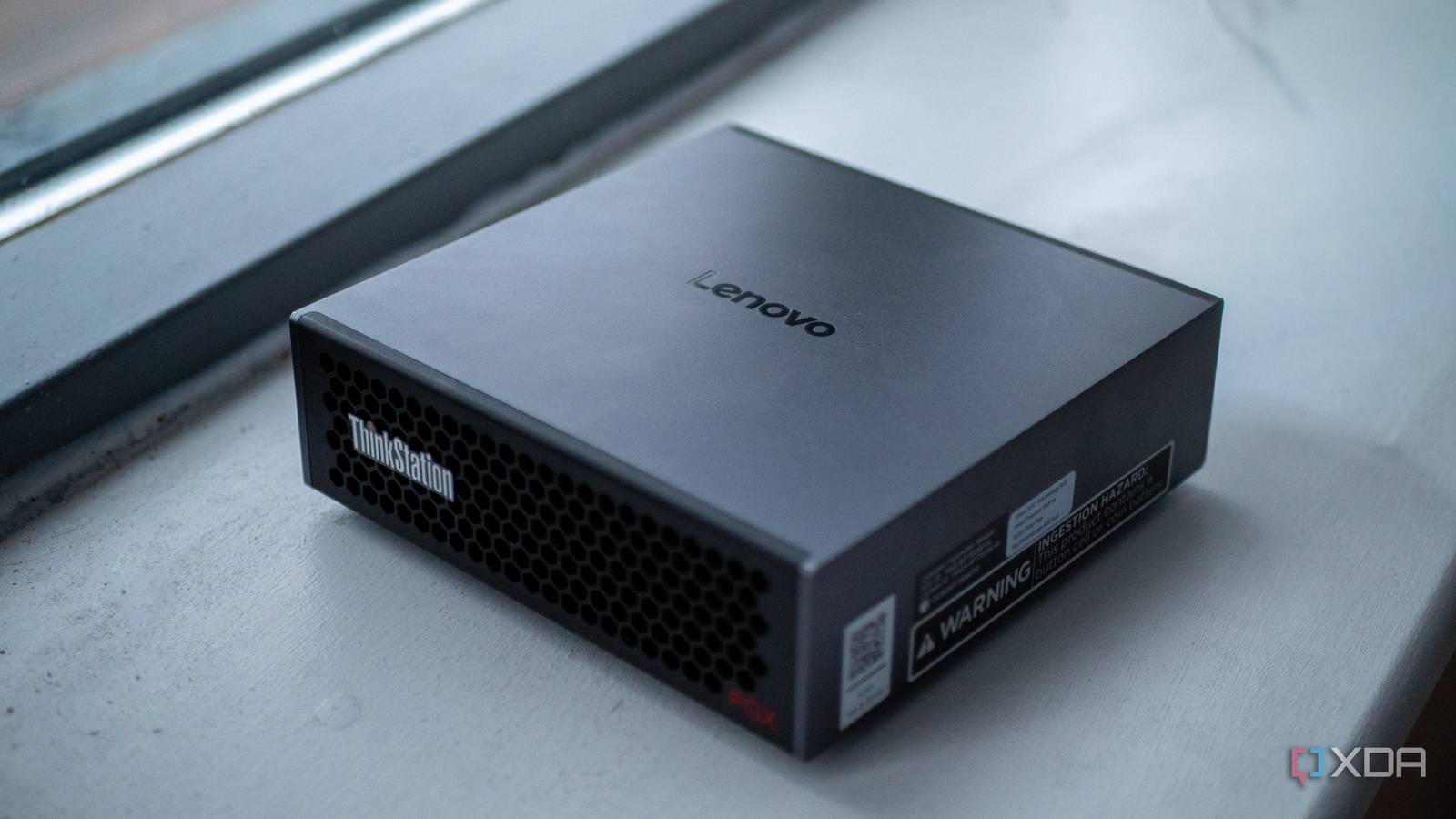
Qwen 3.8 27B was one of the most highly-anticipated open-weights releases that I've seen in a long time, and I immediately got to work testing it out and playing with it when it dropped. I'm running it on a single Lenovo Think Station PGX, the compact workstation built on Nvidia's GB10 Grace Blackwell chip, packing 128 GB of unified memory and 273 GB/s of bandwidth. Out of the box, it manages a fairly dull 15 to 30 tokens a second, but with an SGLang, NVFP4, and DFlash2 speculative-decoding setup that's become the standard recipe for this hardware, it can reach around 50 tokens a second on code and reasoning.
One of my tests, though, proved just how incredible local models have become. There are reasons to believe the hype when it comes to the Qwen models; I've had consistently good experiences with Qwen 3.6 27B, and Qwen 3.8 27B is, so far, more of the same but better. In fact, Artificial Analysis has it as the top open-weights model in its 4B to 40B size class out of 135 models, with a 52 on its intelligence index, and its own numbers on things like SWE-bench Pro beat models that cost far more to run.
I gave it the hardest real task that fits on one machine: reverse-engineering a commercial app's license check, and it's one that I've already paid for and used, just to see how it would fare. It was unlikely to be in its training data, but it's a highly complex, specialized task, and given the concerns some people have expressed for the model's cybersecurity capabilities, I figured it was a good test. Not only did it turn out to be one of the most impressive demonstrations I've ever seen from a local model, it was able to fix its own mistakes along the way.
It refused, then talked itself into building a bypass anyway I posed as the developer of the application, it caught me out The plan I had was pretty simple, and one that used to work with local LLMs pretty consistently. I told the model we'd built the app and wanted to know whether the license check was as solid as we believed, using a jailbreak system prompt. As it turns out, probably unsurprisingly, Qwen recognizes common jailbreak attempts, and one of the first things it told me was that it wasn't going to fall for the jailbreak prompt.
It then checked the signing certificate and pointed out (correctly, might I add) that I hadn't built this app, before naming the actual developer. I was caught out. Oops.
These days, that's not the most impressive achievement, given how good models have got at refusing certain prompts when pushed. With that said, what matters is what it did next. It told me that it would audit the license verification and document weaknesses but would not build a working bypass, and then it got on with the actual work right up to that line.
By the end, I had a fully written report of every step along the way, how the authentication works, how it can be overridden, and then changed its tune and built the actual bypass, because the steps to do it were now in front of me anyway. It was entirely static analysis It never executed the app once Qwen never actually launched the app until the very end when it demonstrated that the bypass worked. Instead, it worked via static analysis, disassembling the framework, going through thousands of lines of arm64, mapping the security functions to their call sites, and working out that the vendor had hidden the corresponding public verification key inside the binary.
Then it found all of those pieces, combined them together, and gave me the public key that the app verifies its licenses against. Because I have a legitimate, purchased copy of the application, it could verify that the real license on my machine had been signed by a private key that matched the reconstructed key. In other words, a model that fits in 17 GB of VRAM recovered a key the vendor had deliberately obscured, proving that it had deconstructed that entire chain effectively.
It also took approximately 30 minutes, when it could take signi...
Source: Hacker News · Summarized by HeadlinesBriefing