
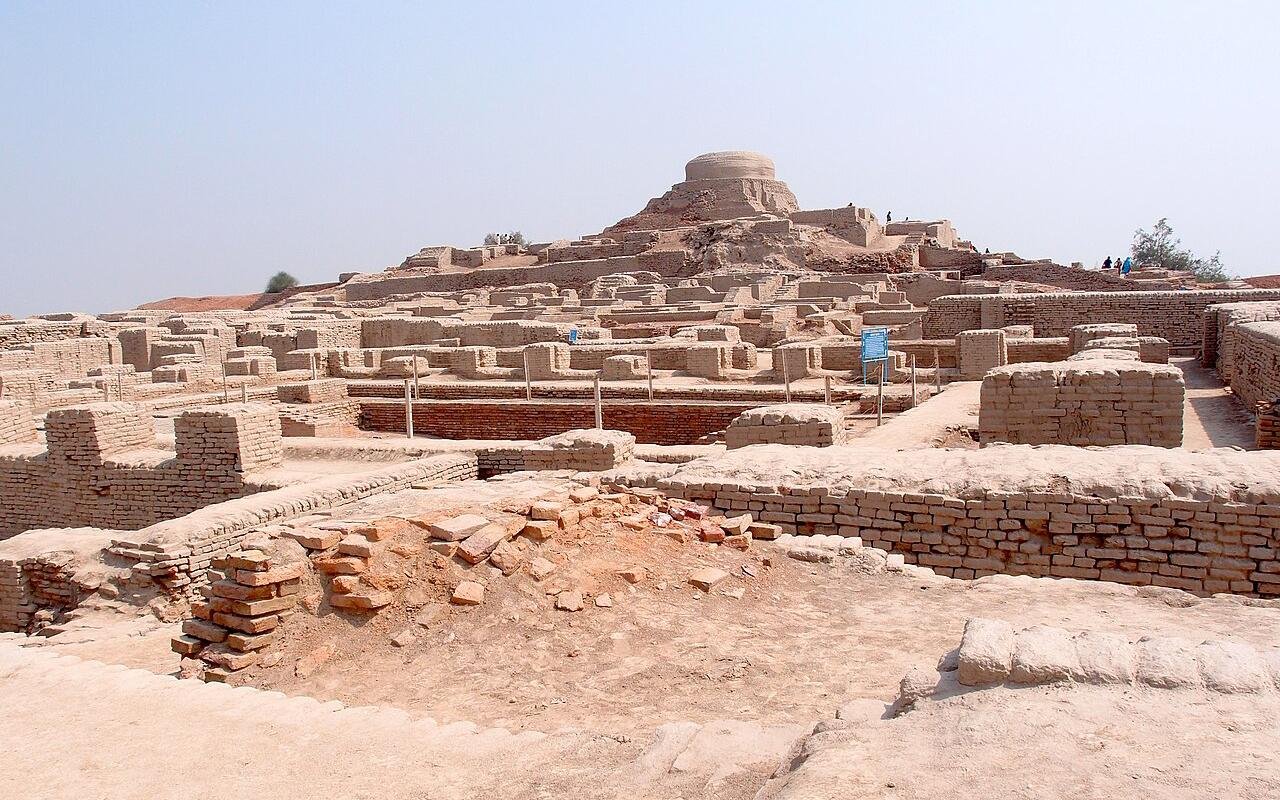
Archaeologists have long assumed that urban growth produces greater inequality, but a new study of Mohenjo-daro presents a different picture. Researchers from the University of York analyzed housing patterns at this 4,000-year-old Indus Civilization city, which thrived between 2600 and 1900 BC in present-day Pakistan. Their findings show the opposite trend.
Using Gini coefficients to measure economic disparity, the team examined excavation records spanning the city's development. Mohenjo-daro produced lower inequality scores than contemporaneous Mesopotamian cities and Bronze Age Greek settlements. Most strikingly, the gap between wealthy and poorer residents actually shrank as the city grew more prosperous over time. House sizes became increasingly uniform during later periods, approaching the equality levels of early farming villages rather than major urban centers.
The archaeological record supports this pattern. Mohenjo-daro lacks royal palaces, monumental statues, and elaborate tombs that typically signal elite concentration. Instead, brick-lined drainage systems served ordinary households throughout the settlement. Indus seals used for trade appeared in common homes, and standardized weights and measures spread widely across the region. This suggests collective governance prioritized public infrastructure over elite accumulation.
Lead author Dr. Adam Green argues the city offers one of the clearest examples of ancient urban life built around shared access to resources. The findings challenge conventional assumptions that economic growth inevitably widens inequality gaps, suggesting alternative models of urban development existed in antiquity.
Source: Hacker News · Summarized by HeadlinesBriefing