
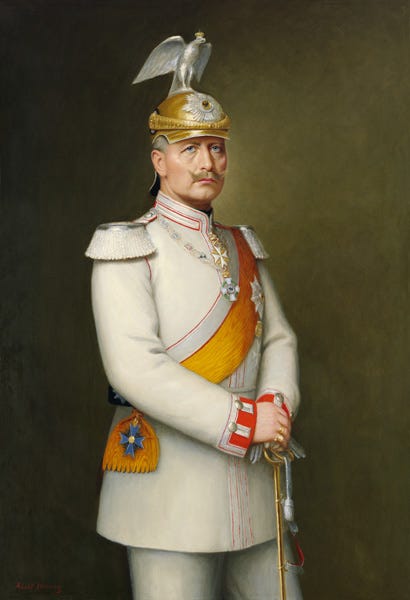
The article challenges traditional historical theories by examining Kaiser Wilhelm II's influence on 20th century history. Moving beyond the "great man" theory that emphasizes exceptional individuals and "history from below" that focuses on structural forces, the author proposes a "mediocre man" theory where ordinary people in positions of power shape history. Wilhelm II, despite not being traditionally "great," significantly impacted Europe's path.
Germany's constitution enabled Wilhelm's "personal rule," with Chancellors serving by royal confidence and the military owing allegiance only to the monarch. His approval was required for career advancement, making his personal preferences decisive. The Kaiser centralized power after accession, using his position as supreme arbiter between institutions to shape policy and personnel decisions based on personal relationships rather than merit.
Wilhelm's personality conflicted between peaceable inclinations and moments of rage. While he frustrated advisors seeking preventative war, his capriciousness and difficulty taking matters seriously sometimes led to dangerous rhetoric. His decisions, whether backing down from conflict or issuing inflammatory orders, had concrete consequences that demonstrate how even mediocre individuals in positions of power can alter history's course.
Source: Hacker News · Summarized by HeadlinesBriefing