
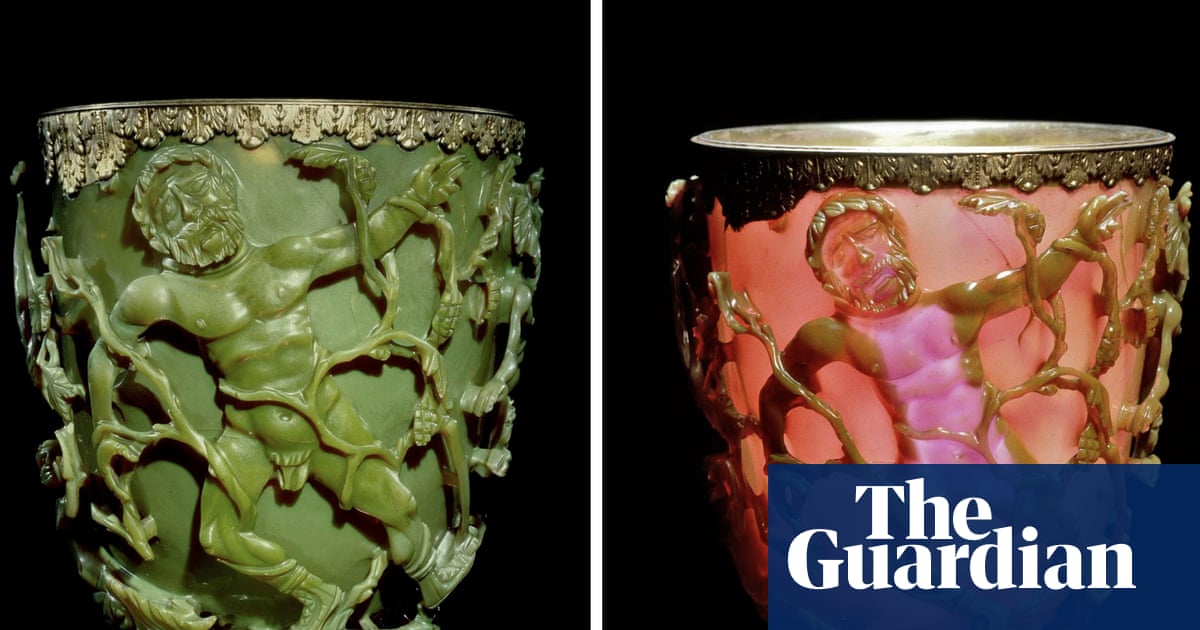
Scientists from the University of Sheffield have replicated the optical behaviour of the Lycurgus Cup, a 1,600-year-old Roman masterpiece held at the British Museum. Depending on where a light source is positioned, the cup changes colour, appearing jade green under normal lighting and ruby red when lit from behind. The effect has puzzled historians and glass-makers for centuries.
The fourth-century original bears a mythological frieze depicting the legend of King Lycurgus from Homer's Iliad, showing the god Dionysus triumphing over Lycurgus, who is ensnared by a vine. In 2022, it was recognised as one of the seven glass wonders of the world by an international panel.
Dr Lisa Hollands, a technician at the university, worked with Prof Caroline Jackson, a leading Roman glass expert, on the research. The team embedded gold and silver nanoparticles, each a thousand times smaller than a grain of sand, into molten glass. As the glass cooled from more than 1,000C, the nanocrystals grew within it. Hollands described the work as "a labour of love" and said, "To me, it's magic."
Ian Freestone, emeritus professor of archaeological materials at University College London, said Sheffield's project is more ambitious and precise than a similar-coloured glass replicated in the 1960s. He noted that the colour depends heavily on the glass's position in the furnace, suggesting the Romans "hit the jackpot" with the Lycurgus glass. The replica will be unveiled at the Millennium Gallery during the university's Festival of the Mind, before a permanent display at the Turner Museum of Glass.
Source: Hacker News · Summarized by HeadlinesBriefing