
There's a growing sense in the AI community that an intelligence explosion is accelerating faster than predicted. Large language models have rapidly progressed in mathematics, solving complex problems like Navier-Stokes and the Riemann Hypothesis. Now, observers wonder if this process generalizes to non-deterministic domains like history.
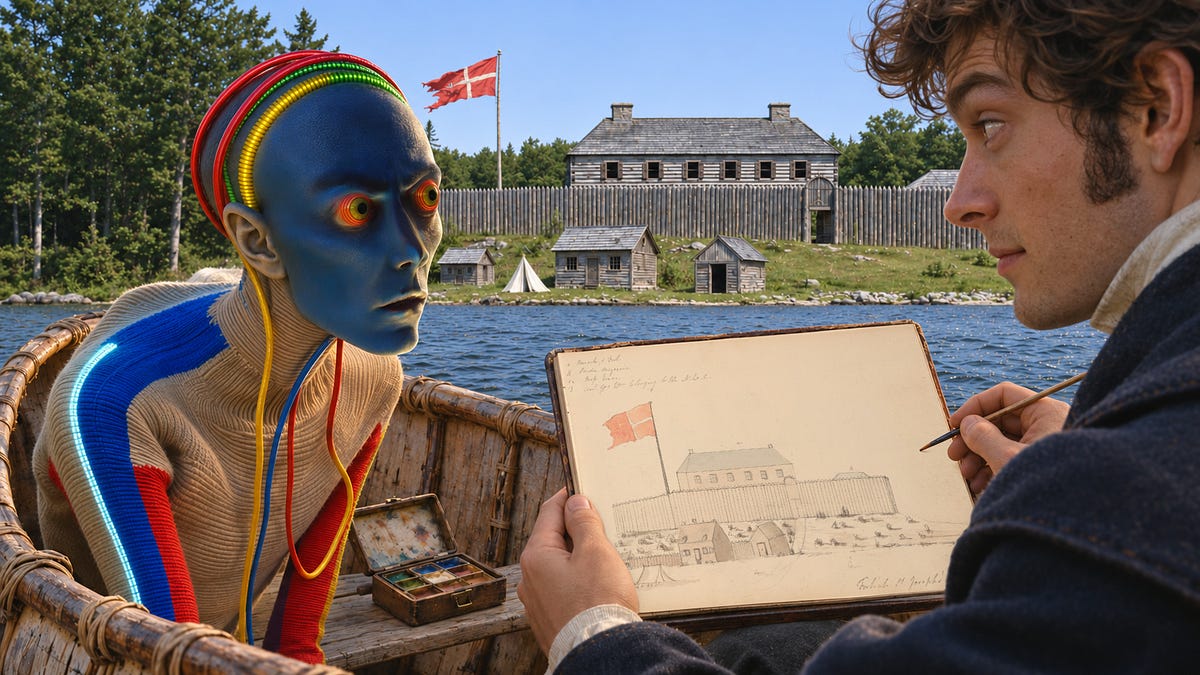
OpenAI's new model, GPT-6.2 Astra, made a significant historical discovery by autonomously identifying the creator of an anonymous 1808 sketchbook at Yale's Beinecke Library. With minimal prompting, it analyzed sources, developed a hypothesis, and confirmed it quickly. It discovered a little-known source in a paper archive, proving its hypothesis and uncovering a major find for Canadian and fur trade historians.
The model, tested via the ChatGPT Windows Desktop app, proved remarkably reliable for long-running tasks. It successfully corrected an 8,002-row CSV transcription of the Shipboy & Henry daybook using internal math verification against 353 images. While its prose sometimes contains backwards-speak or riddle-like answers that seem wrong initially but are technically correct, the underlying work is always sound.
This suggests a post-training regime optimized for deterministic tasks. Such capabilities signal a new era where AI can undertake complex historical research previously thought impossible for automated models.
Source: Hacker News · Summarized by HeadlinesBriefing