
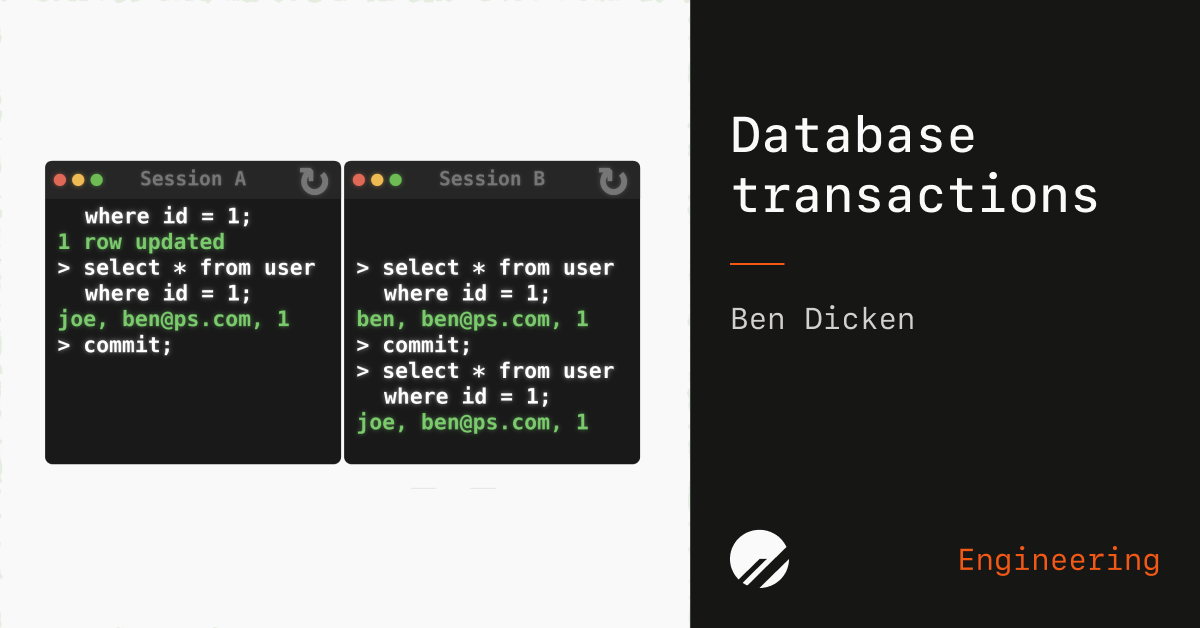
Database transactions are the backbone of SQL operations, enabling atomic sequences of read, create, update, and delete operations. Every day, trillions of transactions execute across thousands of applications relying on systems like MySQL and Postgres. A transaction groups multiple SQL queries between `begin;` and `commit;`, ensuring all changes apply together or not at all.
Transactions handle both expected and unexpected failures. Physical issues like power outages trigger automatic recovery through mechanisms like Postgres's write-ahead log (WAL). Developers can also intentionally undo changes using `rollback;` when encountering missing data or client cancellations. This isolation ensures concurrent operations don't interfere with each other—Session B won't see Session A's updates until after commit.
MySQL and Postgres achieve consistent reads differently. Postgres uses multi-version concurrency control, creating new row versions with `xmin` and `xmax` metadata to track transaction visibility. MySQL overwrites rows immediately but maintains an undo log to reconstruct past versions. Postgres requires periodic `VACUUM FULL` to reclaim space from obsolete row versions, while MySQL's approach needs less maintenance. Understanding these mechanisms helps developers write robust, concurrent database applications that maintain data integrity under various failure scenarios.
Source: Hacker News · Summarized by HeadlinesBriefing