
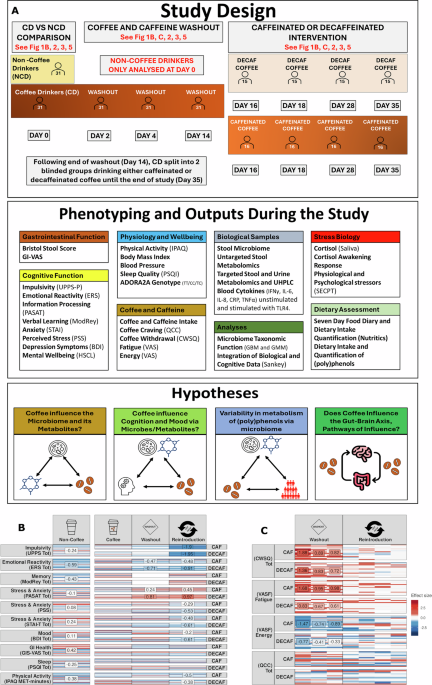
468,629 individuals were analyzed in prior research linking coffee to lower mortality and cognitive decline risks. A recent study tracked 31 coffee drinkers and 31 non-drinkers, revealing habitual intake alters gut microbiota composition. Participants who abstained for 14 days then reintroduced coffee showed gut bacteria shifts tied to cognitive performance metrics.
The gut microbiome emerges as a mediator: coffee drinkers exhibited higher *Bacteroides* and *Bifidobacterium* diversity, while decaf coffee drinkers saw increased *Lawsonibacter asaccharolyticus*—a butyrate-producing species linked to stress resilience. Melanoidins in coffee may boost short-chain fatty acids, influencing gut-brain signaling pathways. Functional MRI scans revealed altered neural connectivity in coffee drinkers’ sensory and emotional processing regions.
Cortisol spikes from coffee normalize with regular use, suggesting adaptation. However, mixed evidence persists about coffee’s stress response effects. The study’s phased design—abstinence, decaf vs. caffeinated reintroduction—isolated caffeine’s role, showing microbial changes persist regardless of caffeine content. Education levels, alcohol use, and childhood trauma were controlled for in the cohort.
Researchers hypothesize coffee’s cognitive benefits stem from microbiome interactions, particularly via neuroactive metabolites like SCFAs and GABA. While caffeine contributes, coffee’s complex mix of polyphenols likely drives broader microbial and metabolic effects. The findings position coffee as a dietary lever for modulating the microbiota-gut-brain axis, though long-term dynamics require further study.