
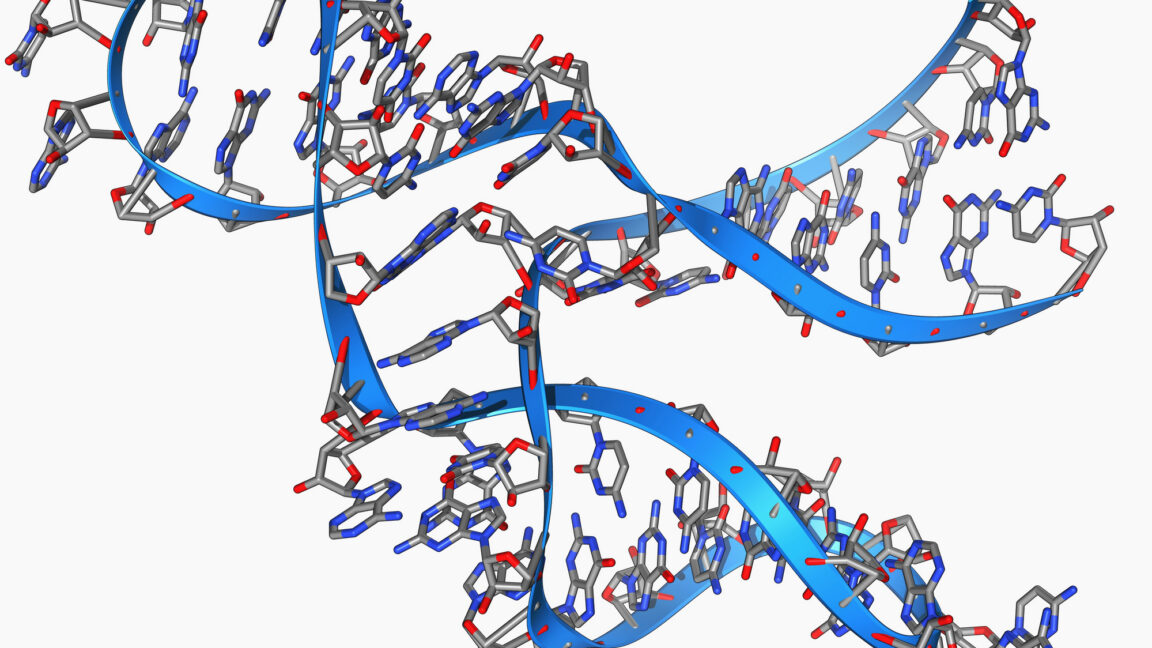
Researchers have identified a remarkably short RNA molecule that can replicate itself, potentially solving a key mystery about life's origins. The 45-base ribozyme represents the smallest known self-replicating RNA, challenging previous assumptions that such molecules would need to be much longer to perform this essential function.
This discovery addresses a fundamental question in origin-of-life research: how could early RNA molecules have copied themselves without the complex protein machinery that exists today? The finding suggests that self-replication might have emerged from much simpler molecular precursors than previously thought. The ribozyme sits functionally between a ligase and a polymerase, capable of adding bases one at a time to create copies of itself.
Previous polymerase ribozymes were hundreds of bases long, making spontaneous formation unlikely in prebiotic conditions. The new molecule's brevity and efficiency overcome these limitations, demonstrating that self-replication could have begun with relatively simple RNA sequences. This breakthrough provides experimental support for the RNA world hypothesis and offers new insights into how life might have emerged from non-living chemistry.
Source: Ars Technica - All content · Summarized by HeadlinesBriefing