
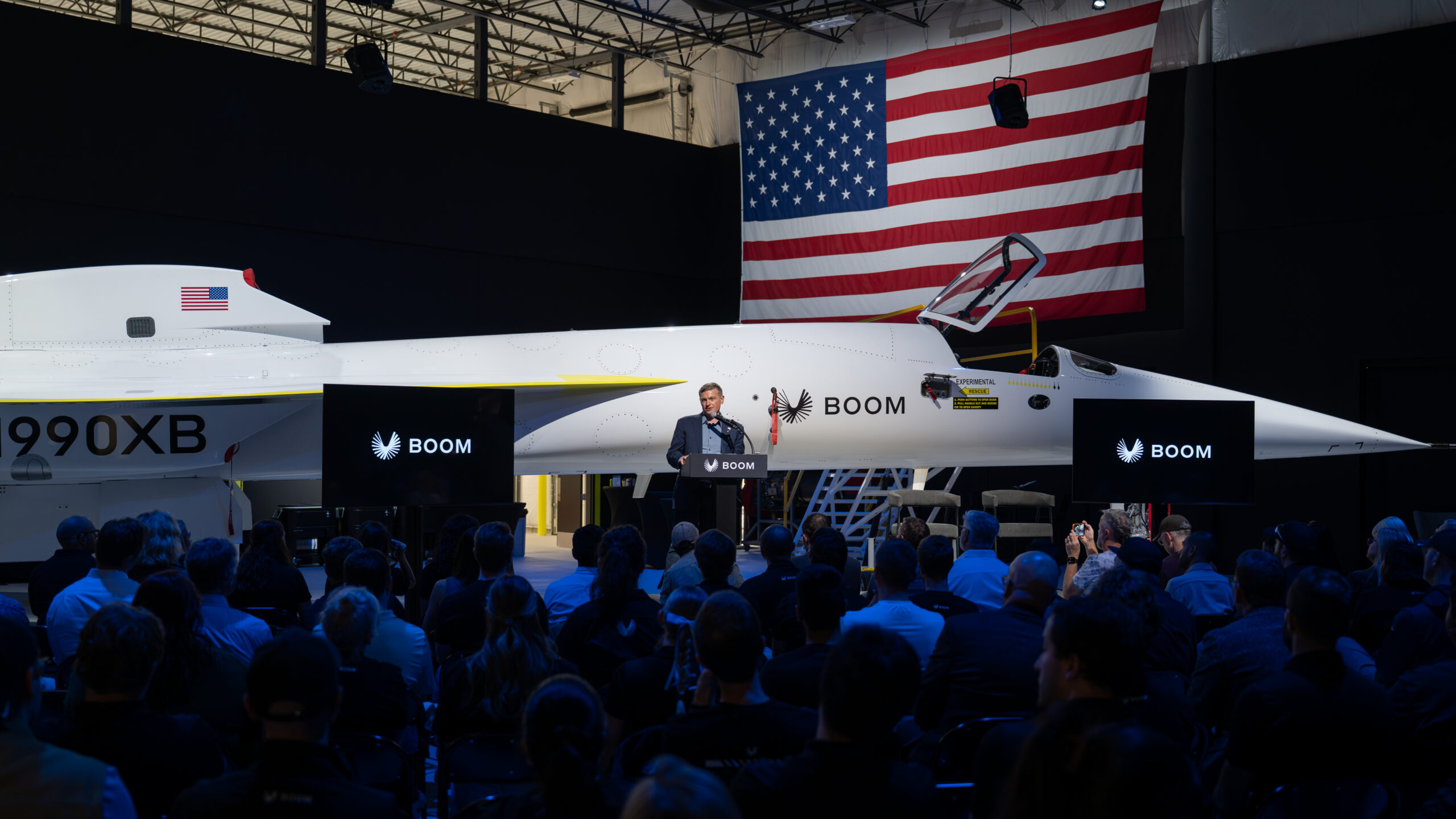
Boom Supersonic's supersonic airliner may be delayed, and its data center power business has lost a customer. CEO Blake Scholl recently declared "it's time for a renaissance in energy and in supersonic flight" as the company unveiled a Colorado factory dedicated to making gas turbines for AI data centers. But Boom may be facing turbulence, as early backers for both ventures have questioned its delivery timeline or backed out entirely.
One of the company's first customers, United Airlines CEO Scott Kirby, has expressed doubts about Boom's original plan to deliver the first Overture supersonic airliner in 2029. In an interview with the Office Hours: Business Edition podcast, Kirby said, "'29 is their official timeline. It's not going to happen in '29—it's going to take longer." He praised Scholl and the company but cautioned that Boom still has "a lot of hurdles to overcome" in developing Overture and securing FAA certification. Earlier, he had put the chances of Overture entering commercial service at "50-50."
Boom first drew attention by flying its XB-1 demonstrator in 2024 and 2025 to test a "boomless cruise" concept based on the Mach cutoff phenomenon. The company's plan has also won support from the Trump administration, which pushed to ease regulations. In June 2026, the Federal Aviation Administration proposed a rule overturning a long-standing ban on commercial supersonic flights over the United States. Boom has conditional agreements with American Airlines, Japan Airlines, and United Airlines, involving non-refundable deposits of unknown amounts.
Meanwhile, the Overture production facility in Greensboro, North Carolina, completed in 2024, has largely sat dormant. That has raised questions for state leaders who provided more than $50 million in taxpayer funding to build it. Boom's current focus has shifted toward natural gas turbines for AI data centers, with its prototype Sprint Core intended to power both those turbines and the Overture engine.
Source: Ars Technica · Summarized by HeadlinesBriefing