
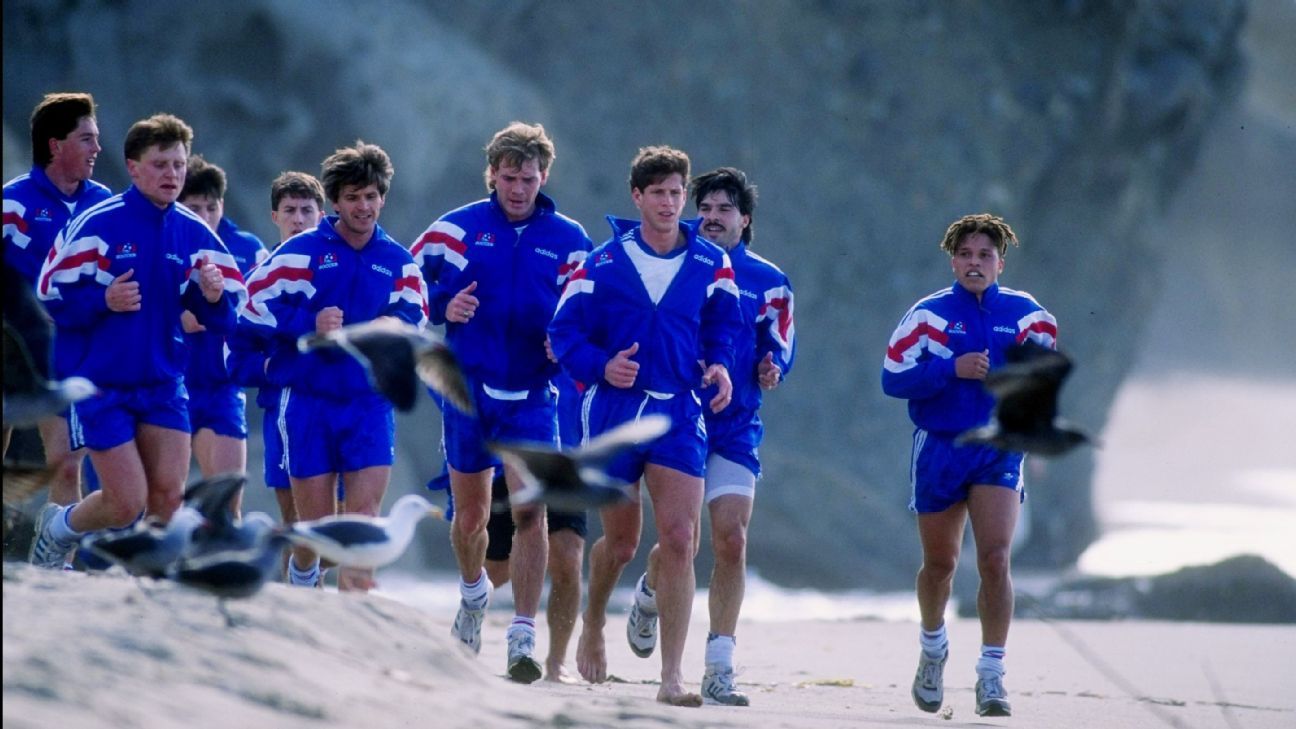
Bora Milutinovic's unorthodox coaching philosophy reshaped the USMNT's trajectory from a 1990 World Cup embarrassment to a 1994 contender. After a disastrous 1990 campaign with only one European league player, Rothenberg hired Milutinovic—a scrappy Serbian tactician known for his philosophical approach. His emphasis on relentless training and cultural immersion in Mission Viejo became the cornerstone of the team's revival. Players like Meola and Balboa adapted to his rigorous demands, blending European pros with American grit. This foundation allowed the USMNT to secure a 1-0 victory over Switzerland in 1994, a milestone that silenced critics and cemented their World Cup relevance.
The journey wasn't without friction. European-based stars struggled with Bora's 24/7 soccer ideology, which clashed with their club schedules. Meanwhile, American players like Agoos and Ramos embraced the grind, forging a cohesive unit. Infrastructure challenges in Mission Viejo—flooded fields, makeshift locker rooms—forced the team to build cohesion without modern comforts. Despite these hurdles, Milutinovic's focus on unity and tactical discipline proved decisive. His ability to calculate risks—like benching veterans for younger talent—allowed the team to evolve rapidly. By 1994, the USMNT had transformed from underdogs to a squad capable of challenging European giants.
The legacy of this era extends beyond 1994. Mission Viejo became a symbol of American soccer's rise, proving that strategic investment and cultural shifts could yield global competitiveness. While modern USMNT faces new challenges, the 1994 team's success highlights the power of visionary leadership. For fans, it remains a testament to how a cohesive identity—crafted through adversity—can redefine a nation's sporting ambitions.
Source: ESPN Soccer · Summarized by HeadlinesBriefing