
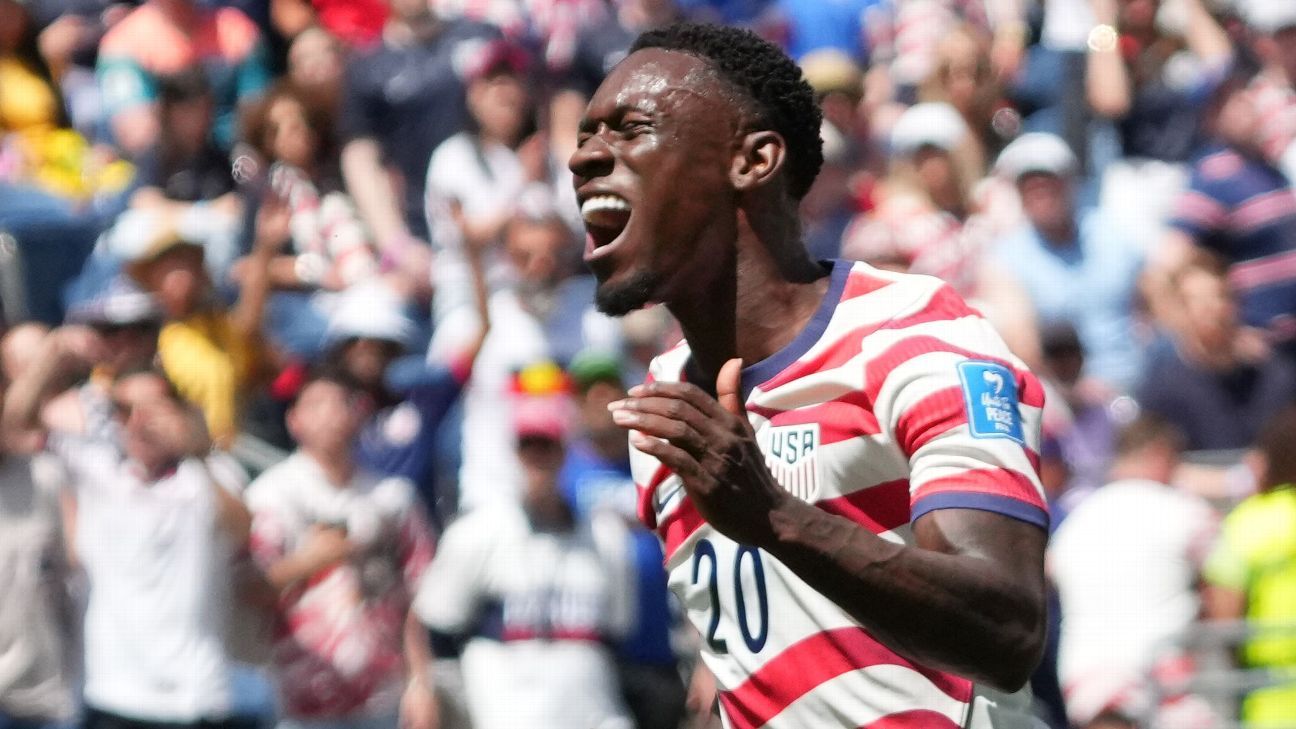
Folarin Balogun's two-goal opening against Paraguay set the tone for Nigerian heritage players at the 48-team World Cup. The USA star not only replicated Landon Donovan's record but also rewrote history with a single-game multi-goal tally since 1930. His combination of flair and clinical finishing—highlighted by a Precision Pass Award in both wins—cements his status as a tournament standout. Meanwhile, Michael Olise's clinical efficiency for France, including three assists and 100% shot accuracy, underscores the depth of Nigerian talent beyond national borders. These performances debunk the notion that Nigeria's absence from the World Cup diminishes its football legacy.
The 16 players of Nigerian descent have collectively shaped their teams' narratives through resilience and creativity. Manuel Akanji's 90% pass completion rate for Switzerland and his commanding presence in defense exemplify how heritage players can anchor squads. Canada's Promise David scored a crucial goal to improve their goal difference, while Germany's Felix Nmecha and Manuel Akanji delivered decisive moments in high-pressure matches. Their consistency across group stages—despite 16 teams being eliminated—highlights their individual grit. Notably, Balogun's record-breaking game and Olise's playmaking mastery resonate as defining contributions, blending technical skill with tactical awareness.
These players' impact extends beyond stats. Their presence in 10 African nations at the tournament reflects a broader shift in global football dynamics. For Nigeria, which missed qualification, this generation of athletes serves as a testament to the country's enduring talent pipeline. The absence of a national team doesn't erase the cultural footprint of these athletes, many of whom carry multiple generations of Nigerian heritage. With the knockout stage imminent, Balogun's record and Olise's form could define their legacies, but their current performances already rewrite the story of African representation in world football. The data suggests that heritage players are no longer peripheral but central to modern tournament success.
Source: ESPN Soccer · Summarized by HeadlinesBriefing