
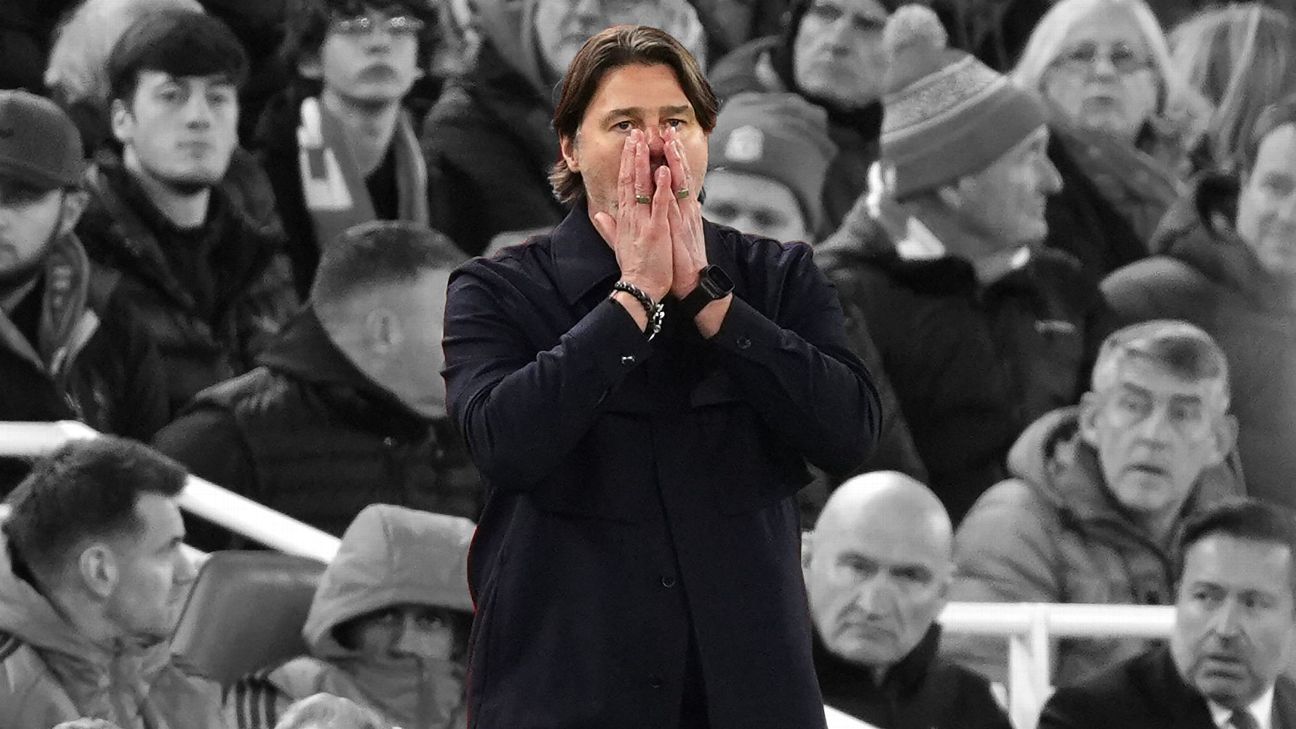
Manchester United's decision to hire former USMNT boss Mauricio Pochettino followed a simple logic: with the club second from bottom in the Premier League and facing the real threat of relegation, an experienced manager capable of restoring order and credibility was the only sensible appointment. Sunday's 4-0 defeat at Liverpool, after an early red card for young defender Leny Yoro, was a miserable start, but it revealed little about what lies ahead.
The appointment shows United have again placed themselves in the hands of a strong figurehead, echoing Louis van Gaal and José Mourinho in personality if not tactics. At Old Trafford it was seen as the best option given the extraordinary pressure when a club of United's size hits a crisis. Copying the model of Brighton & Hove Albion, Brentford and AFC Bournemouth ignores how pressure distorts decision-making: every poor run becomes a judgement on the whole project, breeding impatience and short-termism.
After more than a decade of restructuring attempts, the club find themselves in a familiar place despite spending €2.86 billion on new players since the Glazers' takeover in 2005, and fans are tiring of the cycle.
Much traces back to how United handled Sir Alex Ferguson's 2013 retirement. Ferguson's authority exceeded his job description after 26 years shaping the club alongside chief executive David Gill. Successor David Moyes inherited the same powers but lacked the experience, influence and relationships. Ed Woodward, who replaced Gill, told the United We Stand fanzine: "We don't have a director of football because we back the manager." Without an independent sporting director, the squad drifted out of tune with successive managers' styles.
Source: ESPN Soccer · Summarized by HeadlinesBriefing