
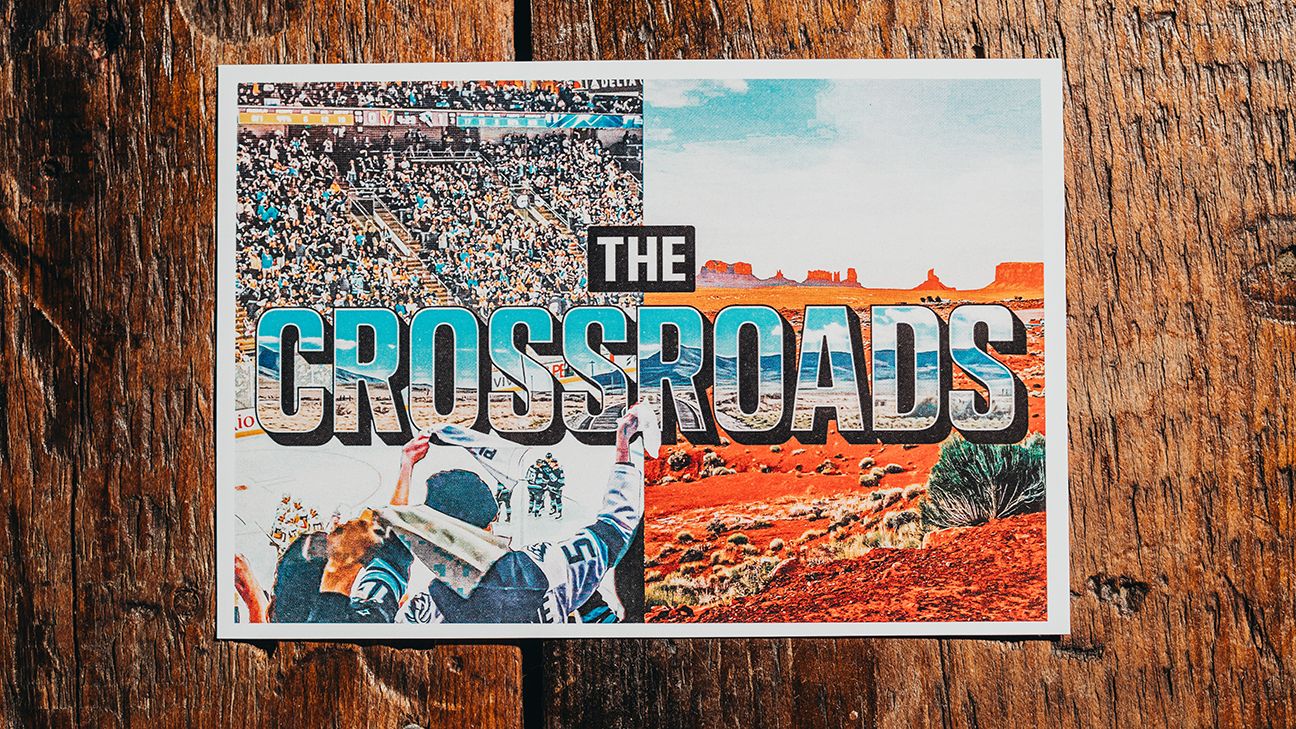
In 1869, railroad barons Charles Crocker and Thomas Durant made a $10,000 bet about track-laying speed. At Promontory Summit, Central Pacific crews laid 10 miles and 56 feet of rail in a single day, connecting the nation ocean to ocean. Chinese laborers did the work while dignitaries took credit for the golden spike ceremony.
Five miles north of Preston, Idaho, the Bear River Massacre site marks where Col. Patrick Edward Connor's soldiers killed at least 250 Shoshone people in 1863. Today, Northwestern Band vice chairman Brad Parry leads restoration efforts, removing invasive Russian olive trees that steal water from the land. Aidan Klopfenstein, a Navajo worker hired through an environmental firm, helps plant native cottonwoods and willows.
At Delta Center in Salt Lake City, the Utah Mammoth's first home playoff game featured Dylan Guenther scoring on Vegas Golden Knights goalie Carter Hart. The arena hit 111 decibels of crowd noise. After two decades covering sports, I had doubted whether games still unite us or just numb our isolation.
Standing where transcontinental rails met, where massacres occurred, and where fans still roar for their team, the connections feel genuine. The money men wrote history, but the laborers built it. Sports still matter because they anchor us to place and purpose, even when that place holds both triumph and tragedy.
Source: ESPN General · Summarized by HeadlinesBriefing