
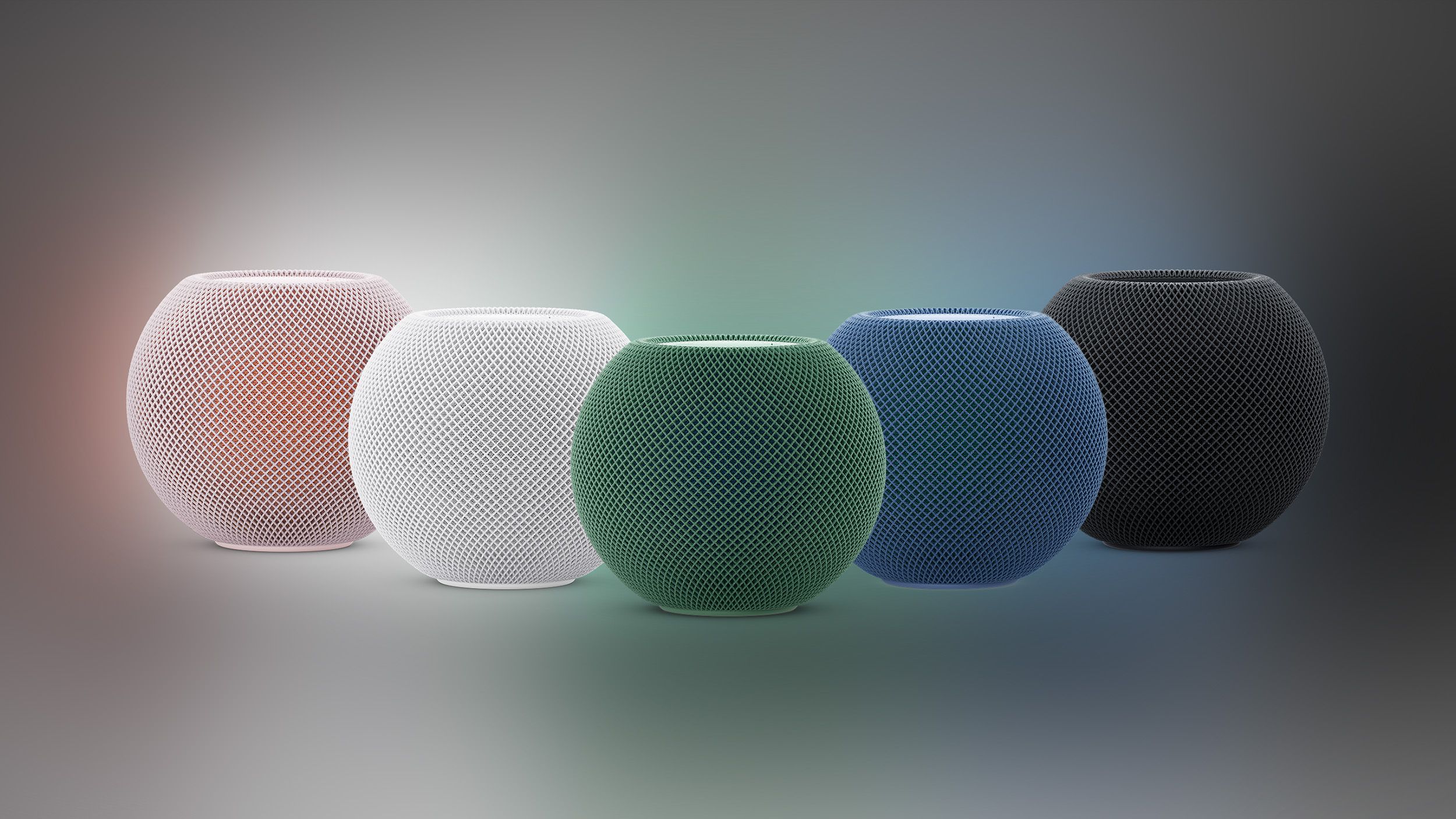
Apple yesterday announced the HomePod mini 2, introducing the compact smart speaker's first major hardware update in six years.
The new model retains the original's spherical design, but adds an S10 chip, faster wireless connectivity, Sound Glow lighting, new Mac and home theater capabilities, and support for Siri AI in a future software update.
The HomePod mini 2 costs $149 in the United States, $20 more than its predecessor's last Apple price of $129. While the original launched for $99 in 2020, Apple raised its price in June 2026. With many core features carried over, is the new model worth upgrading to, and should you consider a discounted original instead?
Both generations feature a full-range driver, two passive radiators, and an acoustic waveguide for 360-degree sound. They also share temperature and humidity sensors, Thread networking, Ultra Wideband proximity features, AirPlay multiroom audio, stereo pairing, Intercom, smart home control, and Sound Recognition. Their dimensions remain identical at 3.3 inches tall and 3.9 inches wide, and both include a 20W power adapter.
Here are the differences between the original HomePod mini and HomePod mini 2:HomePod mini (2020)HomePod mini 2 (2026)Backlit touch surface with status and Siri lightingBacklit touch surface with Sound Glow animations that respond to music, album artwork, and soundscapesS5 chip (from 2019's Apple Watch Series 5, made with TSMC's N7 7nm process, based on Apple's A12 Bionic chip from iPhone XS)S10 chip (from 2024's Apple Watch Series 10, made with TSMC's N4 4nm process, based on Apple's A16 Bionic chip from iPhone 14 Pro)Computational audioEnhanced computational audioFour-microphone designThree-microphone designSiriSiri AI supportWi-Fi 4 (802.11n)Wi-Fi 6E (802.11ax)Bluetooth 5.0Bluetooth 6Mac audio playback via AirPlayCan serve as the default speaker for Macs with Wi-Fi 6E or later, individually or in a stereo pairFour-speaker surround sound with Apple TV 4K (4th generation), including automatic calibration of audio timing and levelsWeighs 0.76 pound (345 grams)Weighs 0.74 pound (335 grams)White, midnight, blue, yellow, and orange; previously available in space grayWhite, midnight, blue, pink, and green89% fiber-based packaging100% fiber-based packagingIntroduced in October 2020Introduced in October 2026Discontinued (initially priced at $99, later raised to $129)$149### Is It Worth Upgrading From HomePod Mini to HomePod Mini 2?
For most existing HomePod mini owners, there is no general-purpose reason to replace a working original HomePod mini immediately. The original retains the main features needed for voice commands, music playback, timers, Intercom, and smart home automations. Sound Glow and the new finishes may appeal to enthusiasts, but they are very small reasons to replace speakers throughout a home.
For buyers primarily interested in sound quality, Apple's specifications provide limited grounds for judging the size of the improvement. The basic driver arrangement remains the same, and the original already used computational audio to tune playback in real time. Apple has not quantified the acoustic gains from the S10 chip.
The clearest upgrade case is using the HomePod mini 2 as a default Mac speaker. If your Mac supports Wi-Fi 6E or later and you want HomePod speakers for games, calls, and everyday computer audio, the new model offers a capability the original's AirPlay connection does not provide.
The four-speaker surround sound system is another notable reason to choose the newer generation. It requires the fourth-generation Apple TV 4K and matching front and rear speaker pairs running the latest software. You can use four HomePod mini 2 speakers, or combine a pair with a pair of full-sized second-generation HomePods. Original HomePod minis are excluded, and the required Apple TV 4K launches on November 13.
Siri AI is perhaps the most consequential improvement, offering more natural conversations, broader general knowledge, improved music discovery, and the ability to act on personal context across supported apps. However, it will not be available at launch, and Apple has not yet announced a release date for the feature.
Apple's requirements specify that the owner of the home in the Home app must have an Apple Intelligence-enabled iPhone or iPad with Siri AI enabled. Personal context requests require the individual user's compatible paired device, although other household members can use conversational and general knowledge features once Siri AI is enabled. Initial availability is planned in English in the United States, Australia, Canada, India, New Zealand, Singapore, South Africa, and the United Kingdom.### Should You Buy HomePod Mini or HomePod Mini 2?
The HomePod mini 2 should be the default choice for most new buyers when the price difference is small. If remaining original stock costs $129, paying another $20 provides the new Mac and surround sound capabilities, faster connectivity, Sound Glow, and eligibility for the forthcoming Siri AI update.
A substantially discounted original HomePod mini remains worth considering for straightforward music playback or adding smart home control to another room. Its value is strongest when you will use the shared features and have little interest in the new features.
Buying another original also makes sense if you already own one and want to create a stereo pair. Apple requires matching models for stereo pairing, so an original HomePod mini and a HomePod mini 2 cannot form a stereo pair.
HomePod mini 2 pre-orders are now open, with availability beginning October 30.Related Roundup: HomePod mini 2Buyer's Guide: HomePod Mini (Buy Now)Related Forum: HomePod, HomeView, CarPlay – Home & Auto Tech
This article, "HomePod Mini vs. HomePod Mini 2 Buyer's Guide: All Differences Compared" first appeared on MacRumors.com
Discuss this article in our forums
Source: MacRumors · Summarized by HeadlinesBriefing