
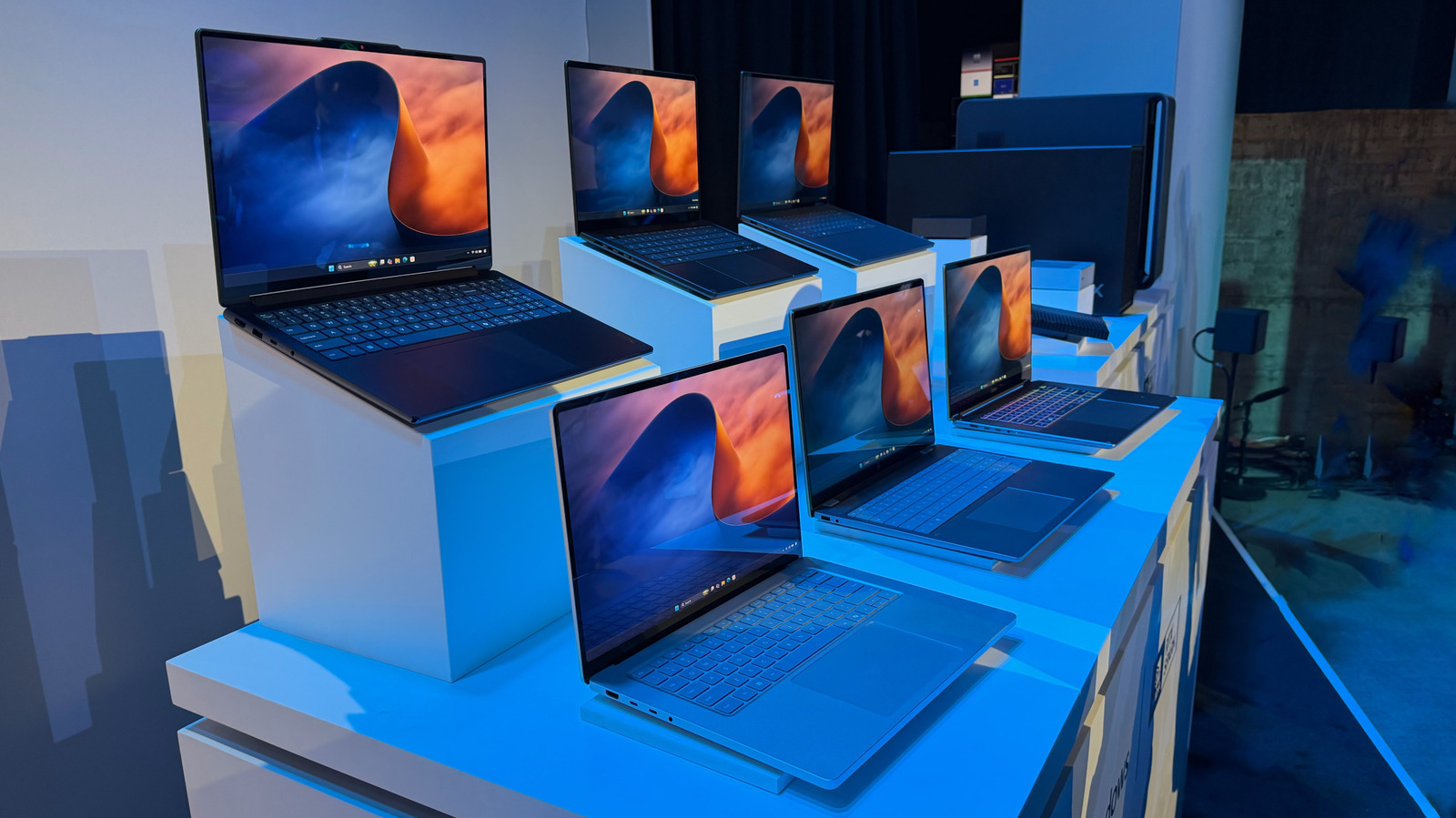
Windows PCs may finally be catching up to Apple Silicon. Engadget's Devindra Hardawar spent two days with Microsoft and NVIDIA's RTX Spark, a new system-on-a-chip powering the Surface Laptop Ultra and several other Windows PCs this fall. It is the first time powerful Arm CPUs have been combined with NVIDIA's Blackwell GPU technology and up to 128GB of ultra-fast unified memory on a single chip.
In theory, RTX Spark should enable thin yet powerful laptops, and a few small desktops, that can handle AI tasks locally while also tackling content creation and gaming. The chip is clearly a response to Apple Silicon, which brought similar changes to Macs six years ago, combining an Arm CPU, a capable GPU and fast unified memory across Apple's lineup. With RTX Spark, high-end Windows users finally get the efficiency benefits of Arm-based design, while recent Qualcomm chips cover the low end and mid-range.
The chip packs up to 20 NVIDIA Grace Arm CPU cores, a Blackwell GPU with up to 6,144 CUDA cores, and up to 128GB of LPDDR5x memory. NVIDIA claims it is twice as efficient as a laptop with an Intel Core Ultra 9 285H and RTX 5070 while gaming at 60 watts. That efficiency matters most for people doing serious creative work on the go, since NVIDIA says the chip performs as fast on battery as it does plugged in. Engadget noted no performance drop while playing Gears of War: E-Day on battery.
The large memory pool should also appeal to AI developers and researchers who want to run big models locally, such as a 125B parameter model, potentially reducing spending on cloud AI tokens. Both companies want buyers to see RTX Spark laptops as a place to run AI models and agents, and even if that future does not fully arrive, the chip could still shift the PC market.
Source: Engadget · Summarized by HeadlinesBriefing