
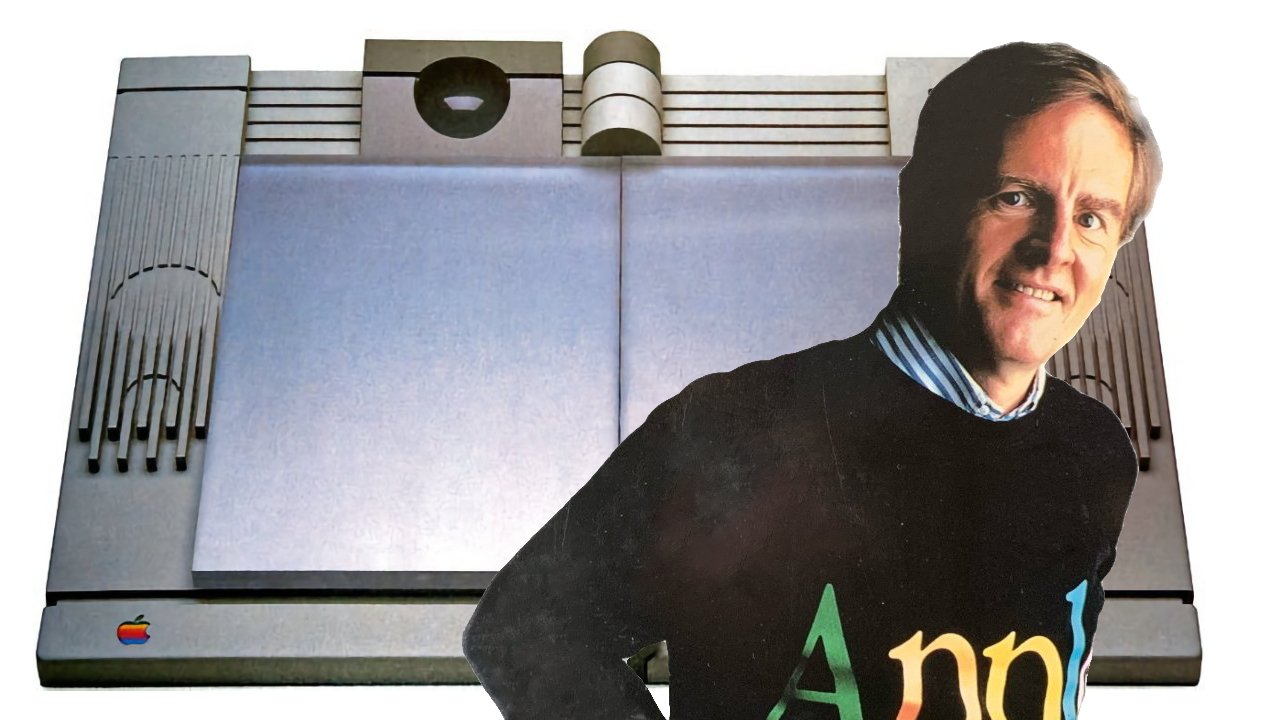
After Steve Jobs and Tim Cook, the best known head of Apple was John Sculley. AppleInsider looks at Sculley's tenure with the company, and how history has treated the man since.
Next time you're asked to become CEO of a major company, make sure you negotiate your exit fee before you sign the contract. Until you sign and start the job, the company wants you and might give you practically anything. That's surely what John Sculley did very well. When he resigned from Apple on October 15, 1993, he left with the equivalent in 2026's money of $23 million. That included severance pay, a one-year consulting fee and Apple's commitment to buy Sculley's mansion — and his private Lear jet.
Sculley is most famous for firing Steve Jobs, or so it appeared, and in 2009 CNBC described him as the 14th worst American CEO of all time. Large payouts are hardly uncommon for CEOs, and nobody should criticise whatever Tim Cook's retirement package is after he grew Apple into a $3 trillion company. But Sculley did not leave on anything approaching that kind of high. He resigned because of what happened the day before, when Apple announced its quarterly results. The firm made a profit and even increased its sales, but just barely enough to beat analysts' gloomy predictions. The reality was still dire: fourth-quarter earnings in 1993 were down 97 percent from the same time in 1992.
Apple's net income was $2.7 million in that 1993 quarter, compared with $97.6 million the year before. In 2026 money, those figures equal $6.3 million and $227 million. CNBC reports that in 1987 Sculley was the highest-paid executive in Silicon Valley, earning $2.2 million annually, a figure that was hard to justify at a company doing so badly.
Yet it all seemed very different just ten years earlier, when Sculley was president of Pepsi. Jobs famously asked him whether he wanted to sell sugar water for the rest of his life or come with him and change the world. Sculley had earlier become known in the retail industry for commissioning the research behind the Pepsi Challenge ad campaign.
Source: AppleInsider · Summarized by HeadlinesBriefing