
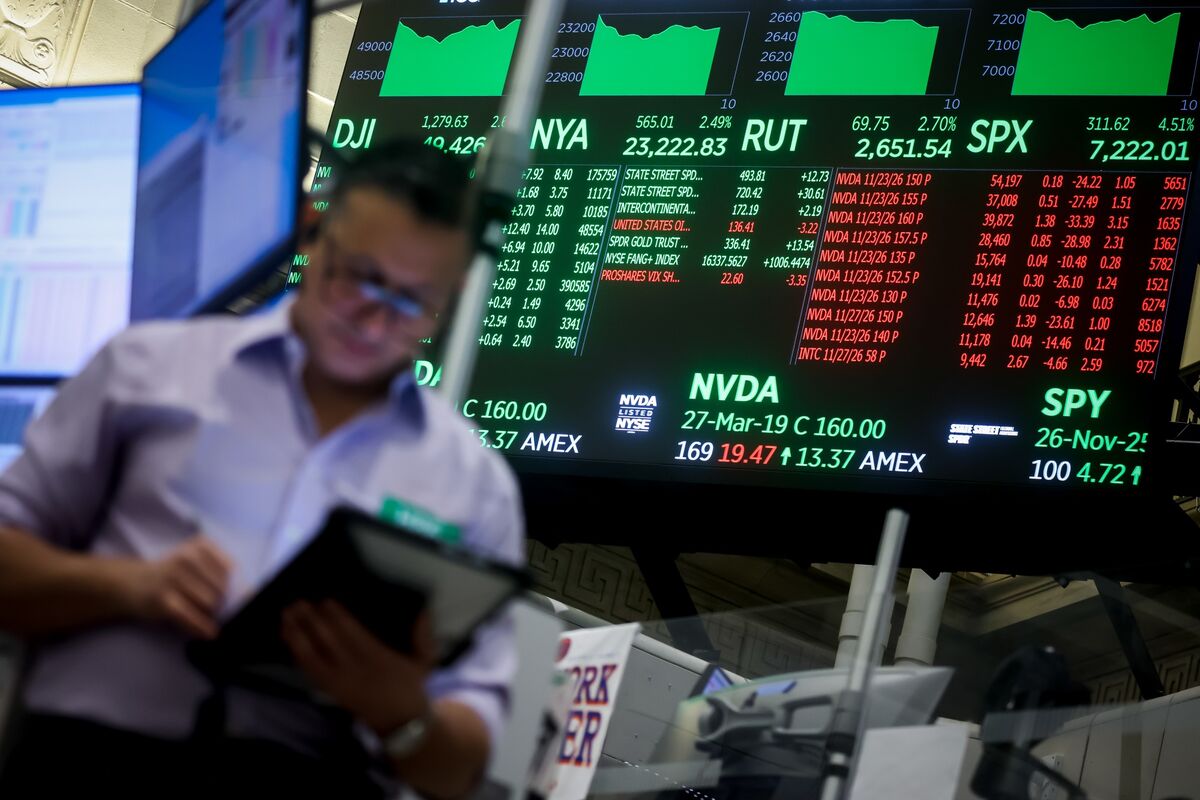
The message from Washington this week was unmistakable: America must do whatever it takes to win the artificial-intelligence race with China, and the government is prepared to intervene to make it happen. A jittery Wall Street has cheered the message, yet wild swings in financial markets show the limits of investor conviction. President Donald Trump's intervention to bring Jensen Huang back to Nvidia Corp. restored to the helm one of the biggest AI evangelists and one of the chief financiers of its expansion. Technology stocks soared, sank and rallied again, with a 1.6% jump in the S&P 500 Friday capping a week of gains across risk assets.
"There was a tacit admission – or maybe not even so tacit – that Nvidia's too big to fail, Jensen is too big to fail, and if you're well enough connected with the powers that be, you'll get bailed out to some extent," said Steve Sosnick, chief strategist at Interactive Brokers. The euphoria over Huang's return had barely lasted a day before stocks started sliding again, while fresh tariff threats from the Trump administration added to market swings. An average of 21 billion shares changed hands daily in the first three sessions, the busiest start to Thanksgiving week in Bloomberg data going back to 2008.
The Nasdaq 100 Index had alternated between weekly gains and losses of more than 3% for four straight weeks, something not seen since July 2022. Through Wednesday's close, a gauge of expected volatility in the Nasdaq 100 had averaged 33 in November, putting it on course for its highest monthly reading since April 2022. At the heart of the whiplash is a question even the full political weight of the US government cannot answer: who will emerge as the winners and losers from one of the biggest investment booms in history.
Investors are becoming more selective. At RWA Wealth Partners, Chief Investment Officer JP Powers said investors are shying away from specialized cloud-computing providers and diversifying into health care and consumer staples. Meanwhile, the economy remains strong: gross domestic product expanded at a 4.3% annualized pace in the third quarter. Traders are all-in betting on an interest-rate increase from the Federal Reserve next month, further complicating the outlook.
Source: Bloomberg Markets · Summarized by HeadlinesBriefing