
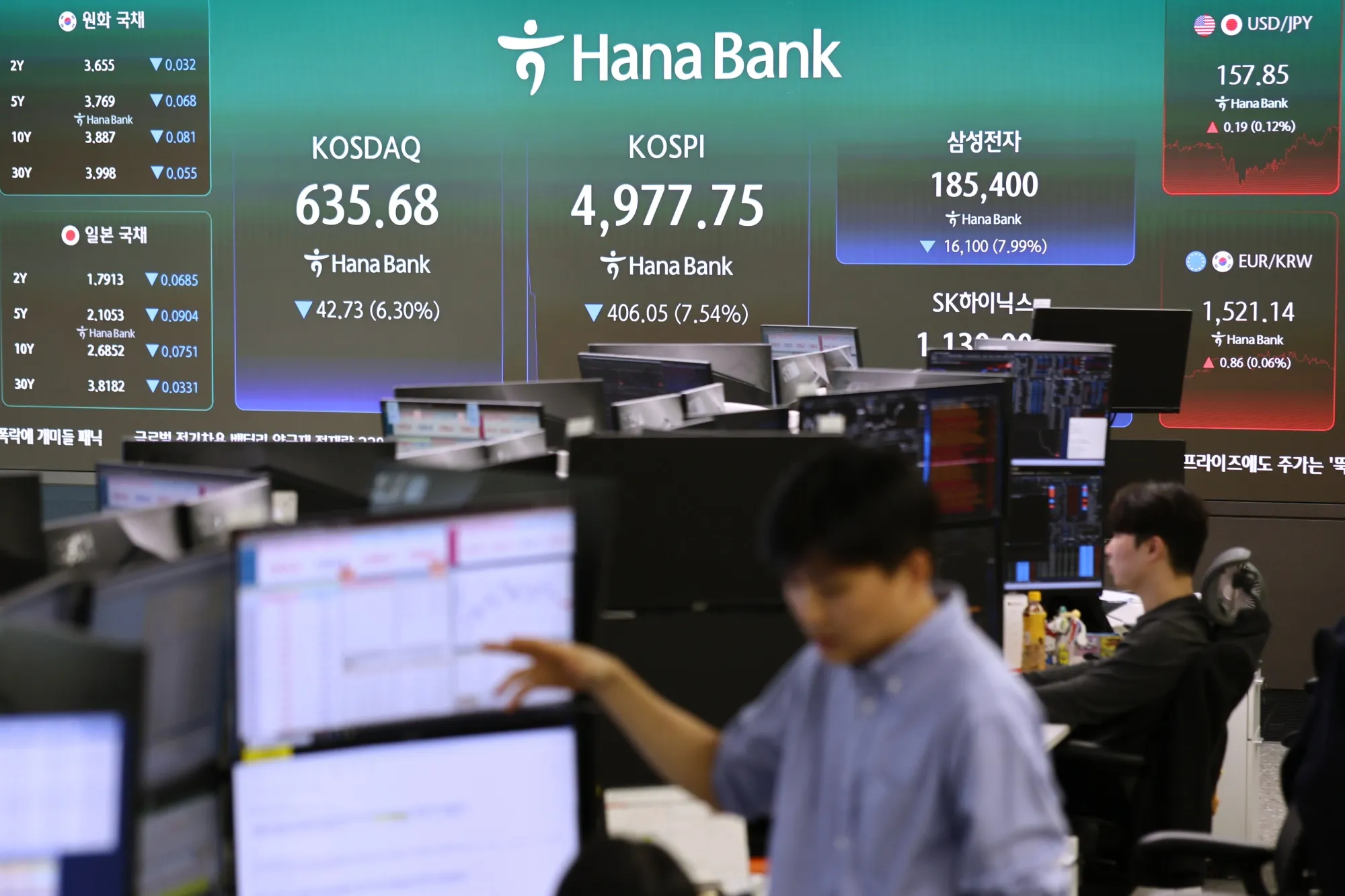
With the Iran war roiling oil markets, concerns about AI spending rattling technology stocks and uncertainty over the global economic outlook, there is no shortage of turbulence in global markets. When markets move sharply, investors often reach for unfamiliar, technical language to describe what is happening. Here is a glossary of some of the terms you may be hearing and what they actually mean.
A bear market is traditionally defined as a 20% drop in a stock index and signals a crisis of confidence among investors. Some experts have argued for more useful definitions. Ritholtz Wealth Management Chairman Barry Ritholtz has floated the idea of a "secular bear market," marked by "increased volatility, frequent cyclical rallies and retreats in an economically challenging environment." A black swan is a rare, surprising and unpredictable event with an outsized or catastrophic impact on the world, such as a pandemic. The term was coined by Nassim Nicholas Taleb in his 2007 book The Black Swan.
A market correction is typically defined as a short-term decline of more than 10% in the value of an index or security from its most recent high. A crash is a rapid, double-digit percentage drop in stock prices that hammers asset values and may trigger a prolonged bear market. Crashes are typically caused when investors panic, such as during Black Monday in 1987 or the 2008 financial crisis, which is why stock exchanges impose circuit breakers to avoid a spiral.
Safe haven assets are viewed as immune to stock market volatility, and traders tend to flock to them when sentiment turns sour. Gold is traditionally seen as a safe haven, as are certain government bonds. Margin trading, meanwhile, involves buying shares with borrowed money, and a broker may issue a margin call if collateral falls below a required level. Short sellers borrow shares and sell them, profiting only if the price falls. The VIX, or Volatility Index, known as the "Fear Index," estimates expected volatility of the US stock market over a 30-day period using real-time price data from the S&P 500.
Source: Bloomberg Markets · Summarized by HeadlinesBriefing