
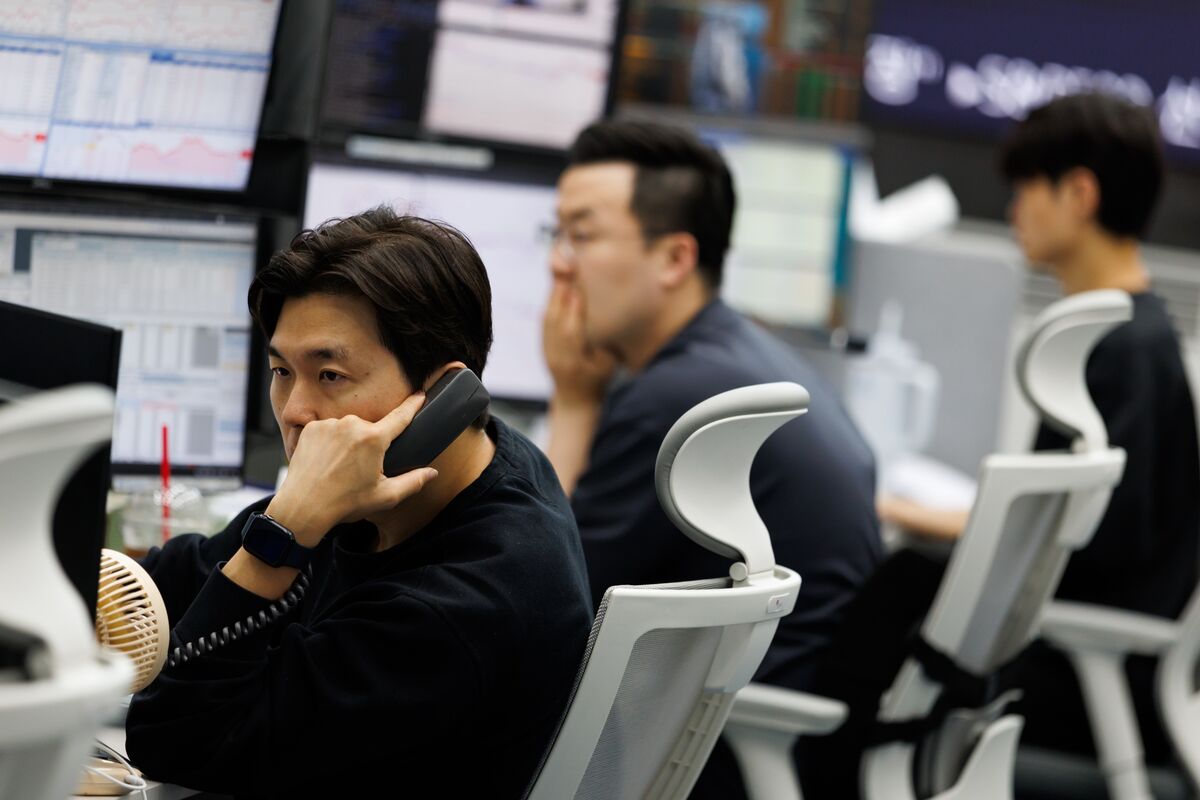
Shares of South Korean chipmakers plunged on concern that a strong showing by Democrats in the US midterms could bring greater scrutiny of the artificial intelligence industry. The Kospi Index slumped as much as 4% as US election results began to trickle in, marking a sharp turnaround from an early gain of as much as 3.2%. Shares of Samsung Electronics Co. and SK Hynix Inc. were down at least 4.5% each, making them the biggest drags on Korea's benchmark.
Democrats swiftly won control of the US House and picked up six key Senate seats in Tuesday's midterms. Their electoral gains are raising concern among investors that tighter scrutiny of the technology and AI sectors could slow the expansion of US data centers. That would cloud the demand outlook for chipmakers and other hardware suppliers in South Korea, Taiwan and Japan, key players in the American AI buildout. The Kospi, once the poster child of Asia's AI trade, was among the top losers in regional markets on Wednesday. Japan's Nikkei 225 was down 4.5%, while Taiwan's stock benchmark lost about 3%.
Huh Jae-Hwan, an analyst at Eugene Investment & Securities, said the races in Ohio and Texas were particularly significant given the states' growing importance as hubs for AI data-center investment. "If there are new regulations in Texas, AI infrastructure will be first to be hurt, and such a worry is getting played out in the stock market," he said. In the Senate race, James Talarico of Texas was projected to defeat Republican Ken Paxton, while former Senator Sherrod Brown beat Republican Senator Jon Husted in Ohio, CNN projected.
Dilin Wu, a strategist at Pepperstone Group Ltd., said South Korea and Japan are particularly sensitive to changes in AI sentiment given how closely their markets are tied to the global semiconductor industry. She noted that companies like Samsung and SK Hynix already have multi-year supply agreements, providing some visibility on near-term demand. "Looking further ahead, the real question is whether AI spending can keep growing at this pace, especially with policy uncertainty, financing costs and power constraints potentially making future projects more difficult."
Source: Bloomberg Markets · Summarized by HeadlinesBriefing