
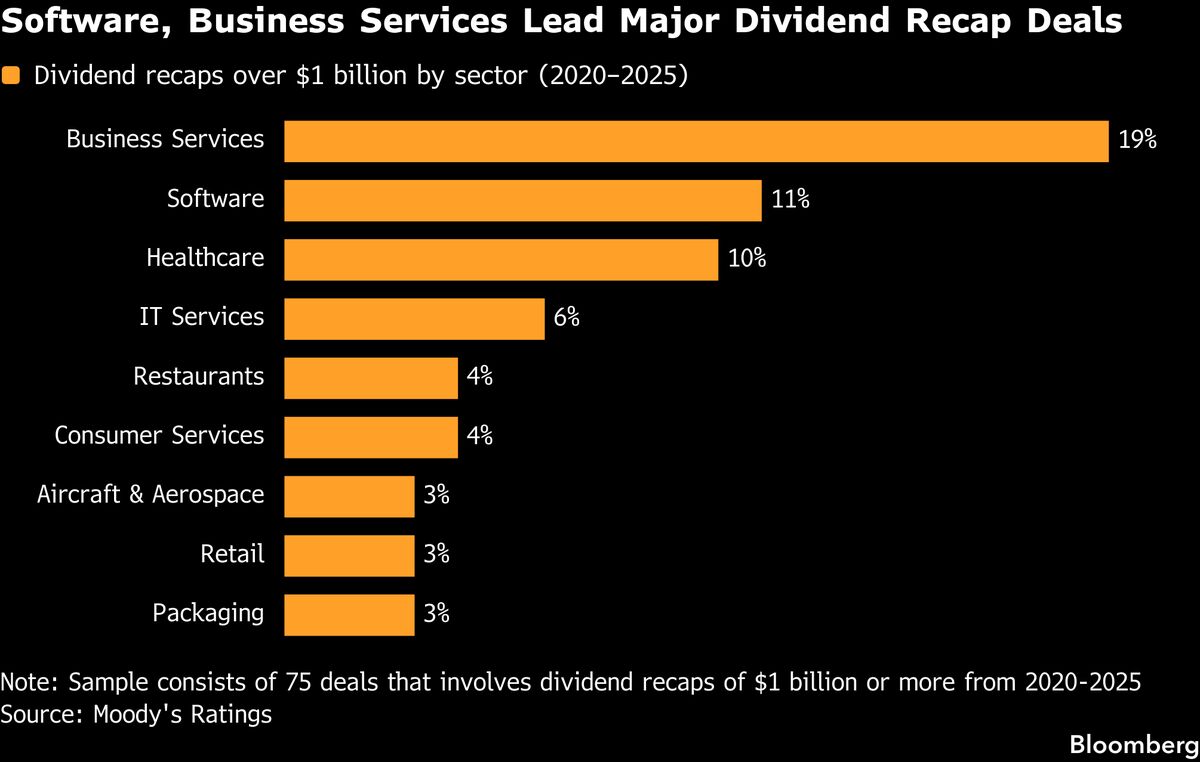
Private equity firms borrowed $94 billion in 2025 through leveraged loans and high-yield bonds to finance shareholder payouts, according to Moody's, significantly increasing the debt burden on their portfolio companies. This trend, which doubled the 2024 figure, reflects a strategy of using corporate borrowing to distribute profits to investors rather than reinvesting in operations. Moody's analysis warns this approach elevates default risks for businesses already facing high leverage, potentially destabilizing the private equity sector's asset-light model. The surge in debt raises questions about long-term sustainability as interest rates remain elevated, forcing companies to prioritize debt servicing over growth initiatives.
The $94 billion figure represents a substantial increase from 2024's levels, signaling a shift in capital allocation strategies within private equity. Firms are increasingly leveraging their portfolio companies' balance sheets to generate returns for limited partners, often at the expense of operational flexibility. This approach, while boosting short-term investor returns, creates a fragile financial structure where earnings must consistently cover interest payments and principal repayments. The Moody's report underscores a critical risk: as debt servicing costs rise, companies may be forced to cut dividends or face credit downgrades, potentially triggering a chain reaction of defaults across the sector.
Moody's cautions that the escalating debt levels could constrain private equity firms' ability to manage economic downturns effectively. With interest rates projected to remain elevated through 2026, portfolio companies may struggle to generate sufficient cash flow to meet obligations, increasing the likelihood of distressed asset sales or forced liquidations. This development highlights a fundamental tension within private equity: maximizing near-term returns versus ensuring long-term portfolio resilience. Investors should monitor these debt trajectories closely as they directly impact the stability of private equity-backed businesses and the broader credit markets.
Source: Bloomberg Markets · Summarized by HeadlinesBriefing