
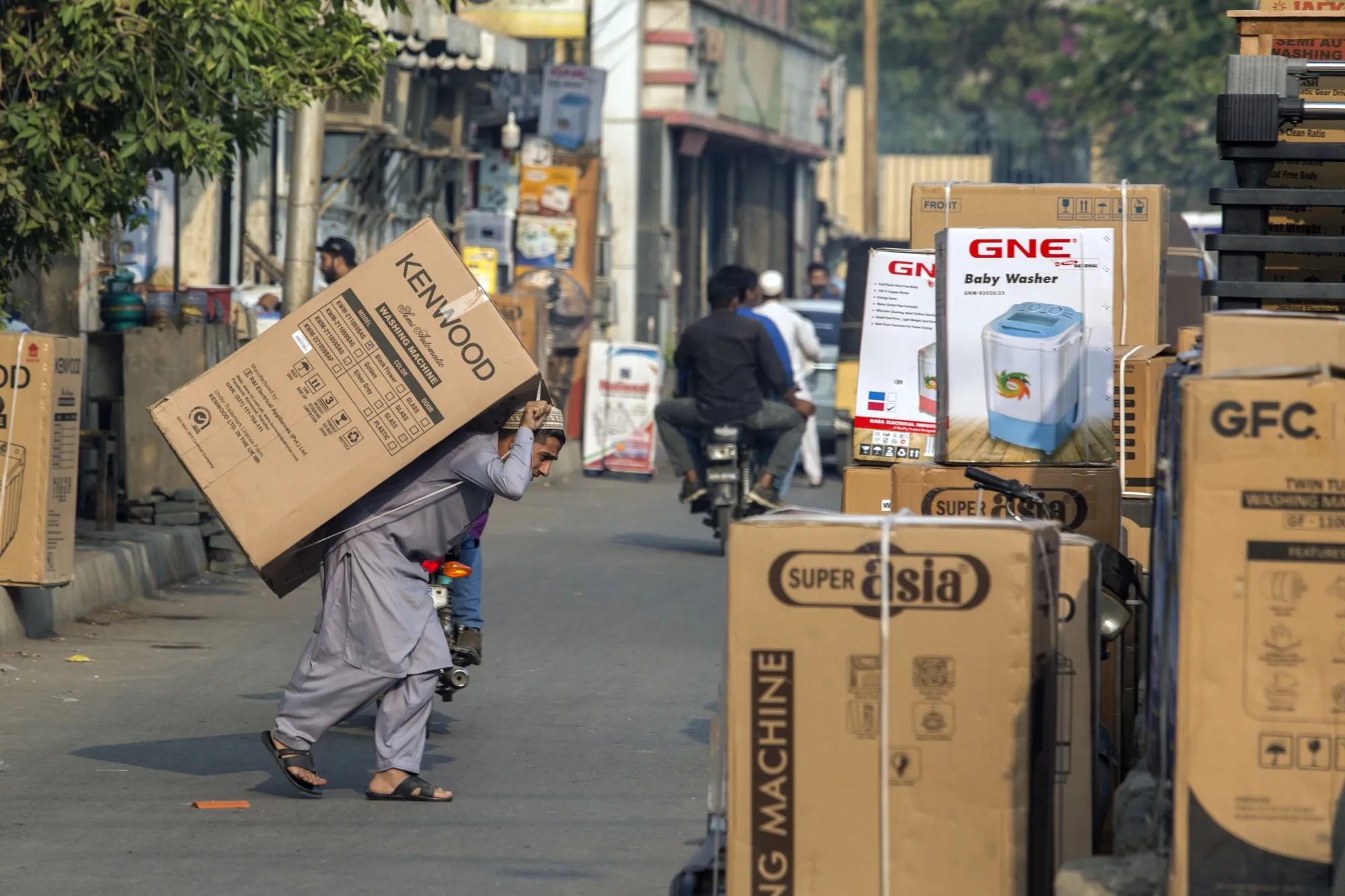
Pakistan’s economy grew less than expected in the last quarter of the financial year to June, signaling a loss of momentum in the recovery as the conflict in the Middle East poses fresh risks to the outlook. Gross domestic product rose 2% in the three months ended June, data released by Pakistan Bureau of Statistics showed Monday. That compares with a 3.5% expansion forecast by economists in a Bloomberg survey and 4.42% growth in the January-March period.
Pakistan has made progress in stabilizing its economy after years of financial turmoil, helped by loans from the International Monetary Fund, and a series of sovereign credit-rating upgrades that have improved investor confidence. However, the conflict in the Middle East now threatens to test that recovery as higher energy costs fuel inflation and put pressure on the nation’s external finances. Muhammad Awais Ashraf, a research director at AKD Securities Ltd., said from Karachi that geopolitical uncertainty and volatile fuel prices have affected growth, especially in the industrial sector.
Despite those risks, Pakistan enters the latest period of uncertainty with stronger financial buffers. Foreign-exchange reserves have climbed to $21.4 billion, while the government raised a record $3 billion from a sale of high-yield bonds. Moody’s Ratings upgraded Pakistan in October, citing a stronger external position, improved fiscal metrics and lower domestic financing costs.
Source: Bloomberg Markets · Summarized by HeadlinesBriefing