
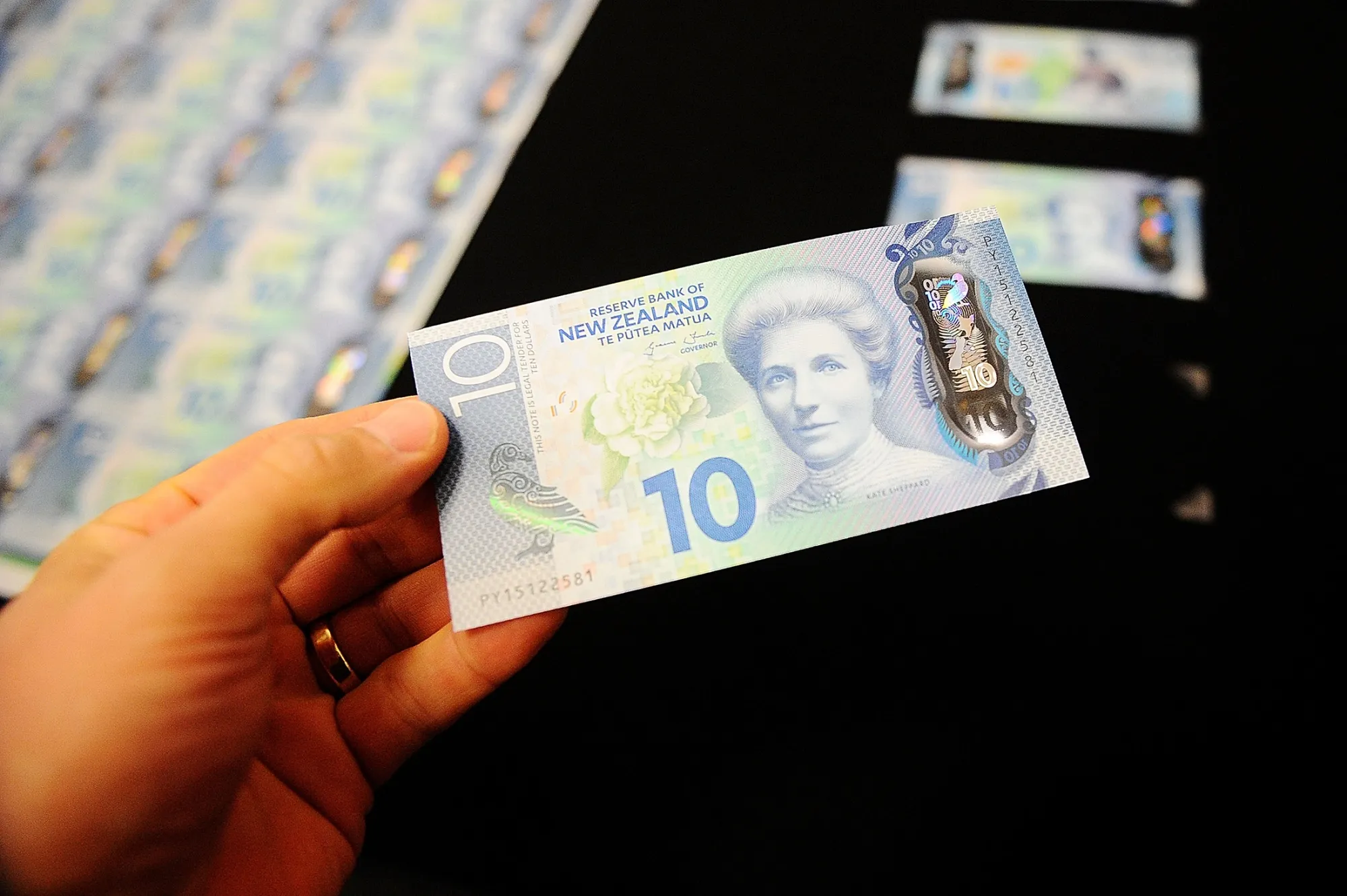
New Zealand’s weakening currency is compounding cost-of-living pressures, turning voters away from the country’s main political parties ahead of next week’s election. The kiwi sank to a record low against the Chinese offshore yuan and its weakest level against the Australian dollar in almost 14 years — the currencies of the nation’s two biggest trading partners. A weaker currency is driving up the cost of imported goods. The slide has become a talking point among economists and investors concerned about its impact on inflation and household purchasing power ahead of a Nov. 7 election. Opinion polls signal the election is too close to call with Prime Minister Christopher Luxon’s center-right National Party and the center-left Labour Party, led by Chris Hipkins, each polling at around 30% of the votes. With the two major parties offering no specific measures to address the currency slump, investors expect the kiwi to remain weak.
“The cost of living crisis is hitting everyone globally, and that’s only just amplified if your currency is weakening,” said Alex Moloney, a portfolio manager at Insight Investment in London. “If that gets more people out to vote, the better, but there needs to be something done on it. What we’ll see, and some of the policies we’ve been looking through, there’s nothing that I really think will structurally turn the Kiwi.”
The New Zealand dollar has lost about 11% since the end of Covid pandemic, making it the worst-performing Group-of-10 currency after the Japanese yen, weighed down by a sluggish economy and a weak job market. The kiwi has fallen about 0.5% on average in the month following the past six national elections, according to data compiled by Bloomberg. The kiwi rose 0.3% on Thursday, in line with gains in most developed-market currencies against a slumping dollar. The weaker currency has partly fueled the cost-of-living crisis that’s caused voters to turn against the major parties over successive elections. National and Labour’s combined support has fallen to around 59% in the most-recent opinion poll, down from about 81% at the 2017 election. New Zealand economy is “quite highly leveraged” to the currency because it raises import costs while higher export prices, including for food, can also push up domestic prices, said Stephen Toplis, head of research at Bank of New Zealand. He estimates a 1% drop in the kiwi adds about 0.1 percentage point to annual inflation.
Minor parties, which may determine who eventually forms the government, have sought to capitalize on voter discontent, with some promising to break up the two main supermarket operators and power companies to boost competition and ease the cost of living. Meanwhile, David Seymour, deputy prime minister and leader of the ACT Party, is urging voters to support his party to save the kiwi. He views the currency as a gauge of confidence in New Zealand, and has advocated balancing the budget without new taxes and reducing government spending to create a more predictable environment for investors.
“Balance the books. Don’t raise new taxes. Don’t legislate or regulate away people’s rights. Create the fiscal and regulatory environment where investors face commercial risk, but not political uncertainty,” Seymour said in a speech last month. “Those are the bare minimum to restore confidence in this country and its dollar, so life can be affordable again.”
The central bank’s unexpected split vote last week to hold interest rate has further clouded the outlook for the kiwi. The pause signaled how policymakers remain cautious over how aggressively they should battle the above-target inflation, particularly as the economic recovery remains fragile amid elevated energy prices. To be sure, as an open economy, New Zealand’s currency is vulnerable to swings in global markets and politicians can do little to influence its direction.
Source: Bloomberg Markets · Summarized by HeadlinesBriefing