
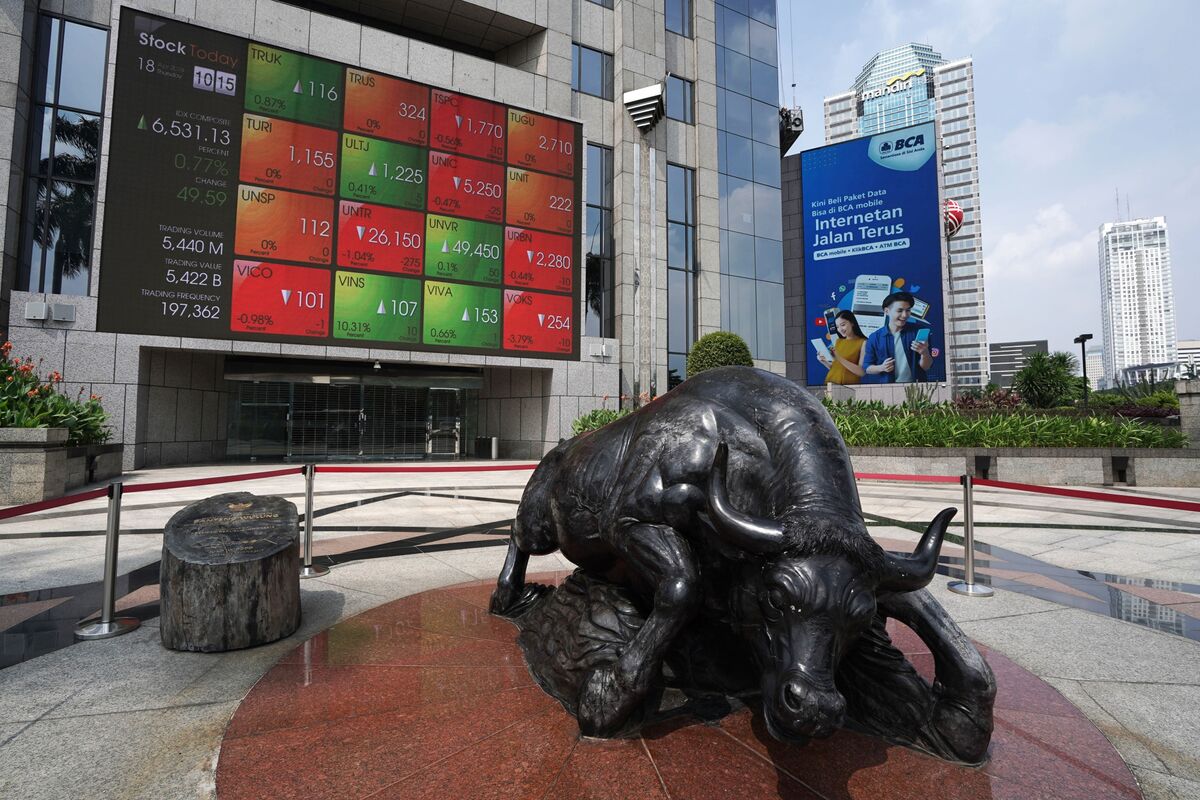
Indonesia stocks rebounded from their worst rout in nearly four decades after authorities unveiled fresh measures aimed at averting a potential two-step downgrade by MSCI Inc. The benchmark Jakarta Composite Index rose as much as 3.2%, clawing back some of a roughly 15% two-day plunge that was its steepest since 1989 and cemented the country’s position as the world’s worst-performing stock market. The Indonesia Stock Exchange said it will remove companies with highly concentrated ownership from the calculation of the benchmark index, following a meeting between exchange officials and MSCI representatives on Monday. The bourse will also expand ownership disclosures by identifying whether investors holding at least 1% of a company’s shares are affiliated with the company.
Henry Wibowo, director and co-founder of Alphagate Capital in Jakarta, said the measures are a step in the right direction, prioritizing long-term market credibility over short-term index performance. The actions come after MSCI signaled it is considering downgrading Indonesia from emerging-market to standalone status, going beyond its January warning of a possible reclassification to frontier status. The index provider cited concerns over opaque shareholding structures and suspected coordinated trading, noting that reforms announced by Indonesian regulators this year had yet to produce sufficient progress.
Stocks with highly concentrated ownership currently account for about 18% of the JCI’s total weighting, according to exchange chief executive Jeffrey Hendrik, who said a timeline for their removal will be announced soon. Felix Darmawan, an analyst at PT BCA Sekuritas, warned that removing such a large chunk of the index could trigger near-term portfolio rebalancing and selling pressure, but viewed it as short-term pain for potentially longer-term gain. Investors cautioned that cleaning up the index alone won’t resolve MSCI’s broader concerns over free float, concentrated ownership, transparency and governance, stressing that avoiding a downgrade will require sustained, market-wide enforcement.
Source: Bloomberg Markets · Summarized by HeadlinesBriefing