
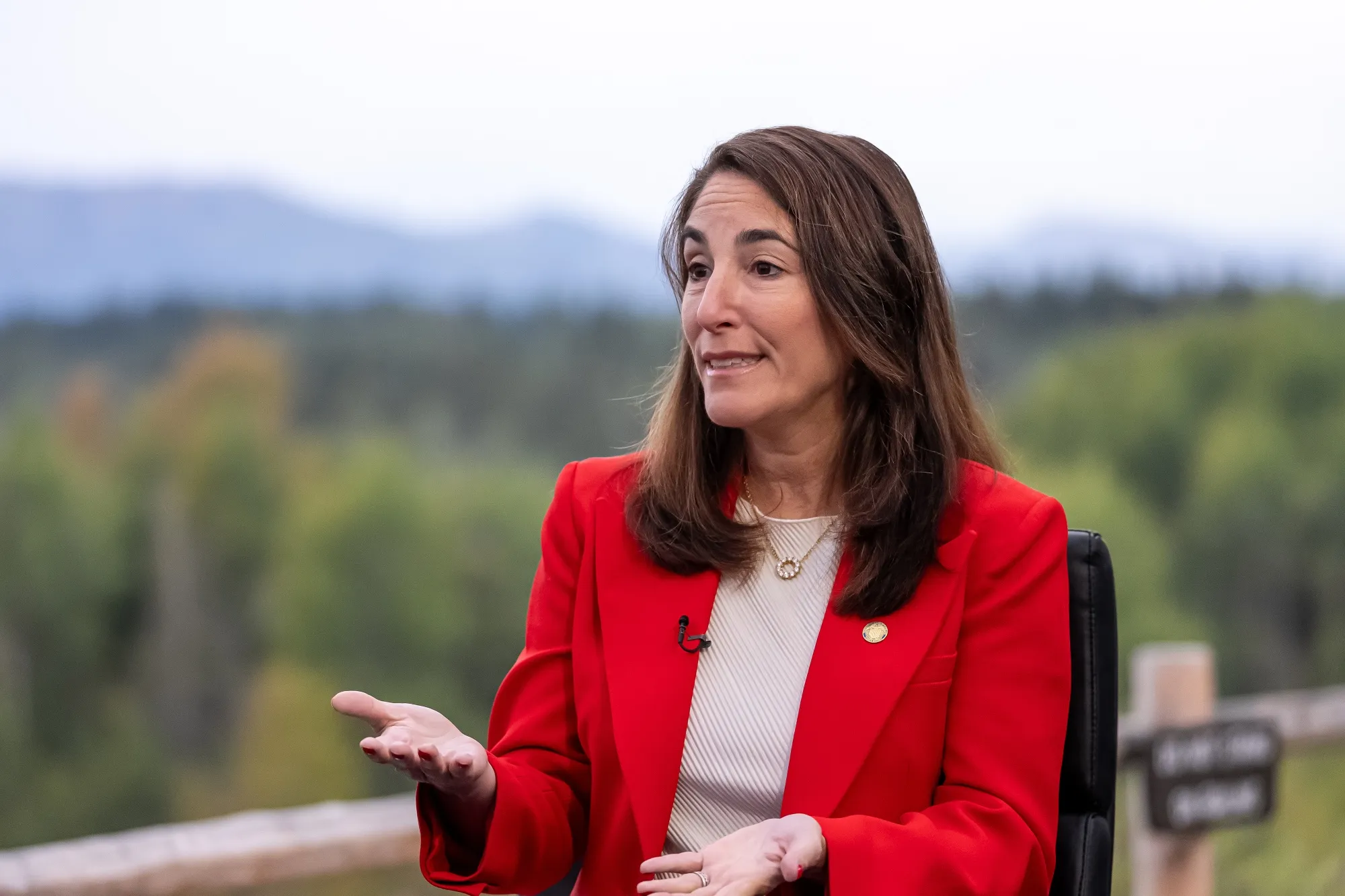
Federal Reserve Bank of Cleveland President Beth Hammack said interest rates need to be restrictive to bring inflation back to the central bank's 2% target, and that more frequent, smaller moves can reduce the risk that policy falls behind. "I expect that monetary policy will need to move to a restrictive stance to bring inflation back to 2% in a timely manner," Hammack said Thursday in remarks prepared for an event in Zurich.
Hammack was one of two Fed officials who dissented last week when policymakers voted to hold their benchmark rate steady after strong inflation data. Other officials have advocated a gradual pace of tightening to limit effects on markets and the economy. Investors see a likely rate increase in December and again in March, according to futures pricing. Richmond Fed President Tom Barkin reiterated his support for a "gradual" pace of hikes but declined to say how far rates will need to rise.
Hammack also addressed stablecoins, digital tokens typically backed by US dollars. She said they could expand rapidly if companies with large customer networks such as Google or Amazon issued their own tokens, and that AI agents using stablecoins could be a material shift. She warned that repeated supply shocks raise the risk of an inflationary mindset taking hold. She said inflation has been above target for nearly six years and that the labor market may be picking up a bit of steam.
Hammack also stressed the Fed's independence after Democrats won control of both houses of Congress, saying the central bank's credibility rests on evidence-based policy rather than short-term political pressure.
Source: Bloomberg Markets · Summarized by HeadlinesBriefing