
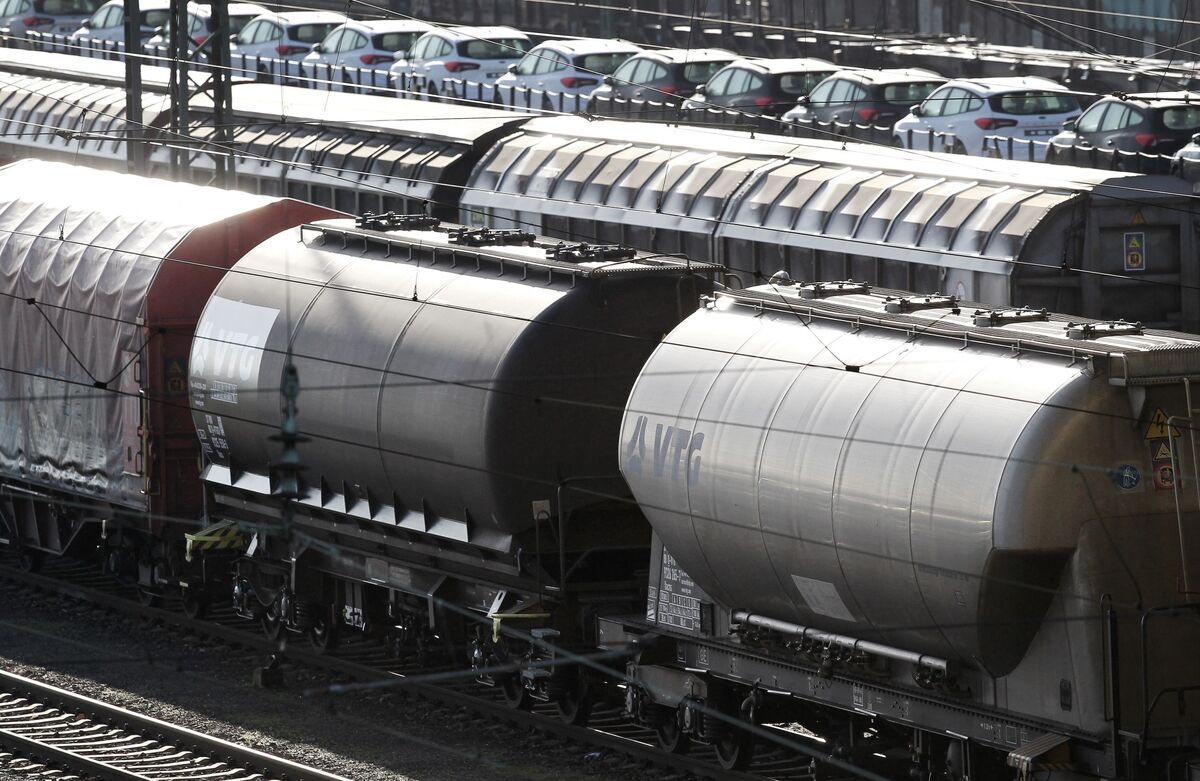
Germany's rail network is struggling to absorb freight diverted from the Rhine River, where record-low water levels after drought and repeated heat waves have driven up costs for companies, rail logistics firm VTG GmbH said. The Rhine is an important route connecting European factories with global markets, and low water has forced companies to shift some traffic to rail and road.
Rail is handling a substantial share of the displaced volumes, but ongoing maintenance has limited capacity. VTG spokesman said by email that rail "cannot replace the Rhine one to one yet." He did not say how much freight has switched to rail. A full block train carries 1,200 to 1,500 tons, less than a standard Rhine barge, which holds roughly 2,500 tons.
The strain is most acute on the stretch between Troisdorf, near Bonn, and Wiesbaden, west of Frankfurt, where track work is scheduled to finish on Dec. 12. Freight has been pushed onto the left-bank line with longer diversion routes, leaving "little reserve left," according to VTG. The river also has a chokepoint at Kaub, where barge loads from the Rotterdam area are currently limited to about 280 tons, pushing barge rates for Switzerland to a record this year.
The effects extend beyond Germany. Low water has restricted deliveries of diesel, heating oil, coal and cocoa through southern Germany into Switzerland, affecting power plants. Swiss authorities cited delays in rail freight for a potential jet fuel shortage at Zurich airport, which said deliveries have been below normal for weeks, though refueling is currently unrestricted. Switzerland released fuel reserves last week, after an earlier release last month following an unplanned outage at its only refinery.
Source: Bloomberg Markets · Summarized by HeadlinesBriefing