
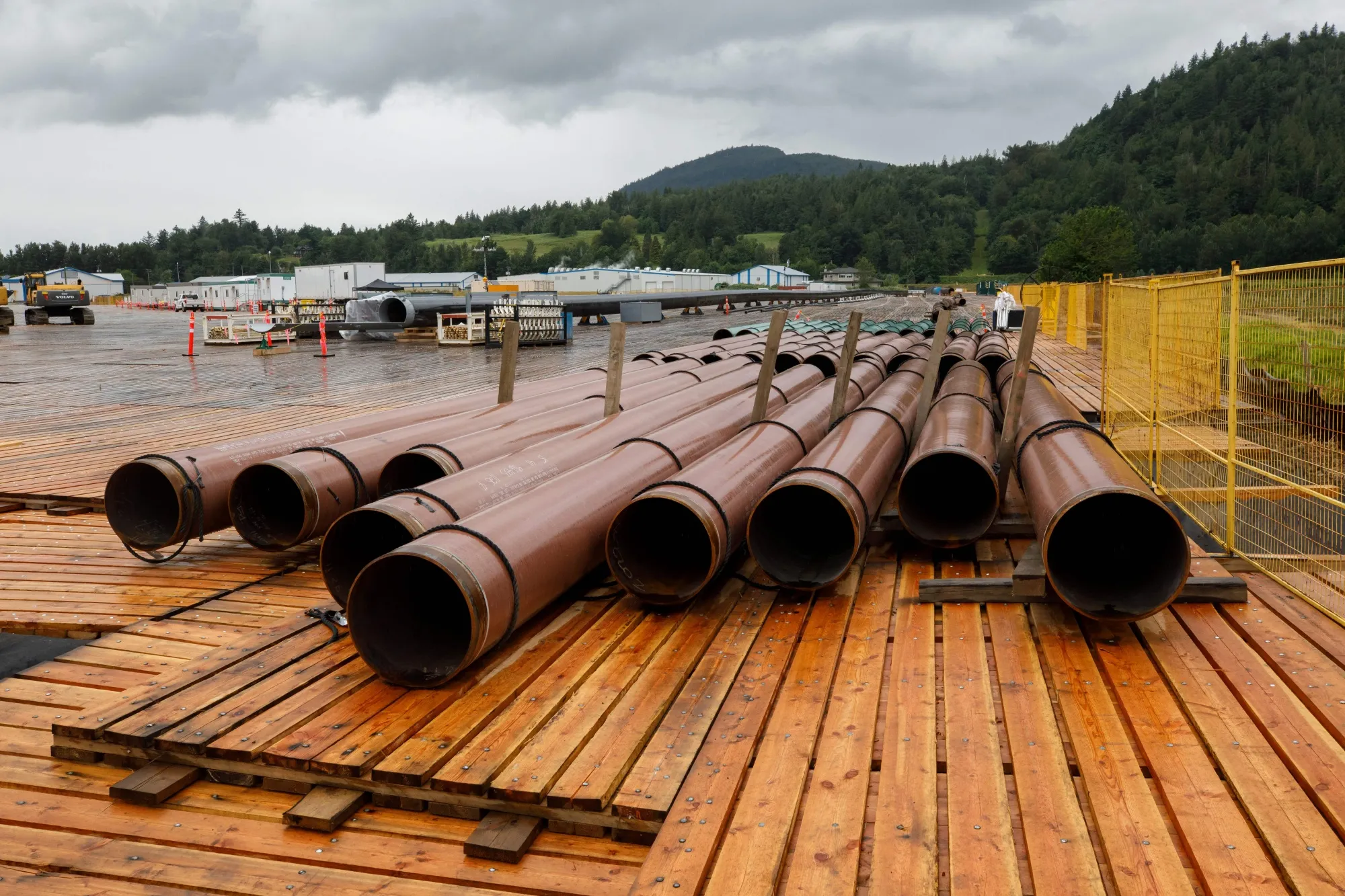
Prime Minister Mark Carney faces a growing wave of court challenges over his government's decision to fast-track a pipeline project under a legal mechanism it devised to speed up major infrastructure. Nine Indigenous groups have asked a judge to review and overturn the October 1 order designating a proposed crude oil pipeline from Alberta to the west coast as a "project of national interest."
New claims filed October 30 come from British Columbia communities including the Cheam First Nation, Boston Bar First Nation, Lower Nicola Indian Band, Kwantlen First Nation and Tsartlip First Nation. The Cheam claim, filed against Canada and Alberta, alleges the cabinet "erred in law by proceeding without adequate consultation" and cites rights recognized in Canada's constitution as well as commitments to the UN Declaration on the Rights of Indigenous Peoples. These follow an earlier challenge from the Cold Lake First Nations, based in Alberta.
"My fundamental, basic message to the corporations is: Buyers beware when you invest in British Columbia, because we're not standing down," said Grand Chief Stewart Phillip, president of the Union of BC Indian Chiefs. Terry Teegee, regional chief of the British Columbia Assembly of First Nations, called the government's goal of approving projects in "one year, one review" "untenable."
The pipeline, dubbed "Pacific Link," would carry one million barrels per day and was the first project designated under Carney's Building Canada Act, a central part of his strategy to diversify trade in response to President Donald Trump's tariffs. It is expected to follow the Trans Mountain route and end at a new terminal south of Vancouver. Earlier Trans Mountain expansion and Enbridge's Northern Gateway pipeline also faced First Nations legal challenges.
Source: Bloomberg Markets · Summarized by HeadlinesBriefing