
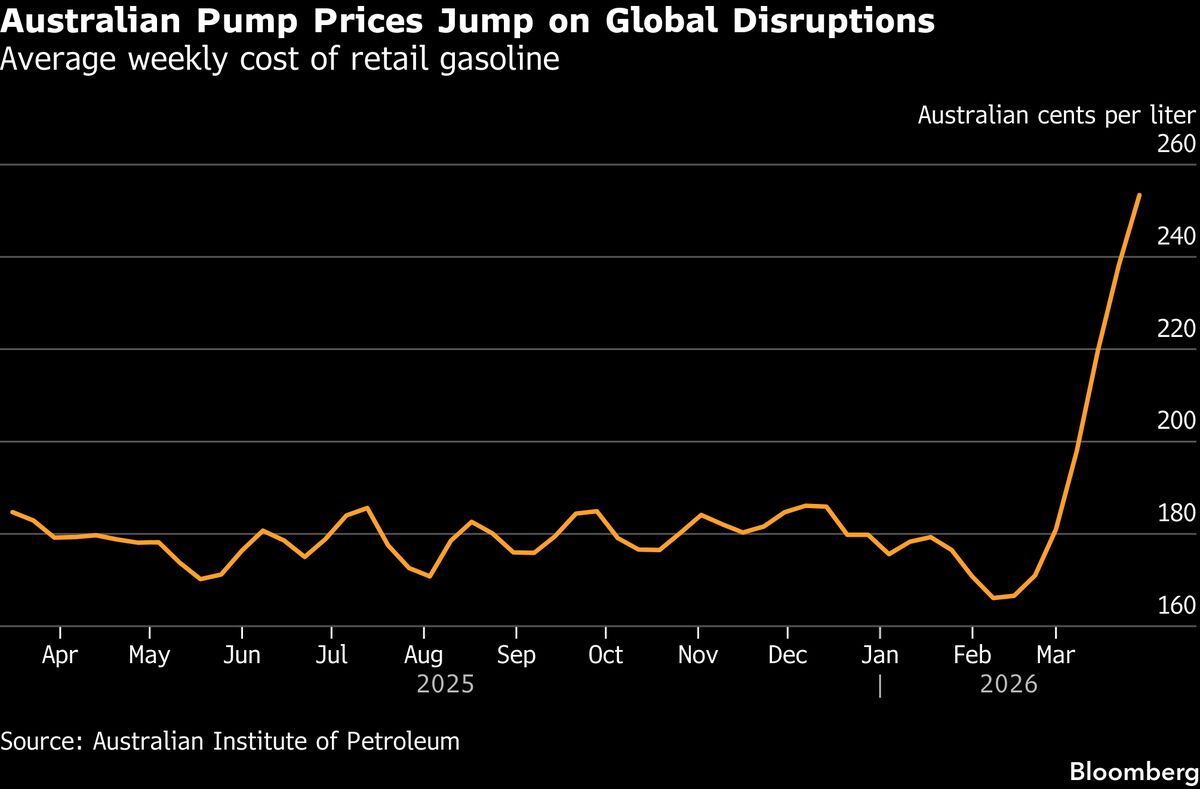
Foreign Minister Penny Wong stated that Australia's decision to halve retail fuel taxes will take time to reach consumers, according to a Bloomberg Markets interview. The policy aims to reduce the tax burden on gasoline, but implementation delays and market adjustments mean price reductions at pumps will be gradual. Wong emphasized that the government expects the move to stabilize household budgets in the long term, though immediate relief for drivers remains limited.
The tax cut, which slashes the current rate by 50%, applies to fuel retailers rather than directly lowering pump prices. Analysts note that businesses may absorb savings temporarily due to competitive pressures or logistical costs before passing them to consumers. This staggered approach contrasts with direct subsidies, which would have offered faster relief but at higher fiscal risk. The government frames the policy as a balanced strategy to address inflationary pressures without overburdening public finances.
Market reactions have been muted, with fuel futures showing minimal movement following the announcement. Industry experts suggest retailers might wait for seasonal demand fluctuations or regulatory clarifications before adjusting prices. Meanwhile, opposition lawmakers criticized the timeline as insufficient for cost-of-living relief, arguing that middle-class households need quicker measures. Wong defended the phased rollout, citing economic modeling that projects sustained savings over 12-18 months.
The policy’s success hinges on global oil price stability and domestic refining capacity. If crude prices remain volatile, fuel retailers may hesitate to lower prices despite tax savings. Conversely, a stable market could accelerate consumer benefits. The government plans to monitor compliance through quarterly reports, ensuring retailers align with the new tax structure. This cautious approach reflects Australia’s broader effort to manage economic transitions without abrupt fiscal interventions.
Source: Bloomberg Markets · Summarized by HeadlinesBriefing