
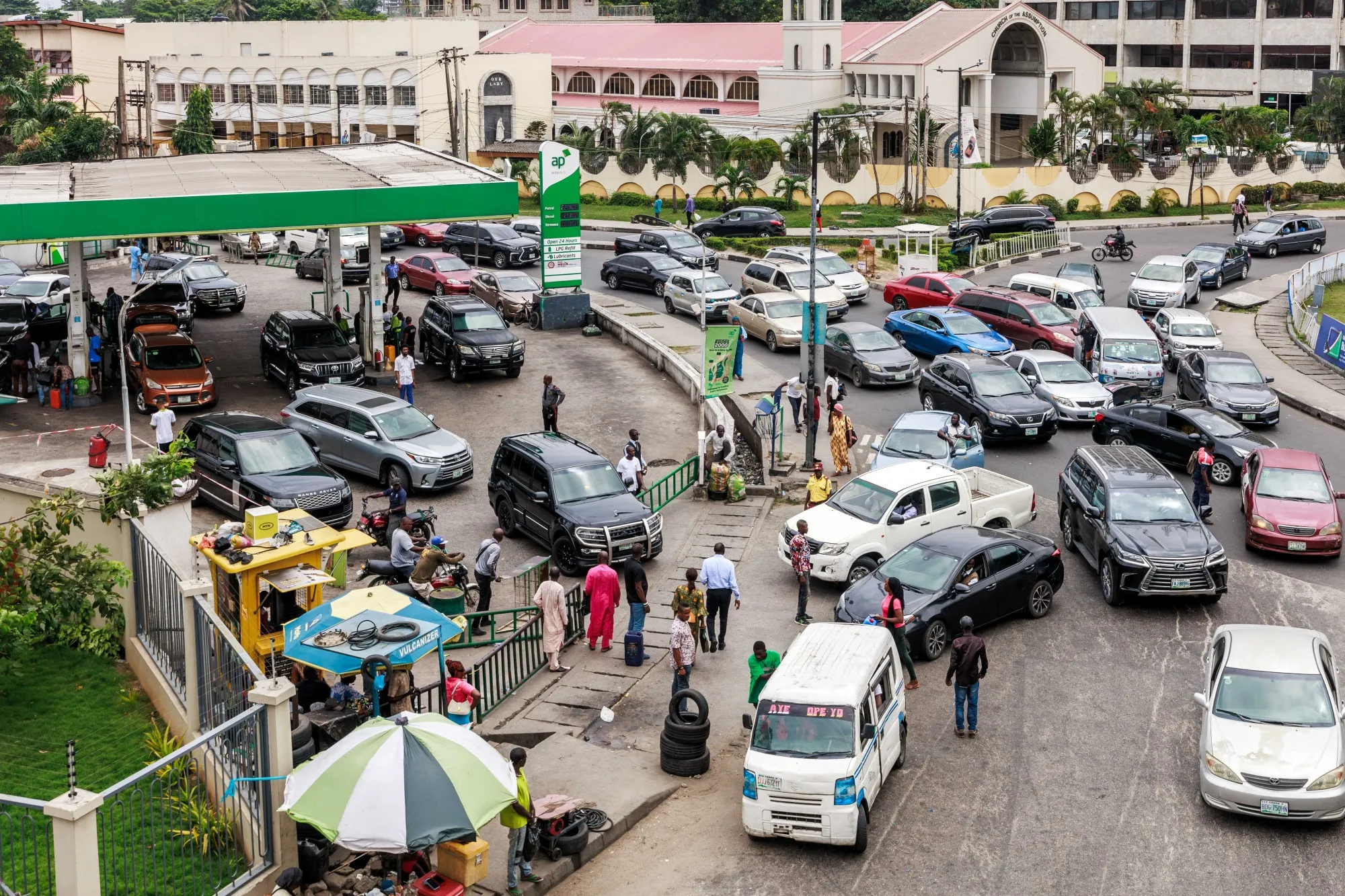
African governments from Nigeria to Kenya are adding fresh measures to soften a rise in fuel prices caused by the Iran war. The Middle East conflict has been a driving force behind $100 a barrel oil and constricted refining capacity, causing pump prices to surge. At the start of the war, African states took steps ranging from suspending taxes to delaying an upward adjustment in regulated fuel prices.
After European benchmark crude oil mostly remained in triple digits last month, Nigeria introduced a measure referred to as "price modulation." Finance Minister Taiwo Oyedele said it was designed to delay part of an upward price adjustment and recover that amount when prices decline. "This is neither a subsidy nor a price control," he told reporters in Abuja, the capital, on Thursday. "It is designed to smooth prices over time rather than suppressing them."
Fuel prices and availability are particularly sensitive for African governments, and transportation costs, which also feed into food prices, typically make up a significant share of household budgets. President Bola Tinubu, seeking a second term in January elections, abolished Nigeria's fuel subsidy after taking office in 2023. Clementine Wallop, director for sub-Saharan Africa at Horizon Engage, said the latest decision "speaks to the government's concern around cost of living as campaign season ramps up."
In Kenya, the government is seeking lawmakers' approval to slash the 16% value-added tax on fuel in half. South Africa initially cut fuel taxes but set a three-month limit that expired in June, and it raised retail fuel prices 12% to a record this week. That lifted inflation to 4.4% from 3% before the war, prompting the central bank to hike interest rates twice. Zimbabwe, meanwhile, lowered gasoline prices by 0.5% to $2.05 a liter on Thursday.
Source: Bloomberg Markets · Summarized by HeadlinesBriefing