
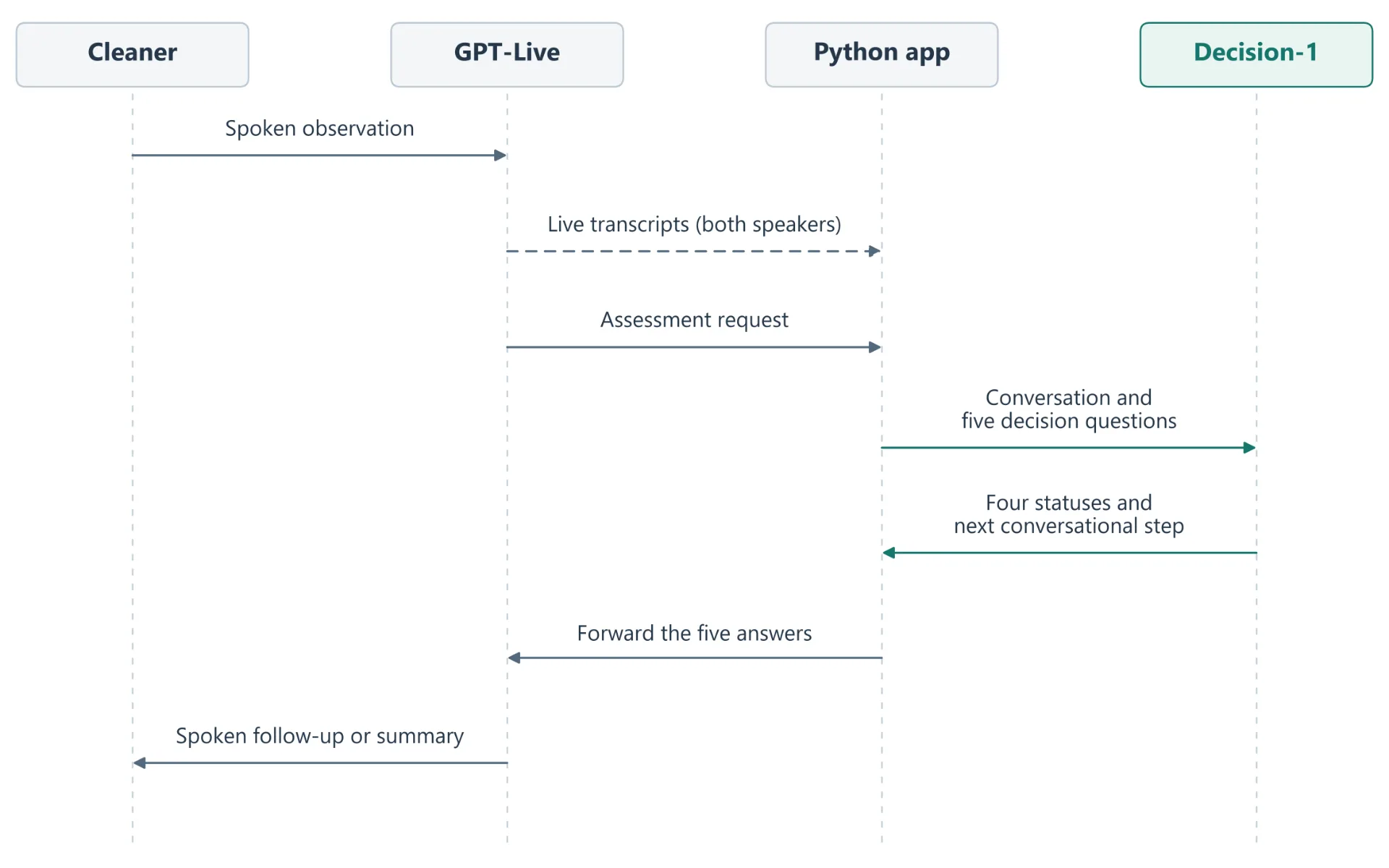
Integrating decision models into live voice conversations allows assistants to track confirmed information and intelligently request missing details. GPT-Live handles real-time speech, while a decision model evaluates the conversation status. This approach manages messy, out-of-order user input by defining evidence requirements for each task. When a user states a fact, the model assesses if requirements are met or if further verification is needed. If new information contradicts prior assumptions, the model reopens relevant checks while preserving established facts. The system supports dynamic follow-up questions based on current conversation state.
A practical case study demonstrates this with a rental apartment inspection scenario. A cleaner evaluates four requirements: entrance access, bedroom cleanliness, bathroom drainage, and kitchen cleanliness. The assistant strategically asks follow-up questions to gather sufficient evidence. For instance, when the cleaner reports the guest code works and bed is made, the assistant prompts about sink drainage. The cleaner mentions water is off, prompting a shift to kitchen inspection while waiting. This exchange showcases how the decision model assesses established evidence and selects useful follow-ups for the current situation.
The technical implementation combines GPT-Live (Open AI's speech model) and Decision-1 (Microsoft's decision model) through a Python workflow. This architecture enables real-time conversation management, where the assistant can update status, request verification, or progress to subsequent requirements based on the model's assessments.
Source: Towards Data Science · Summarized by HeadlinesBriefing