
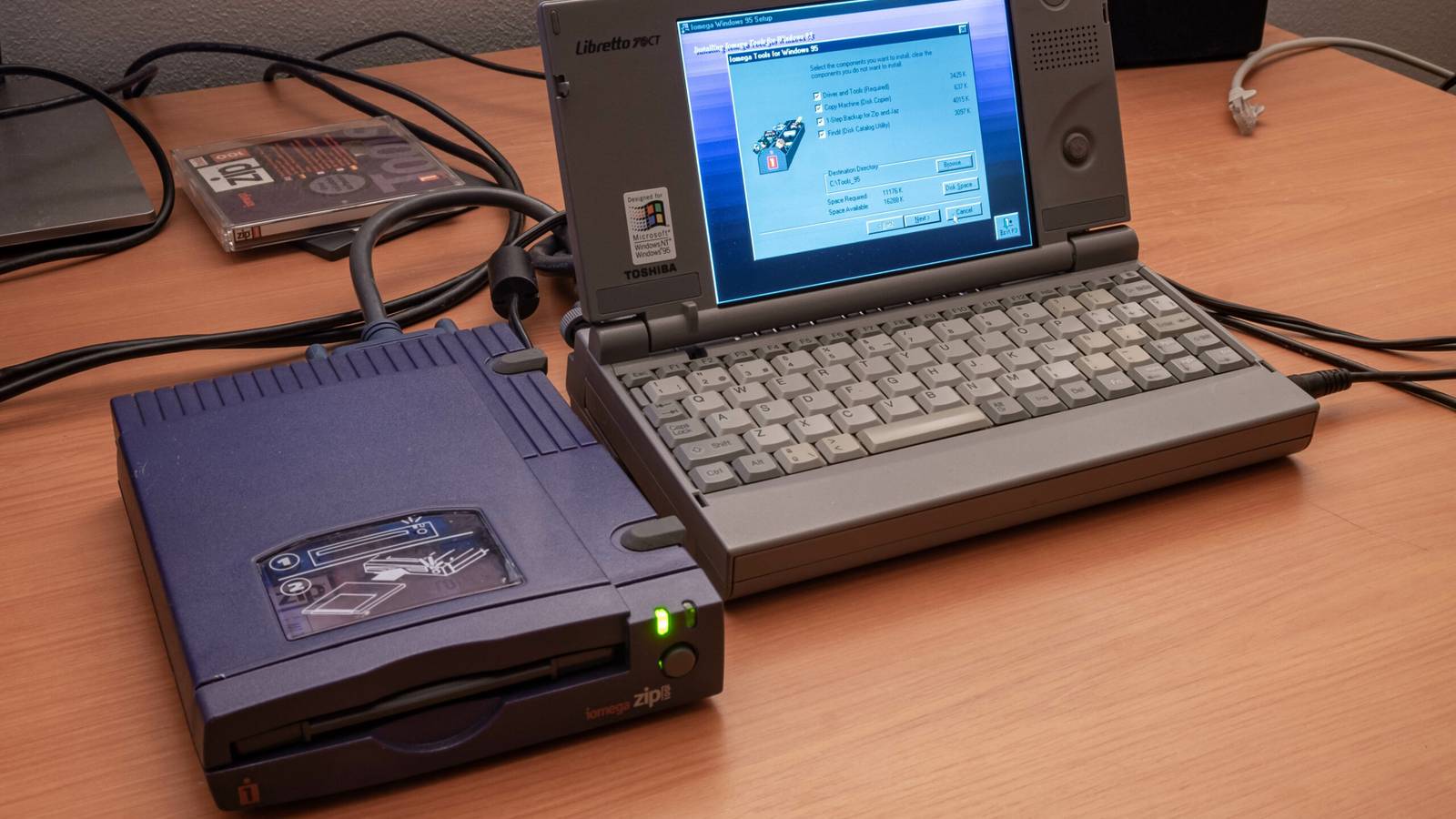
Iomega's Zip drives revolutionized portable storage in the 90s with 100MB capacity and 1.4MB/s speeds, outperforming floppy disks. Initially priced at $200 (including a 100MB disk), they gained traction with Dell and Apple, but reliability issues—dubbed the 'click of death'—sparked a 1998 class-action lawsuit. Despite evolving to 750MB disks by 2000, declining sales and lawsuits hastened their decline.
The format's downfall accelerated as CDs (700MB, cheaper production) and USB flash drives emerged. USB 1.1 matched Zip speeds, but USB 2.0 (2002) made magnetic storage obsolete. Iomega pivoted to CD drives under the Zip brand, but couldn't compete. By 2013, EMC-Lenovo dissolved Iomega, erasing its legacy despite niche use in aviation until 2014.
Zip drives exemplify how rapid innovation can falter without reliability. Their story mirrors broader tech trends: formats like floppy disks and CDs followed similar trajectories, replaced by smaller, faster alternatives. Iomega's bankruptcy underscores the fragility of even promising technologies.
Zip drives 90s remains a cautionary tale for engineers and investors. The $700 lawsuit payout and abrupt obsolescence highlight risks in hardware development. As solid-state storage dominates today, Zip's legacy serves as a reminder of the volatile interplay between novelty and practicality.
Source: Hacker News · Summarized by HeadlinesBriefing