
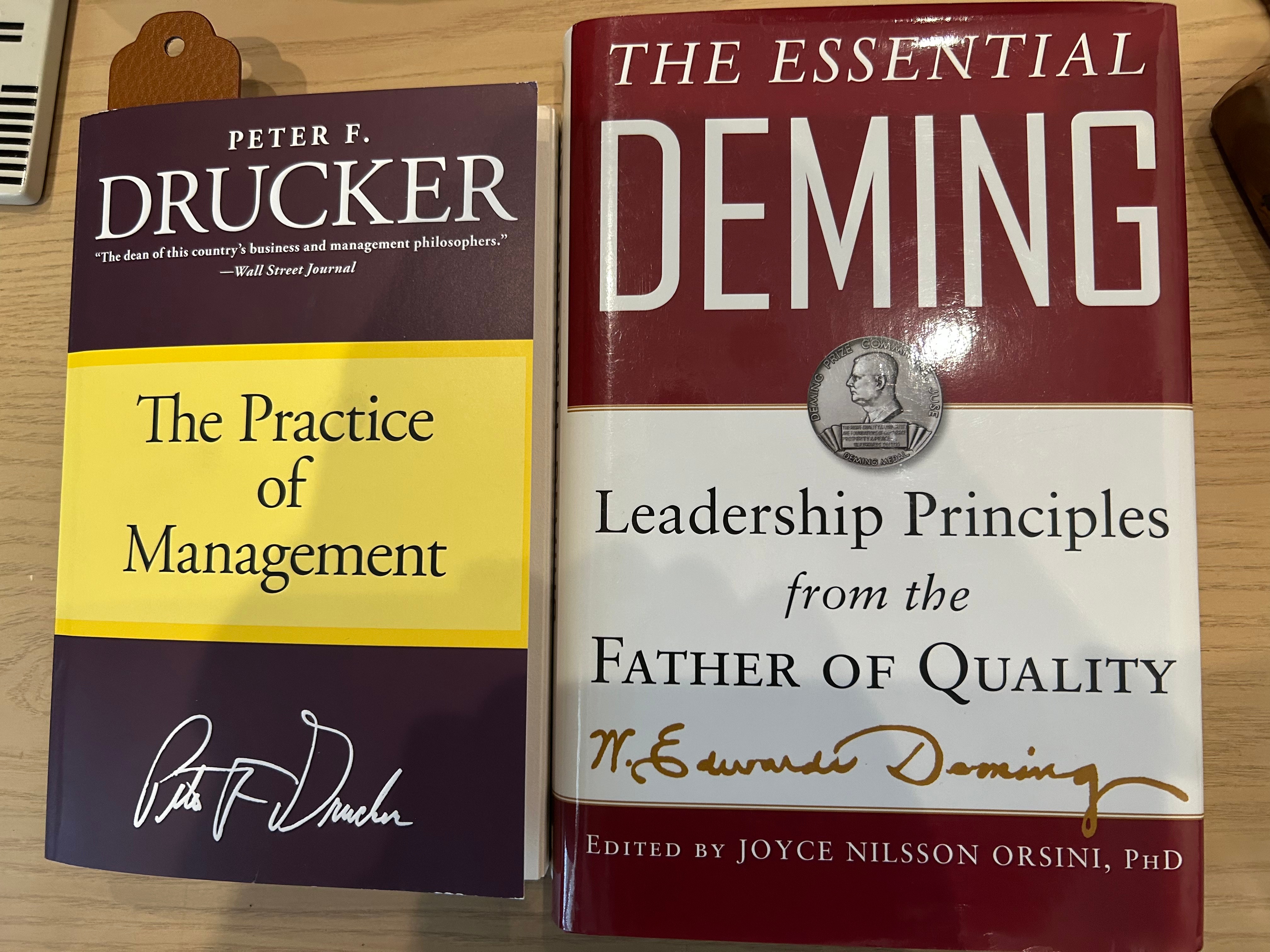
The management philosophies of Peter Drucker and W. Edwards Deming represent two fundamentally different approaches to organizational leadership. While Drucker's ideas about management by objectives and OKRs became dominant in American companies, Deming's systems thinking approach gained more traction in Japan. This divergence stems from the practical demands of management bandwidth and organizational complexity.
Drucker's approach offers managers a straightforward control mechanism: set objectives, define key results, and monitor progress. This creates a neat summary of organizational performance that fits neatly into spreadsheets and slide decks. The beauty of OKRs lies in their ability to reduce the blooming, buzzing confusion of complex organizations into manageable metrics. John Doerr's book Measure What Matters captures this essence perfectly - focusing on quantifiable targets that managers can easily track and enforce.
Deming's critique of numerical targets as a 'deadly disease' and his advocacy for understanding systems through statistical process control required a far greater commitment from managers. His approach demanded continuous observation and qualitative investigation rather than simple metric tracking. While Deming argued that true improvement requires systemic changes and understanding variability, his methods proved too demanding for American managers who preferred the bounded simplicity of OKRs. The triumph of Drucker's ideas over Deming's represents a classic case of choosing the easier path over the harder but potentially more effective one.
Source: Hacker News: Front Page · Summarized by HeadlinesBriefing